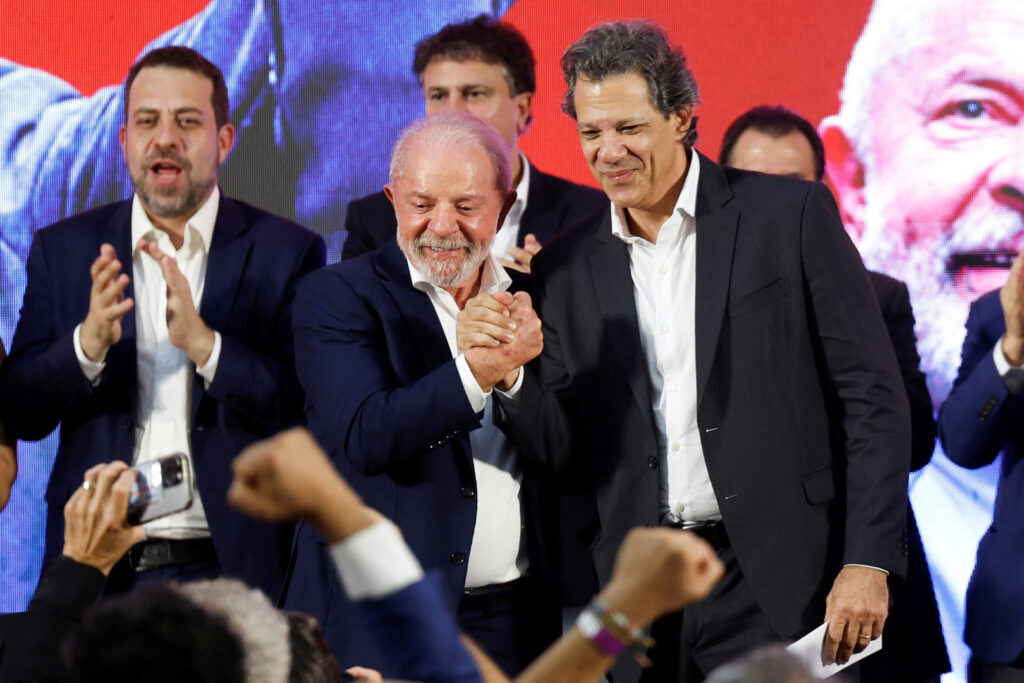
Brazil's President Luiz Inacio Lula da Silva and Brazil's Finance Minister Fernando Haddad attend an event to launch Haddad's bid to run for Sao Paulo governor, challenging the incumbent Tarcisio de Freitas, one of the most popular figures in the country's conservative opposition, in Sao Bernardo do Campo in the state of Sao Paulo, Brazil March 19, 2026. REUTERS/Tuane Fernandes
In a bold diplomatic statement, Brazil’s President Luiz Inácio Lula da Silva openly criticised the United States for what he described as an aggressive foreign policy stance under former President Donald Trump’s administration. Speaking at an international forum, Lula da Silva accused the US of acting with a unilateral approach towards global matters and behaving as though they “own the world.”
Lula’s comments reflect long-standing tensions over the US’s international interventions and its assertive approach to foreign relations during the Trump era. The Brazilian president emphasized the importance of multilateral cooperation and respect among nations, contrasting it with the US’s perceived unilateral actions and disregard for international consensus.
This critique from Brazil, a key player in Latin America and emerging global power, highlights growing concerns about the impact of US foreign policy on international stability and respect for sovereignty. Latin American countries have often felt the brunt of US policies in the region, including economic sanctions, political interference, and military interventions.
President Lula called for a renewed commitment to diplomacy, dialogue, and mutual respect in international affairs. He stressed the need for world powers to work collaboratively rather than impose their will on other countries, urging an end to what he termed “the era of domination.”
Analysts note that Brazil’s stance under Lula da Silva represents a shift towards a more assertive and independent foreign policy, seeking to balance global power dynamics that have long been dominated by the US and Western countries. Lula’s administration is also enhancing ties with emerging economies such as China, Russia, and India, aiming to foster a multipolar world order.
The US, meanwhile, has defended its foreign policy as necessary for maintaining global security and promoting democratic values. However, critics argue that the US approach under Trump often disregarded international norms and created tensions with allies and adversaries alike.
Lula’s remarks come amid a broader reevaluation of global leadership roles in a rapidly changing geopolitical landscape. The rise of emerging economies and shifting alliances are challenging traditional power structures, and vocal criticisms like those from Brazil’s president spotlight the complex dynamics at play.
As Brazil continues to assert its position, the international community watches closely to see how these diplomatic tensions might evolve and how they will influence future global cooperation efforts. Lula’s call for respect and partnership aims to foster a more equitable and peaceful world order, countering narratives of dominance and unilateralism.