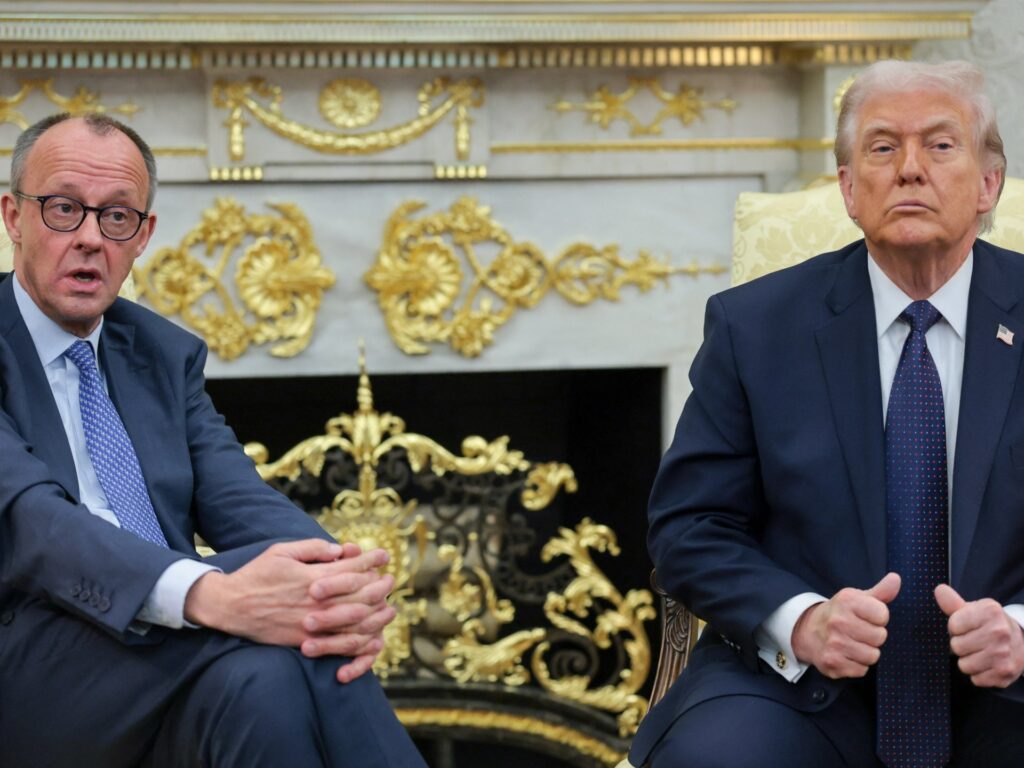
In a recent statement, former President Donald Trump claimed that the United States had destroyed Iran’s navy and air force. Trump further alleged that Germany was assisting in these efforts, a claim that has raised eyebrows internationally.
This bold declaration came amid ongoing tensions between the US and Iran, which have fluctuated since the US withdrawal from the Iran nuclear deal in 2018. Trump’s remarks have added a new layer to the discourse surrounding military actions and geopolitical strategies in the Middle East.
Additionally, Trump contradicted Senator Marco Rubio’s narrative regarding the US’s motivations for attacking Iran. While Rubio suggested that the military actions were in response to direct threats or provocations, Trump stated that the US acted because he “had a feeling” that Tehran planned to attack Washington first.
This assertion is noteworthy as it departs from conventional justifications based on concrete intelligence, and instead highlights the role of intuition or pre-emptive strategy in Trump’s decision-making. It also reflects the high-stakes environment in which US-Iran relations are situated, where perceptions and anticipations can drive significant actions.
Trump’s comments on Germany’s involvement suggest a broader international dimension to the conflict, implying that allies may be more deeply engaged behind the scenes than publicly acknowledged. Germany, a key NATO member and traditional US ally, has previously expressed a measured stance on Iran sanctions and military actions, focusing more on diplomatic solutions.
Observers have pointed out that such statements from Trump could influence public opinion and political narratives both in the US and abroad. By framing the US attack as preemptive and justified by suspected Iranian intentions, Trump reinforces his administration’s tough posture on Iran.
Critics, however, have cautioned that relying on “feelings” or unverified intentions as grounds for military action risks escalating conflicts unnecessarily and undermines the importance of verified intelligence and diplomatic engagement.
The global community continues to monitor developments closely, as any military escalation in the Persian Gulf region could destabilize international markets and exacerbate regional conflicts.
While the US government has not officially confirmed the destruction of Iran’s navy and air force as Trump described, these claims have sparked debate among policymakers and analysts about the current state of U.S.-Iran relations and the potential for further confrontations.
In summary, Trump’s recent statements highlight the complexity and volatility of Middle Eastern geopolitics. His admission of acting on a “feeling,” combined with assertions of destroyed Iranian military capabilities and alleged German involvement, underscore the precarious balance of power and the risks tied to miscalculations or miscommunications in this arena.