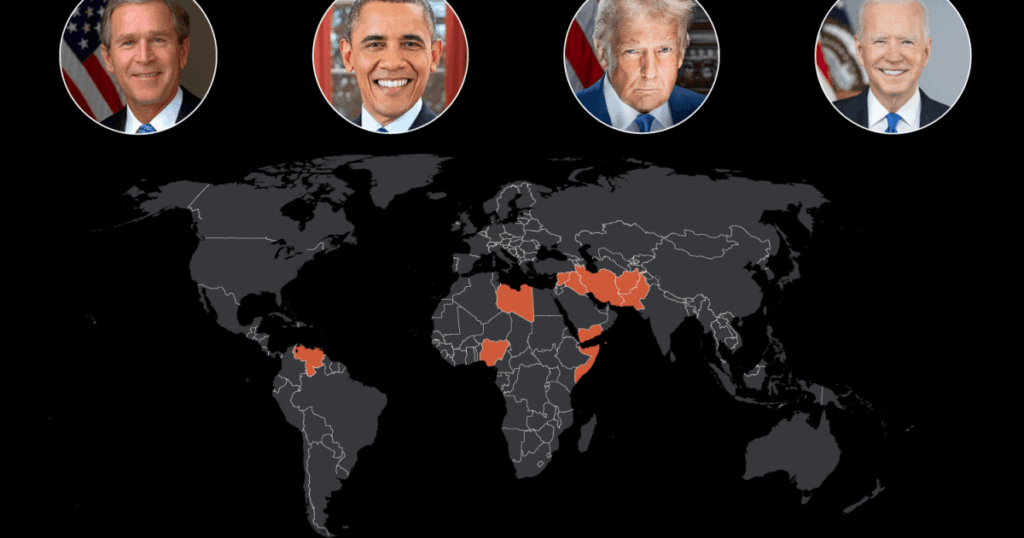
Since the tragic events of September 11, 2001, the United States has engaged in extensive military operations that have involved bombing campaigns across multiple countries. Under four different presidents, the US has waged three full-scale wars and bombed at least 10 countries.
The conflicts following 9/11 marked a significant expansion of US military involvement globally, initially focusing on Afghanistan as part of the War on Terror. This operation quickly expanded to include other regions where terrorist organizations were believed to operate or where US interests required intervention.
These countries include Afghanistan, Iraq, Syria, Pakistan, Yemen, Somalia, Libya, and others where US forces conducted airstrikes either independently or in coalition with allies. The intervention strategies ranged from targeted drone strikes to full-scale aerial bombardments.
The financial cost of these military campaigns has been immense. Estimates suggest that the direct and indirect costs of these wars have run into trillions of dollars. This includes expenses related to the deployment of troops, equipment, logistics, intelligence, health care for veterans, and reconstruction efforts.
Beyond economic factors, the human toll and geopolitical consequences of these interventions have also been significant and remain subjects of study and debate among policymakers and historians.
Overall, the US bombing campaigns since 2001 reflect a complex interplay of military strategy, international relations, and national security objectives that have shaped global dynamics for over two decades.