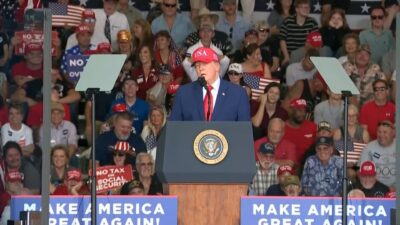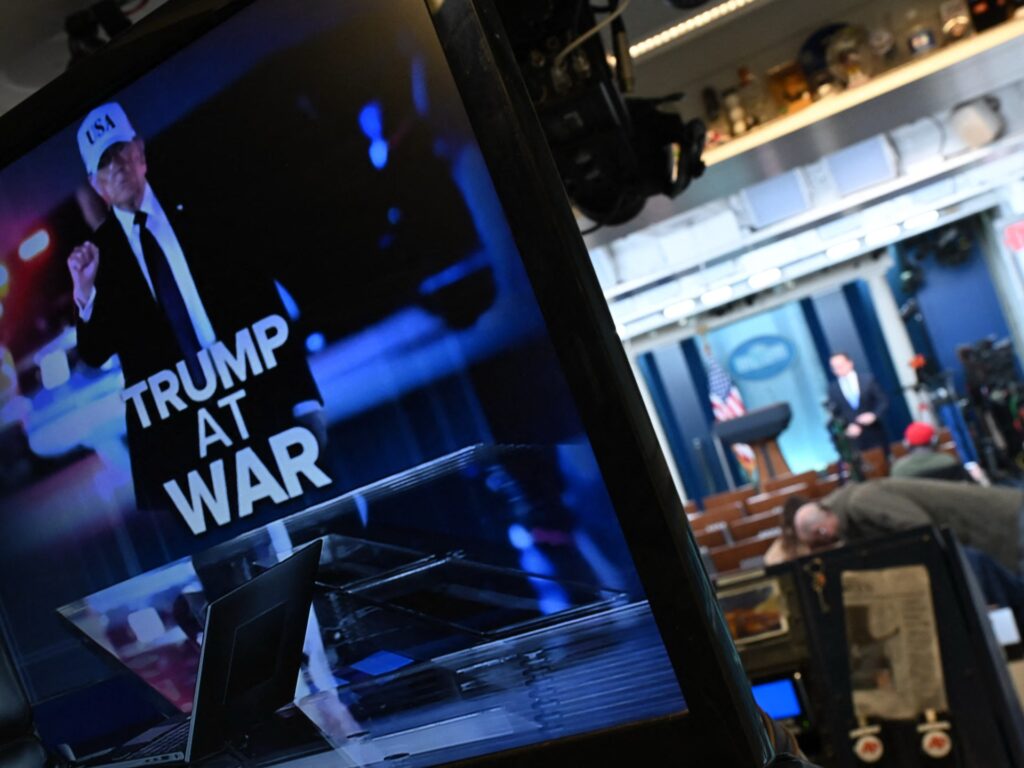
In a striking display of party unity, former President Donald Trump has garnered significant support from the Republican Party for recent military action against Iran, including the bombing operations that led to the death of a key figure, Khamenei. Despite the presence of an antiwar faction within the MAGA wing, their opposition remains minimal compared to the hawkish voices within the party.
The conservative base, often fragmented on foreign policy issues, has largely rallied behind Trump’s decisive approach towards Iran. This support is particularly noteworthy given the usual tensions between interventionist and non-interventionist Republicans. The hawks within the party have openly praised Trump’s leadership, viewing the strikes as a strong message of American resolve.
The antiwar MAGA faction, while vocal, has not succeeded in shifting the broader Republican consensus, which favors a robust response to what they perceive as Iran’s destabilizing activities in the Middle East. This dynamic underscores a complex alignment within the party: a toughness on foreign policy paired with a nationalist rhetoric that Trump continues to champion.
Analysts suggest that Trump’s ability to secure this support hinges on his fiery rhetoric and promises to protect American interests aggressively. By framing the Iran strikes as a necessary and justified action, Trump has consolidated his position as a leader willing to take the hard line.
The context of this support is critical. The United States has long grappled with its policy towards Iran, oscillating between diplomacy and confrontation. Trump’s approach marks a clear pivot back towards confrontation, winning accolades from the party’s traditional conservative base.
Despite some dissent, the Republican Party’s backing of Trump’s Iran strategy signals a continued endorsement of hawkish foreign policies. This consensus could shape the party’s stance in upcoming elections, reflecting their priorities on national security and military strength.
The conservative praise for Trump is not unconditional, however. Some Republicans urge caution and advocate for a strategy that avoids prolonged conflict, highlighting a pragmatic strand within the party. Nonetheless, this voice has been overshadowed by the dominant hawkish narrative celebrating the successful strike and the elimination of a high-value target.
Critics on the left and antiwar advocates underscore the risks of military escalation and the potential consequences for regional stability. Yet, these concerns have done little to alter the Republican Party’s unified stance in support of Trump’s actions.
In summary, Trump’s recent Iran strikes have illuminated the Republican Party’s prevailing foreign policy posture: a strong, hawkish approach supported by a majority of conservatives, despite a relatively small but persistent antiwar minority within the MAGA wing. This alignment reinforces Trump’s role as a decisive leader willing to use military force to protect American interests and assert American strength on the global stage.