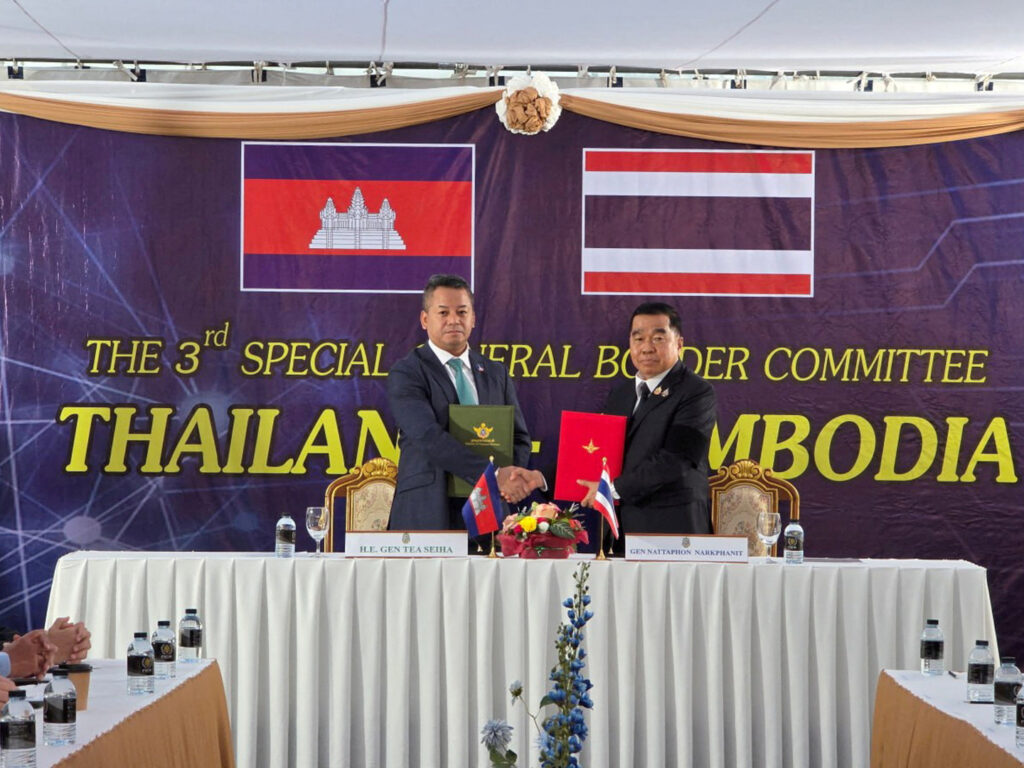
Cambodia's Defence Minister Tea Seiha and Thailand's Defence Minister Natthaphon Narkphanit pose with documents during a special General Border Committee (GBC) meeting at a border checkpoint, in Chanthaburi province, Thailand, December 27, 2025. Agence Kampuchea Press/Handout via REUTERS NO RESALES. NO ARCHIVES. THIS IMAGE HAS BEEN SUPPLIED BY A THIRD PARTY TPX IMAGES OF THE DAY
After weeks of intense and deadly clashes along the border, Thailand and Cambodia have officially implemented a ceasefire agreement aimed at ending hostilities. This ceasefire marks a significant development in the ongoing conflict that has strained relations between the two Southeast Asian neighbors. The first 72 hours of the ceasefire are viewed by regional experts and international observers as a critical period that will test the commitment of both sides to peace.
The conflict, which escalated due to longstanding territorial disputes, has resulted in numerous casualties and displacement of civilians. Both Thailand and Cambodia have suffered losses, and the fighting disrupted local economies and daily life for residents in the border areas. Governments on both sides expressed a strong desire to stabilize the situation through diplomatic channels and ceasefire negotiations.
The ceasefire agreement was reached after intensive talks mediated by ASEAN representatives and international peace facilitators. Key points of the agreement include the cessation of military operations, withdrawal of troops to predetermined limits, and the establishment of a joint border commission to oversee any disputes. This collaborative approach aims to build trust and prevent misunderstandings that could reignite violence.
Despite the announcement, skepticism remains among some analysts and local populations due to previous ceasefire attempts that failed to hold. However, officials from Thailand and Cambodia have reiterated their commitment to peace and expressed hope that this ceasefire will lead to a lasting resolution. They acknowledge that the next 72 hours will be a litmus test of their ability to maintain calm and engage in constructive dialogue.
The international community welcomed the ceasefire, highlighting it as a positive step toward regional stability. Humanitarian organizations are preparing to assist affected communities, focusing on rebuilding infrastructure and providing aid to displaced families.
Moving forward, both nations plan to address underlying issues through continued negotiations and confidence-building measures. The ceasefire serves as a foundation for more comprehensive peace talks, aiming to resolve the border dispute conclusively. Observers stress the importance of sustained political will, transparent communication, and adherence to the ceasefire terms.
As this historic ceasefire unfolds, all eyes are on the border regions where the fragile peace must withstand the pressures of lingering tensions. The hope is that through mutual respect and cooperation, Thailand and Cambodia can turn a new page in their relationship, fostering harmony and development in the region.