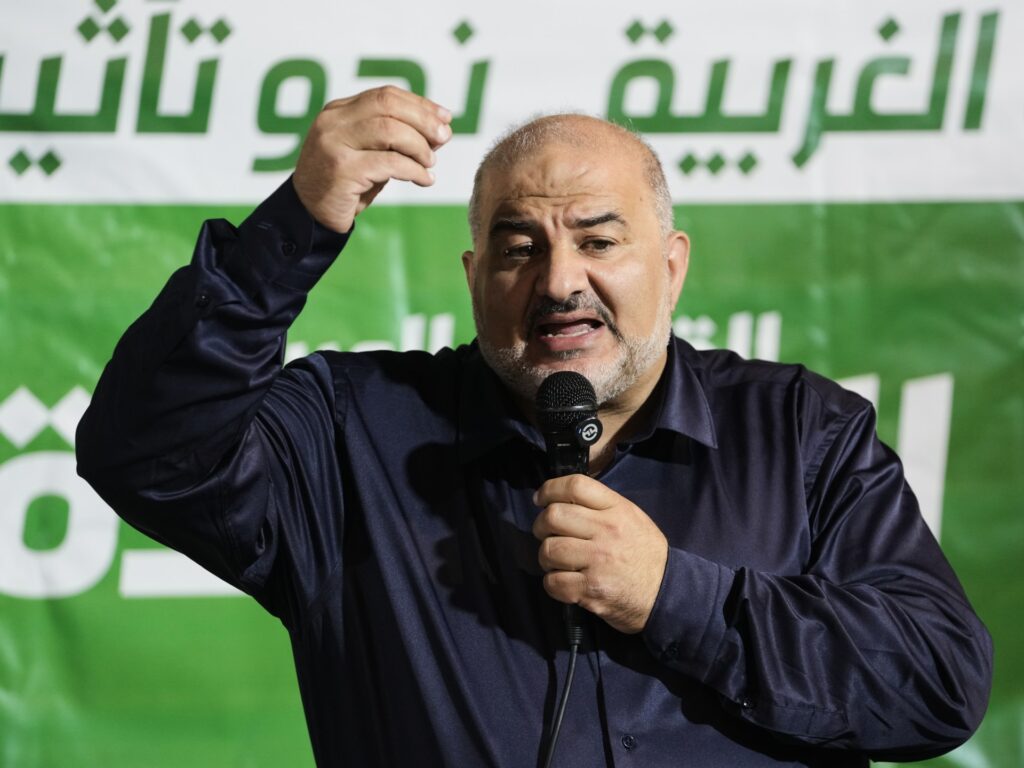
In the evolving political landscape of Israel, coalition talks have intensified, placing significant pressure on Mansour Abbas, the leader of an Arab party, to take a clear stance on Hamas. As Israel’s change bloc navigates the complexities of forming a new government, Abbas faces growing demands to publicly denounce Hamas as a prerequisite for his party’s participation in the coalition.
Mansour Abbas, a prominent figure in Israeli Arab politics, has thus far maintained a nuanced position regarding Hamas, often emphasizing dialogue and political engagement rather than outright condemnation. However, the shifting dynamics of Israeli politics, particularly the urgency to form a stable government, have brought increased scrutiny on Abbas and his party.
The change bloc, which seeks to consolidate a coalition that can command a parliamentary majority, sees Abbas’ explicit denouncement of Hamas as a critical aspect of ensuring political stability and addressing national security concerns. This demand reflects broader anxieties among Israeli lawmakers and the public about Hamas’ activities and the implications for the country’s security.
Abbas’ potential role in the coalition is pivotal, as his party could provide the necessary seats to tip the balance in the tightly contested Knesset. Yet, this leverage also means that Abbas is caught in a delicate position: balancing the expectations of his constituents, many of whom may have differing views on Hamas, against the political realities and pressures from Israeli coalition partners.
The tension highlights the broader challenges of integrating Arab parties into Israeli governing coalitions, particularly amid ongoing conflict and deeply rooted divisions. Abbas’ response to the ultimatum could set a precedent for future Arab participation in Israeli politics and shape the broader discourse on peace and security.
As talks continue, stakeholders within and outside Israel are closely watching the developments. The outcome will not only determine the composition of the next government but also reflect the evolving nature of Israeli democracy and its handling of minority party involvement.
In summary, Mansour Abbas stands at a political crossroads, with his decision bearing significant implications for both Israel’s internal politics and its broader regional relations. The pressure to denounce Hamas underscores the complexities of coalition-building in a climate of security concerns and political fragmentation.