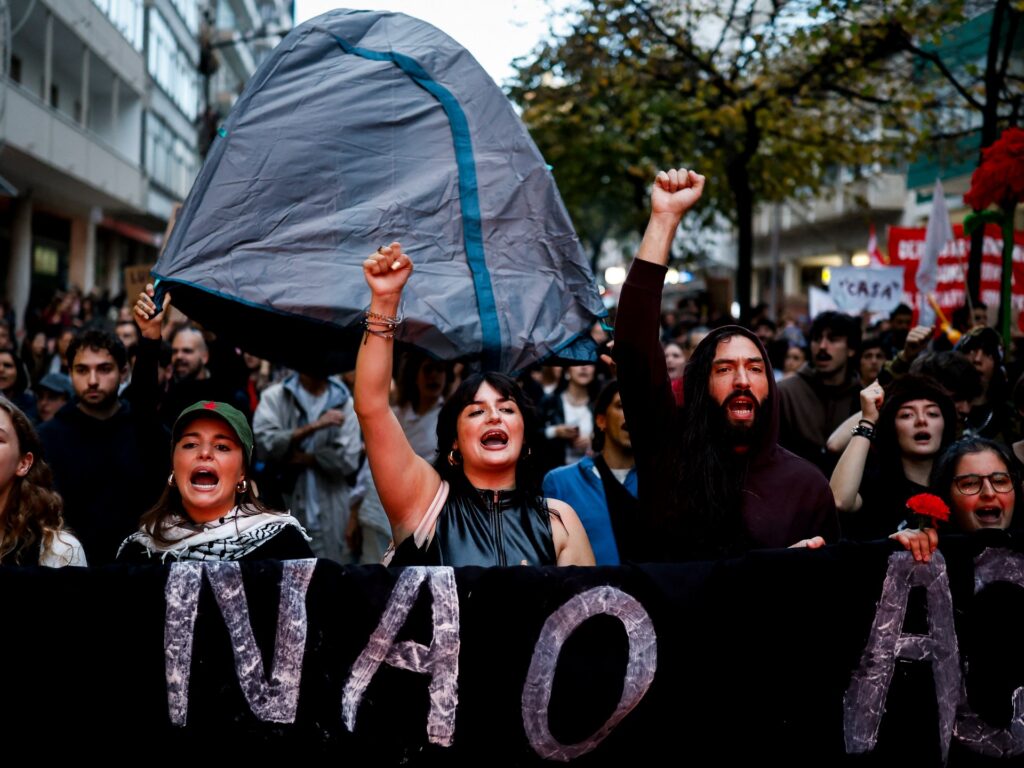
Portugal recently witnessed its largest demonstrations yet in response to escalating housing costs, with tens of thousands taking to the streets. These protests mark the peak of a growing social movement that has gained momentum over the past weeks, reflecting widespread public frustration over the unaffordability of housing in the country.
The movement, which began as smaller, localized protests, has now evolved into a nationwide call for urgent government action to address the soaring prices of rent and property. Citizens from various cities, including Lisbon and Porto, gathered in significant numbers, demanding comprehensive reforms and protective measures for tenants and potential homeowners.
Rising housing costs have become a critical issue in Portugal due to a combination of factors, including increased demand in urban areas, limited supply of affordable housing units, and the impact of short-term rental platforms driving prices upward. Many participants in the protests described how these dynamics are forcing them out of the cities where they work and live, exacerbating social and economic inequalities.
The government has acknowledged the challenges posed by the housing crisis and announced plans to increase investment in affordable housing projects and introduce stricter regulations on short-term rentals. However, activists argue that these measures are insufficient and call for more immediate and substantial interventions.
Experts note that Portugal’s housing market situation is not unique, as many European countries face similar pressures. Nonetheless, the scale and intensity of the recent demonstrations in Portugal signal a critical juncture for policymakers and civil society alike.
The protests also featured speeches from housing advocates, union leaders, and local officials, emphasizing the right to secure and affordable housing as a fundamental human right. Organizers have pledged to continue mobilizing citizens and pressing authorities until tangible solutions are implemented.
This wave of demonstrations reflects a broader global trend where housing affordability has become a focal issue for social justice movements. In Portugal, the momentum built by the recent protests is expected to influence upcoming legislative sessions and shape future housing policies.
As the movement grows, all eyes remain on how Portugal’s government will balance economic development with social equity, ensuring that rising housing costs do not undermine the quality of life for its citizens.
In conclusion, the latest housing protests in Portugal represent a significant moment in the country’s social and economic landscape, highlighting the urgent need for policies that protect residents from the adverse effects of rising housing costs. The collective action of tens of thousands of marchers serves as a powerful reminder of the importance of affordable housing and the demand for systemic change.