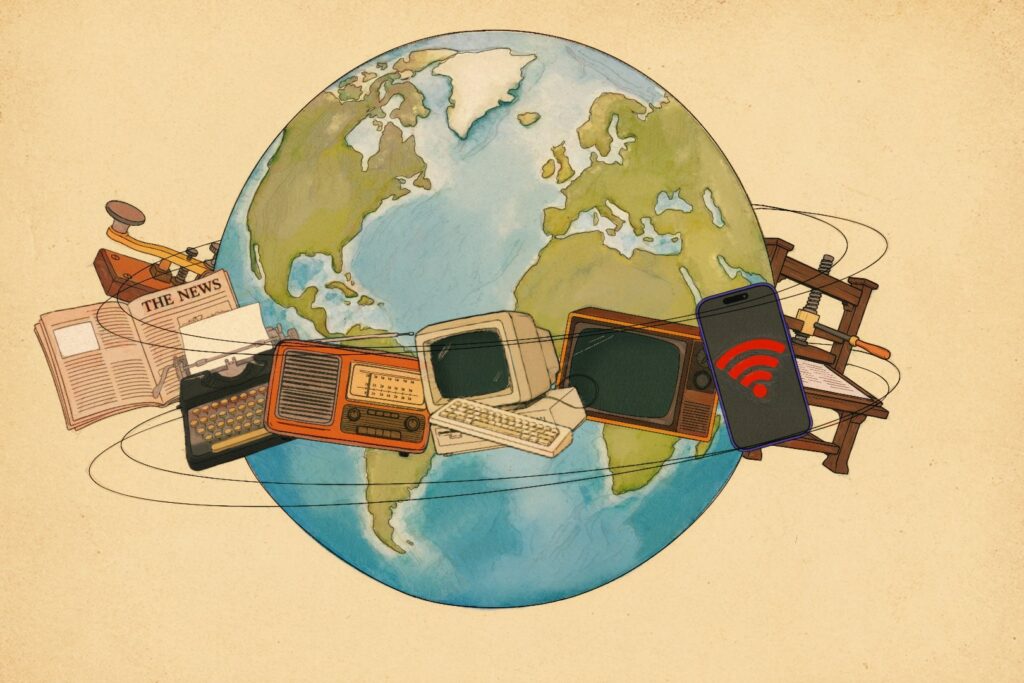
The question of who gets to tell the world’s news is deeply intertwined with power, representation, and the flow of information. Historically, the narrative of global events has largely been controlled by Western media outlets, leading to a dominance that shaped perceptions and understanding around the world. However, the Global South—comprising countries in Latin America, Africa, and Asia—has long recognized the need to challenge this imbalance and assert its own voice in international news.
In the post-colonial era, many nations in the Global South grappled with the legacy of colonial media systems, which often portrayed local realities through a Western lens. This misrepresentation fueled efforts among these countries to create alternative news sources that reflected their perspectives, cultures, and political realities.
One of the earliest and most significant initiatives was the establishment of news agencies and information networks that aimed to provide a counter-narrative to Western news dominance. For example, the Non-Aligned Movement, a coalition of states not formally aligned with any major power bloc during the Cold War, included media cooperation as a core strategy. This group sought to foster dialogue and information exchange independent of Western or Soviet influence.
Organizations like the Association of African News Agencies (AANA), founded in the early 1960s, emerged as key players in promoting African perspectives in the news. These agencies worked collectively to share stories, highlight development issues, and promote African cultural and political identities. Similarly, Latin American countries pursued regional networks to disseminate news that reflected regional aspirations and challenges.
In addition to institutional efforts, there were numerous cultural and intellectual movements across the Global South dedicated to media reform and the democratization of information. Writers, journalists, and activists called for more equitable media representation and fought against stereotypes perpetuated by Western media. The articulation of these demands was crucial for fostering local journalism that could serve the needs of their societies and counteract external biases.
Challenges remained, including limited technological resources, funding difficulties, and sometimes political repression within their own countries. Despite these obstacles, the determination to shape their own narratives laid the groundwork for more balanced global news flows. The early initiatives of the Global South inspired subsequent efforts in the late 20th and early 21st centuries, including the creation of satellite broadcasting, independent news websites, and social media platforms.
Today, while Western media remains influential, the Global South’s contributions to global news are increasingly visible. These efforts underscore the importance of diverse voices in international media, which enrich global understanding by presenting multi-faceted views of events and issues.
Reflecting on the history of the Global South’s push against Western news dominance reveals a larger story about the ongoing struggle for media pluralism and the right to self-representation. It is a testament to the power of information as a tool for empowerment and a crucial chapter in the story of global communication and diplomacy.