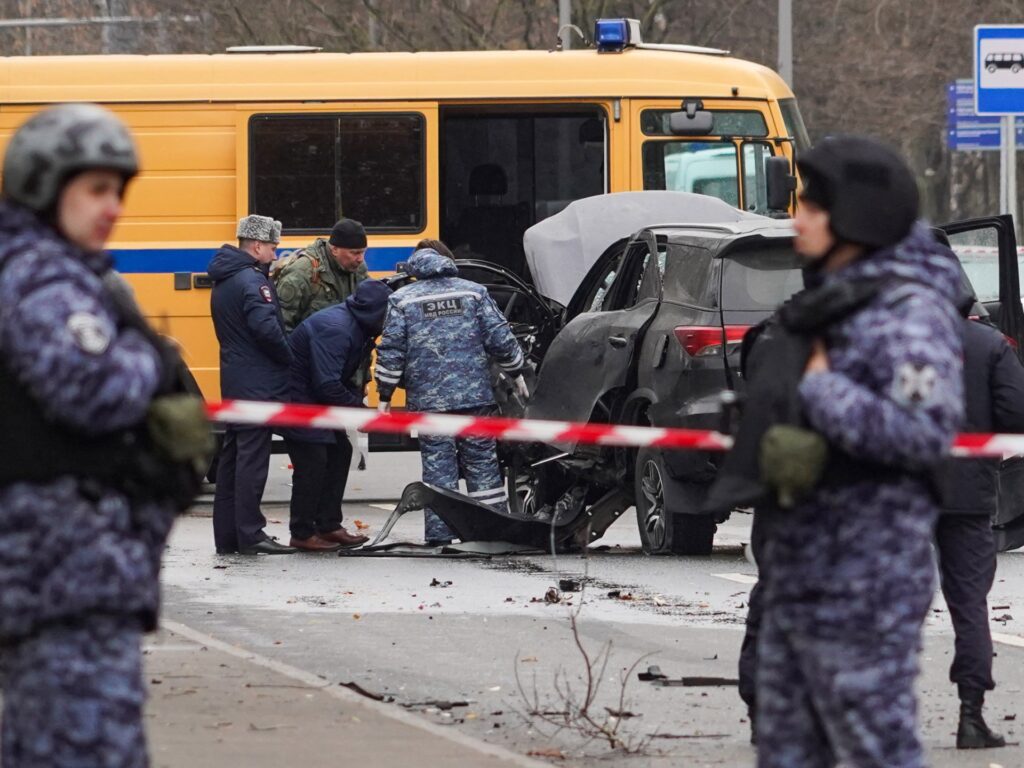
A series of car bombings in Russia have led to the death of a military officer and injured a former adviser to Ukraine’s Prime Minister, escalating tensions amid ongoing conflict concerns. Moscow has quickly blamed Kyiv for orchestrating these attacks, which targeted individuals linked to the war with Ukraine.
The violent incidents have heightened fears of an intensifying conflict spilling beyond conventional battlefields. The deceased military officer was reportedly targeted due to his involvement in operations related to Ukraine, making the attack a direct consequence of the geopolitical crisis between the two nations.
Authorities confirmed that the bombings occurred in several locations, each strategically aimed at people who have a connection to the ongoing war or hold significant military or political influence. The most notable victim, aside from the military officer, is the former adviser to Ukraine’s Prime Minister, who sustained injuries during the bombing but is reported to be in stable condition.
Russian officials wasted no time in blaming Kyiv for the attacks, pointing to these bombings as evidence of Ukraine’s efforts to destabilize Russia internally. This accusation reflects the broader propaganda and information war that has accompanied the physical conflict on the ground.
The car bombings represent a new dimension to the conflict, involving targeted assassinations using explosives, a tactic that could signal a dangerous escalation. Security forces in Russia have increased their vigilance, deploying additional resources to prevent further attacks and to protect high-profile individuals linked to the war.
Experts note that such attacks complicate any prospects for peaceful negotiation, as they increase mistrust and provoke retaliatory measures. The international community has expressed concern over the violence, urging restraint and dialogue to avoid a wider regional conflict.
The ongoing war between Russia and Ukraine has already caused significant casualties and displacement. These recent bombings illustrate the conflict’s expanding reach and highlight the personal risks faced by those involved in or connected to the conflict.
In response to the attacks, Moscow has vowed to intensify its counterterrorism measures and to hold accountable those it deems responsible. Meanwhile, Kyiv has denied involvement in the bombings, labeling the accusations as unfounded and part of a disinformation campaign.
As both sides trade blame, the situation remains volatile with heightened tensions threatening to spiral further. The car bombings serve as a grim reminder of the conflict’s grave human cost and the increasingly dangerous tactics employed by those caught in its shadow.