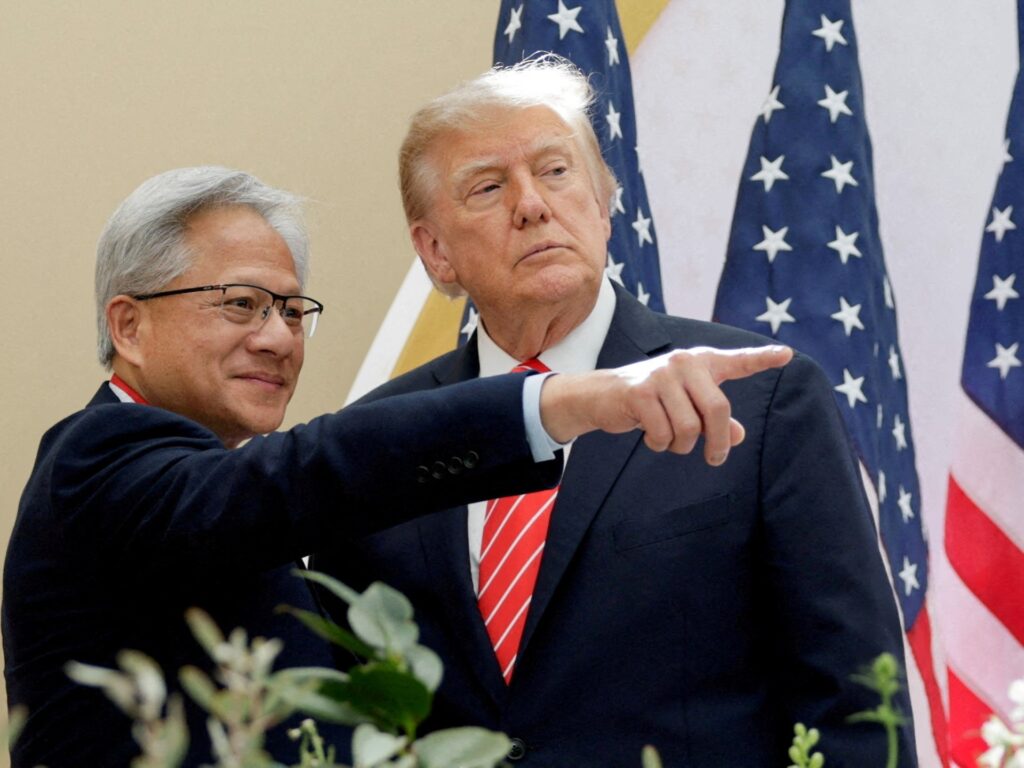
Former President Donald Trump is set to visit China amid a backdrop of escalating tensions and significant developments in the US-China technological and diplomatic landscape. This visit comes at a critical juncture, as the outgoing Nvidia chief, credited with helping to ease the chip-related tensions between the two powerhouse nations, faces a personal scandal. Despite the scandal, analysts suggest it is unlikely to derail the important talks scheduled for next week.
The Nvidia case highlights the intricate dynamics of US-China relations, particularly in the technology sector which is central to both countries’ strategic interests. Nvidia has been a notable player in facilitating dialogue and cooperation between the US and China, especially concerning semiconductor technology, a sector crucial to national security and economic competitiveness.
Trump’s visit is viewed by many as potentially pivotal. His administration was known for its hardline stance against China, particularly regarding trade practices and technological transfers. The current climate, however, suggests a nuanced approach might be in play, balancing the demand for technological leadership with diplomatic engagement.
The scandal involving Nvidia’s chief, while personal and unrelated directly to government affairs, has introduced an element of unpredictability. It raises questions about the influence of private-sector developments on international diplomatic efforts and whether such incidents might sway negotiation dynamics.
Analysts note that the US-China technological rivalry is emblematic of broader geopolitical shifts. Maintaining open communication channels is deemed essential even amid conflicts and controversies. Nvidia’s role in easing chip-related tensions exemplifies how private companies can impact international policy.
Trump’s approach to China during this visit will be closely watched. Will he reinforce previous policies advocating for dominance and containment of Chinese technological advancements, or will he signal a more collaborative posture that acknowledges the complexities of global interconnectedness?
The outcome of next week’s talks could set the tone for the future of US-China relations in technology, trade, and beyond. Industry insiders expect discussions to cover a range of issues, including semiconductor supply chains, intellectual property rights, and market access.
Moreover, the visit underscores the evolving nature of international diplomacy where personal scandals and public perception can ripple into larger geopolitical strategies. However, diplomatic experts largely see Trump’s personal style and policies as the more decisive factors influencing the talks rather than the Nvidia scandal.
In summary, as Trump heads to China, the world waits to see whether his leadership will usher in a tougher stance on Beijing or a strategic pivot aimed at stabilizing one of the most consequential bilateral relationships in the contemporary geopolitical arena. The Nvidia scandal, while notable, is unlikely to overshadow the broader issues at play, but it serves as a reminder of the interconnectedness of private-sector dynamics and international diplomacy in today’s globalized world.