In a powerful display of unity, Poland’s political rivals came together to participate in the ‘March of Silence’ held in Krakow in memory of the recent shooting victims. The event saw the participation of thousands of people from various walks of life, including key political figures such as President Karol Nawrocki and Prime Minister Donald Tusk.
The solemn march was organized to honor and remember those who lost their lives in the tragic shooting incident that has deeply affected the nation. It also served as a call for peace, unity, and a collective stand against violence in society. The presence of the president and prime minister side by side sent a strong message that political differences can be set aside in times of national tragedy.
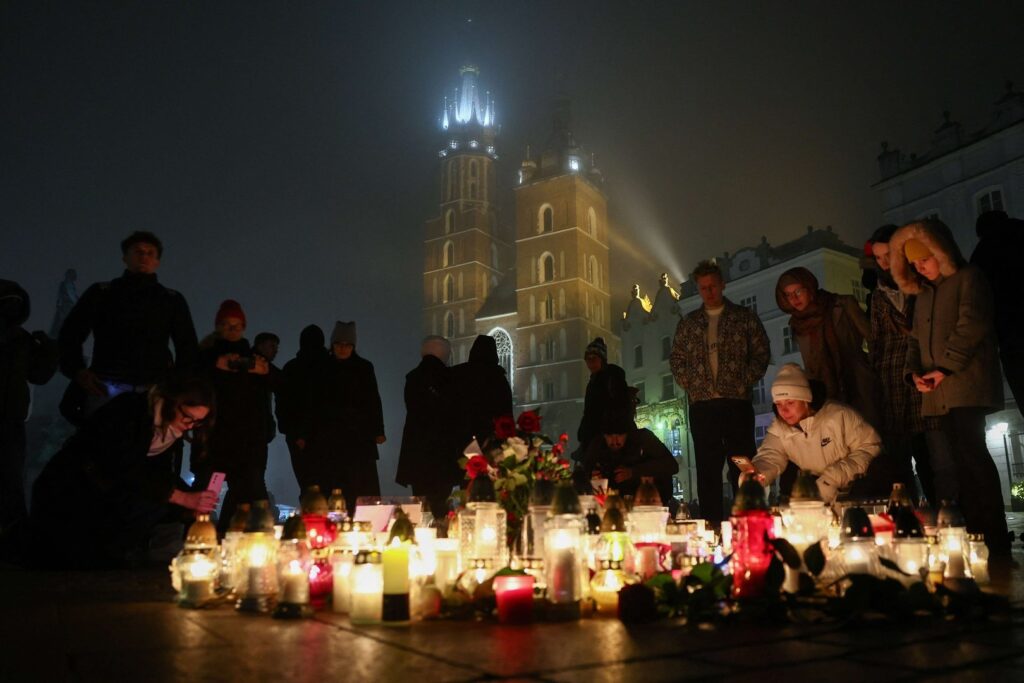
Participants in the march held candles and banners, walking silently through the streets of Krakow. The atmosphere was filled with a sense of mourning but also hope for healing and reconciliation. Organizers emphasized the importance of solidarity among citizens, regardless of political affiliations, to build a safer and more compassionate Poland.
President Nawrocki addressed the crowd, expressing his condolences to the families of the victims and highlighting the need for a united front against violence. Prime Minister Tusk echoed these sentiments, stressing that such acts of violence threaten the very fabric of society and must be confronted collectively.
The ‘March of Silence’ also featured moments of reflection and speeches by community leaders and representatives of the victims’ families. They called for enhanced measures to prevent similar tragedies in the future and encouraged dialogue across political and social divides.
This event is seen as a milestone in Polish politics, illustrating how empathy and humanity can bridge gaps even in a polarized political landscape. The march concluded with a candlelight vigil, as participants paid their last respects and committed to fostering a culture of peace and mutual respect.
Krakow’s residents expressed gratitude for the leadership shown by Nawrocki and Tusk, noting that such initiatives help heal wounds and bring about meaningful change. The march demonstrated the power of collective mourning and the potential for political cooperation in addressing critical national issues.
As Poland continues to grapple with the aftermath of the tragedy, the ‘March of Silence’ stands as a beacon of hope, reminding the nation that unity and compassion are essential in overcoming adversity. It is a poignant reminder that even in the darkest times, solidarity can light the way forward.