In the aftermath of a closely contested election that resulted in a deadlock, Benjamin Netanyahu and Benny Gantz Eisenkot have jointly pushed for the formation of a new government. The election results failed to produce a clear majority, leading to political uncertainty and a call for cooperation between rival leaders.
Benjamin Netanyahu, the leader of the right-wing Likud party, and Benny Gantz Eisenkot, representing the centrist Blue and White alliance, have emphasized the importance of unity in navigating the country’s challenges. Both leaders have expressed willingness to negotiate terms to break the political stalemate.
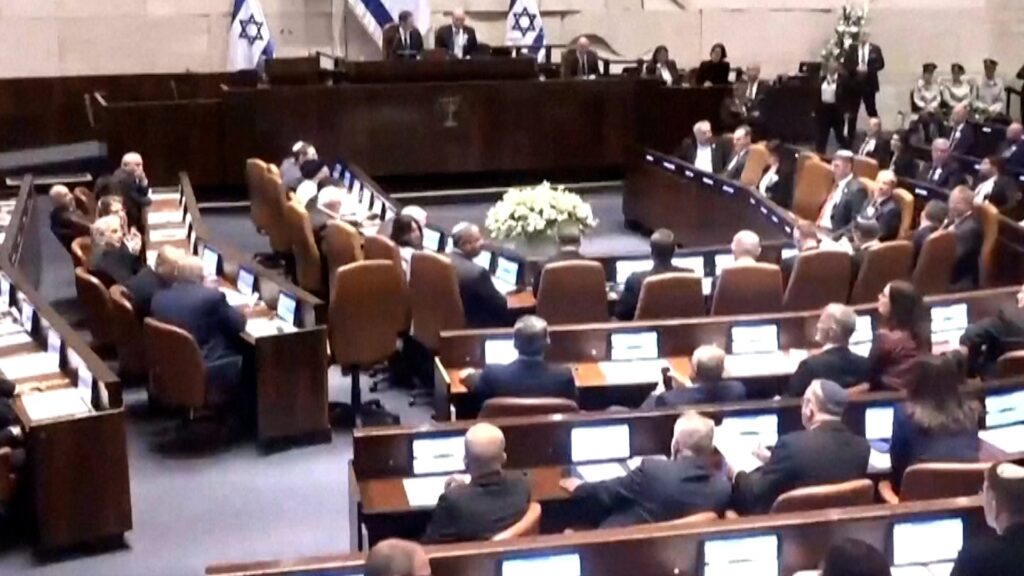
The election deadlock has been attributed to the fragmented nature of the Knesset, Israel’s parliament, with multiple parties securing a range of seats but none achieving dominance. This fragmentation has complicated coalition-building efforts traditionally necessary for establishing a stable government.
In response to the stalemate, Netanyahu and Eisenkot have outlined preliminary discussions indicating a shared interest in forming a coalition government. They have highlighted key policy areas for cooperation, including economic recovery, security, and addressing social issues.
Political analysts view this collaboration as a pragmatic step aimed at maintaining governance and avoiding another election cycle, which could further destabilize the political landscape. Public response has been mixed, with some citizens hopeful for stability and others skeptical about the alliance’s durability given their ideological differences.
The push for a new government entails delicate negotiations with smaller parties to secure the requisite majority in the Knesset. Both Netanyahu and Eisenkot are reportedly in talks with potential coalition partners, balancing political priorities and concessions.
Observers note that the success of these efforts depends largely on the willingness of the involved parties to compromise and prioritize national interests over partisan agendas. The ongoing discussions signal a potential shift in Israel’s political dynamics, with a focus on consensus-building amidst a period of uncertainty.
As the situation develops, the international community is watching closely, recognizing the implications of Israel’s political stability on regional and global matters. The coming days will be critical in determining whether Netanyahu and Eisenkot can overcome their differences to establish a functioning government after the election deadlock.