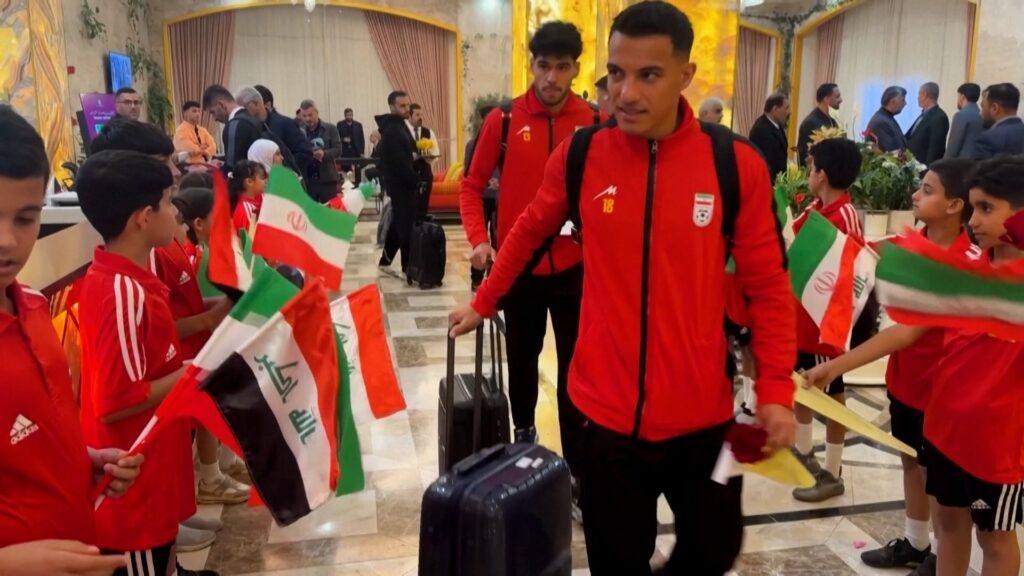
In a significant move underscoring the complexities of international relations and sanctions enforcement, Iraq has prevented Iran’s national football team from landing in the southern city of Basra. The decision comes as a direct result of US-imposed sanctions on certain Iranian airlines.
The incident occurred when the Iranian national football team, scheduled to participate in an international match or event hosted in Basra, was denied permission to land. Iraqi aviation authorities cited compliance with US sanctions targeting specific Iranian airlines as the reason behind the denial.
This development reflects the broader geopolitical tensions surrounding Iran and the United States, extending even into the realm of sports. The US has maintained a series of sanctions on Iran, particularly focusing on sectors including transportation and aviation, which aim to limit Iran’s international connectivity and economic reach.
The sanctions have led to various complications for Iranian entities attempting to travel or operate abroad, and this latest case highlights how these restrictions can also affect cultural and sporting exchanges.
For Iraq, the decision places the country in a delicate position, balancing its regional relationships and diplomatic ties. Historically, Iraq has maintained a complex relationship with Iran, involving both cooperation and rivalry. Complying with US sanctions in this instance may be viewed as aligning with international pressure, but it also risks straining regional goodwill.
The denied landing has caused disappointment among fans and officials who had anticipated the match or event. It remains unclear how organizers will address the situation, whether by rescheduling, relocating, or seeking exemptions.
This episode underscores how international sanctions can have unintended consequences beyond their primary economic targets, impacting sports diplomacy and cultural exchanges. It also raises questions about the future of sporting events involving Iranian teams traveling through countries adhering to US policies.
As the situation develops, stakeholders including sports federations, government officials, and international organizations may need to consider how to navigate the intersection of geopolitics and sports to minimize disruptions and foster continued international engagement.