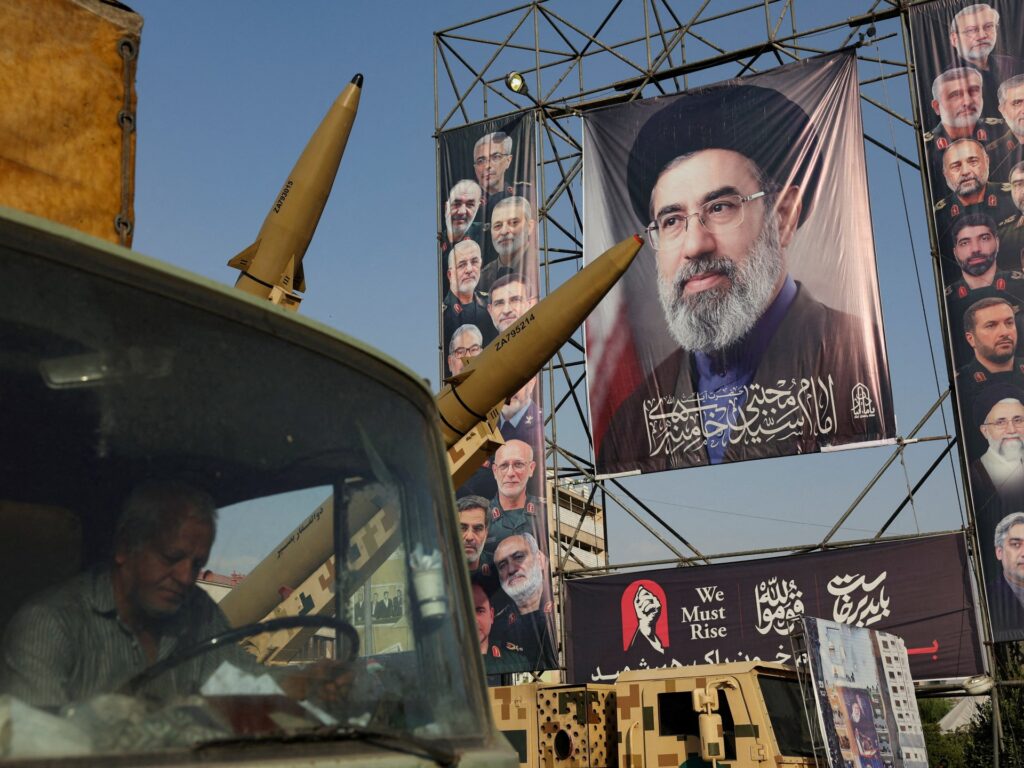
Iran has officially removed its self-imposed 2,000km range limit on ballistic missiles, a move signaling a potential shift in its military strategy and regional security dynamics. This announcement marks a significant development in Tehran’s defense policy, as the previous range cap was widely seen as an attempt to project power regionally without overtly threatening neighbors beyond the Middle East.
The key question experts are now asking is whether this new policy signals Iran’s intention to develop and possibly deploy longer-range ballistic missiles that could strike targets beyond its traditional geographic focus, the Middle East. Lifting the range constraint allows for the possibility of missile development capable of reaching parts of Europe, Asia, and Africa.
Historically, Iran’s missile program has been a point of contention in international relations, particularly with the United States, Israel, and Gulf Cooperation Council (GCC) countries, who view Tehran’s missile capabilities as a direct threat to regional stability. The previous 2,000km range limit was perceived as a tacit acknowledgement by Iran to limit its missile reach and avoid provoking wider international confrontation.
With the lifting of the range restriction, Iran theoretically could enhance the reach of its missiles, increasing its strategic deterrence and offensive capabilities. This could alter power balances and provoke changes in military posturing and alliances among neighboring countries as well as globally.
Analysts suggest that the move might be aimed at countering perceived threats from adversaries who possess longer-range missile capabilities, including the United States and its allies. It may also be part of Iran’s broader strategy to assert itself as a dominant regional power with extended influence.
The technological aspect of developing such long-range ballistic missiles involves overcoming significant engineering challenges, including propulsion, guidance systems, and payload delivery. Iran’s past missile developments, including the Shahab series and the more recent Khorramshahr missile, demonstrate growing sophistication but also raise questions about the accuracy and reliability of expanded-range systems.
There are concerns that Iran’s extended missile range could increase the risk of proliferation, as Tehran might provide missile technology or expertise to allied non-state actors or proxy forces in the region. This possibility heightens fears regarding escalation and instability, especially in volatile areas like Yemen, Syria, and Lebanon.
The international community, including the United Nations and key global powers, may respond with heightened sanctions or diplomatic efforts to curb Iran’s missile capabilities, depending on how Tehran proceeds with this new policy. This decision by Iran will be closely monitored for signs of missile tests or deployments that might confirm the expansion of its ballistic missile arsenal beyond the current norms.
In conclusion, Iran’s removal of the 2,000km range limit on its ballistic missiles introduces uncertainty and complexity into an already tense regional security environment. Whether this policy change translates into operational longer-range missiles or remains a strategic signal depends on various factors, including Iran’s technological progress, international diplomatic pressures, and regional geopolitical developments. What is clear is that the decision reflects Tehran’s intent to enhance its military capabilities, potentially shifting strategic calculations not only in the Middle East but also farther afield.