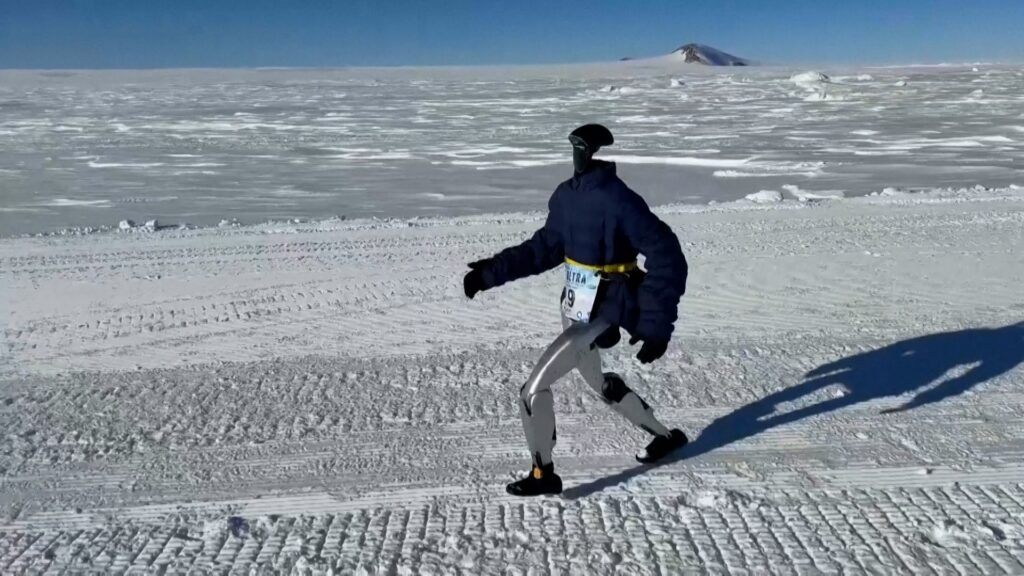
In an unprecedented event that captured global attention, a humanoid robot took a bold leap into the world of extreme sports by competing in an ultra-marathon held in the harsh environment of Antarctica. This ultra-marathon, known for its brutal conditions including freezing temperatures, biting winds, and treacherous terrain, pushed human endurance to its limits. The robot, designed to mimic human locomotion and endurance, aimed to test the boundaries of robotics in one of the most challenging natural settings on Earth.
The competition drew seasoned runners from around the world, all vying to conquer the unforgiving Antarctic landscape. Against this backdrop of human grit and resilience, the humanoid robot’s participation was both a technological trial and a symbolic gesture towards the future intersection of robotics and human activities.
Equipped with sensors and advanced locomotion technology, the robot was programmed to navigate the icy trails and maintain a steady pace. However, despite meticulous preparation and engineering, the robot encountered significant difficulties. The extreme cold negatively affected its power systems, and the uneven ice and snow proved too complex for its balance and movement algorithms. Midway through the race, the robot faltered and was unable to continue competing.
Although the robot did not complete the marathon, the attempt was far from a failure. Engineers and scientists gathered data and insights that are invaluable for future enhancements in robotic mobility and endurance in harsh environments. This experiment highlighted the current limitations of humanoid robots but also emphasized their potential for roles in exploration, search and rescue, and other applications where humans face extreme conditions.
The Antarctic ultra-marathon event underscored the resilience of human athletes who braved the cold to complete this punishing race. Meanwhile, the humanoid robot’s participation marked a significant milestone in robotics development, showcasing the ambitious stride towards machines that can perform alongside humans in the most extreme scenarios.
The lessons learned from this historic attempt will undoubtedly fuel innovation. Future humanoid robots might overcome these obstacles with improved battery technology, enhanced AI for terrain navigation, and more robust materials to endure environmental stress. This pioneering venture into blending robotics with extreme sports offers a glimpse into a future where humans and robots may share the path in extreme endurance challenges and beyond.