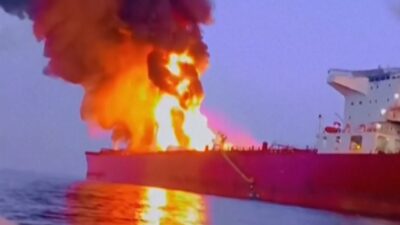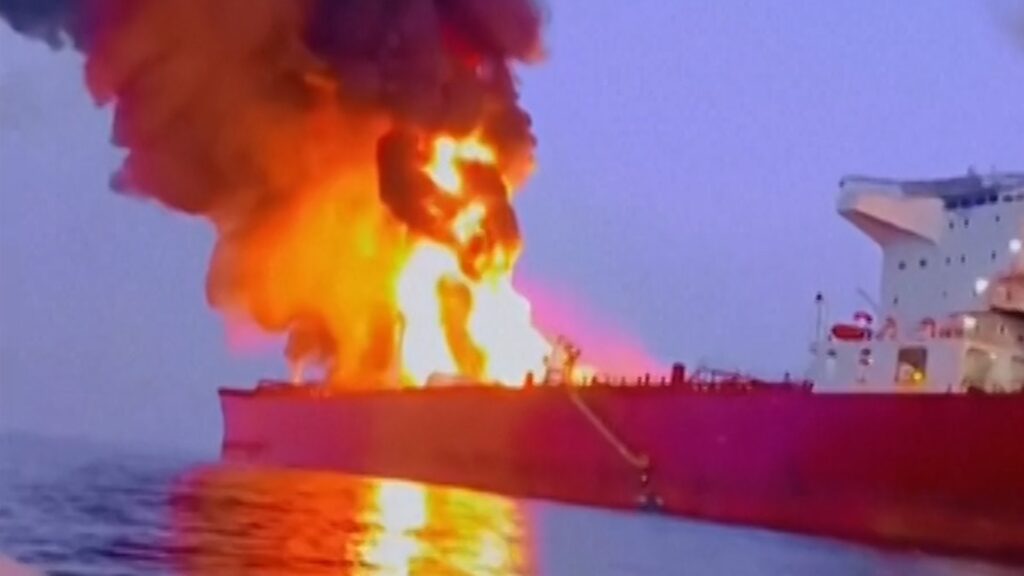
In a recent escalation of tensions in the Middle East, Iran’s Islamic Revolutionary Guard Corps (IRGC) announced that it struck three oil tankers near the strategic Strait of Hormuz. The operation took place on Sunday and targeted vessels allegedly linked to the United States. The incident led to a significant oil tanker catching fire close to the Strait, a crucial chokepoint responsible for a substantial portion of the world’s maritime oil trade.
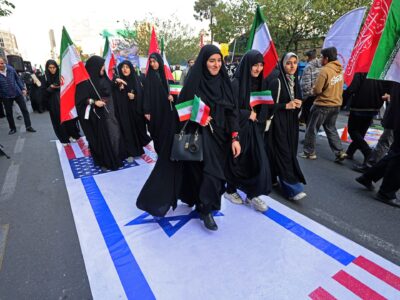
The IRGC, a powerful branch of Iran’s military establishment, justified its actions by citing the tankers’ connections with the US, which Tehran has consistently accused of hostile intentions towards the region. This strike marks one of the latest developments in a series of confrontations between Iran and Western powers, particularly involving maritime security in the Persian Gulf.
The Strait of Hormuz is critical for global energy supplies, with approximately 20% of the world’s petroleum passing through this narrow waterway. Any disruption there has immediate repercussions on global oil prices and regional stability. The attack has raised international alarm, prompting calls for restraint and urgent dialogue to de-escalate the situation.
Analysts interpret the IRGC’s actions as a response to ongoing sanctions and military pressure from the United States and its allies. Iran’s leadership views such measures as attempts to undermine its sovereignty and economic well-being, thus opting for demonstrations of force to assert its deterrence capability.
The affected tankers were reportedly multinational vessels, further complicating the diplomatic fallout from the incident. Maritime insurance providers and shipping companies are expected to reassess their risk exposure in the Persian Gulf, potentially increasing operational costs and routing adjustments.
International organizations and governments have condemned the attack, urging all parties to pursue peaceful solutions to avoid escalation into broader conflict. The United Nations and the International Maritime Organization have highlighted the necessity of safeguarding international waterways and ensuring freedom of navigation.
The Iranian government has maintained a stance that its naval operations are defensive and lawful under international law, emphasizing the protection of its territorial waters and national interests. Meanwhile, the US and its allies have hinted at reinforcing their naval presence in the Gulf to deter further aggression.
This development underscores the fragile security environment in the Persian Gulf and the high stakes involved for global energy markets and geopolitical relations. Observers will be closely monitoring subsequent diplomatic engagements and military movements in the region.
In summary, the IRGC’s strike on three oil tankers near the Strait of Hormuz represents a significant escalation in regional tensions, highlighting ongoing disputes between Iran and the United States. The incident has immediate implications for maritime security, global oil supply, and international diplomatic efforts aimed at maintaining peace in one of the world’s most volatile areas.