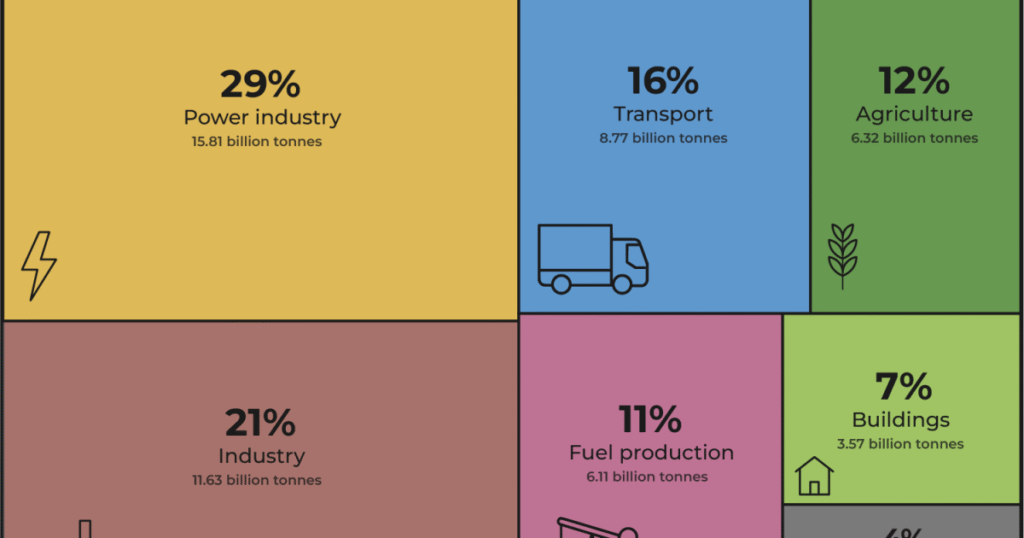
Greenhouse gas emissions are a critical driver of global climate change, with some countries and industries contributing disproportionately to the problem. Historically, the United States has emitted the most carbon dioxide (CO2) due to its long industrial history and high per capita energy consumption. However, in recent years, China has overtaken the U.S. as the world’s largest annual emitter of CO2, reflecting its rapid industrialization and economic growth.
### Top Emitting Countries
1. **China**: Currently the largest emitter, China’s emissions are fueled primarily by coal-based power generation, heavy industries like steel and cement production, and increased transportation demand. Despite efforts to expand renewable energy, its overall emissions continue to grow because of economic development and urbanization.
2. **United States**: Historically responsible for the largest share of global emissions, the U.S. remains a top emitter due to transportation, energy production, industrial processes, and agriculture. Although emissions have declined somewhat in recent years thanks to energy efficiency and cleaner fuels, the country remains a major player.
3. **India**: Rapid economic growth and population increase have made India one of the top global emitters. Coal remains the dominant fuel source for electricity generation, and industry and transportation are also significant contributors.
4. **European Union**: Collectively, the EU member countries emit a significant portion of global greenhouse gases, with substantial reductions in recent decades due to policies promoting renewable energy, efficiency, and carbon pricing.
5. **Russia, Japan, Brazil, and others**: These countries also contribute notably to global emissions, largely due to fossil fuel consumption in energy production, industry, and transportation.
### Leading Industries in Greenhouse Gas Emissions
– **Energy Production**: The largest source globally, especially coal, oil, and natural gas used in electricity generation and heating. Fossil fuel combustion emits large amounts of CO2.
– **Industry**: Cement, steel, chemical production, and other heavy industries release CO2 and other greenhouse gases during manufacturing processes.
– **Agriculture**: Produces methane (CH4) and nitrous oxide (N2O) through livestock digestion, manure management, rice cultivation, and fertilizer use.
– **Transportation**: Road vehicles, aviation, shipping, and rail contribute significantly via burning gasoline, diesel, and jet fuel.
– **Land Use and Forestry**: Deforestation and land-use changes release stored carbon dioxide and reduce the planet’s ability to absorb emissions.
### Conclusion
While the United States holds the historical record for total CO2 emissions, China is now driving global emissions upward with its current high output. Countries like India and regions like the European Union play crucial roles as well. To combat climate change, it is essential to target these major emitters and their key industries, transitioning to cleaner energy sources, enhancing energy efficiency, and adopting sustainable agricultural and land-use practices worldwide.