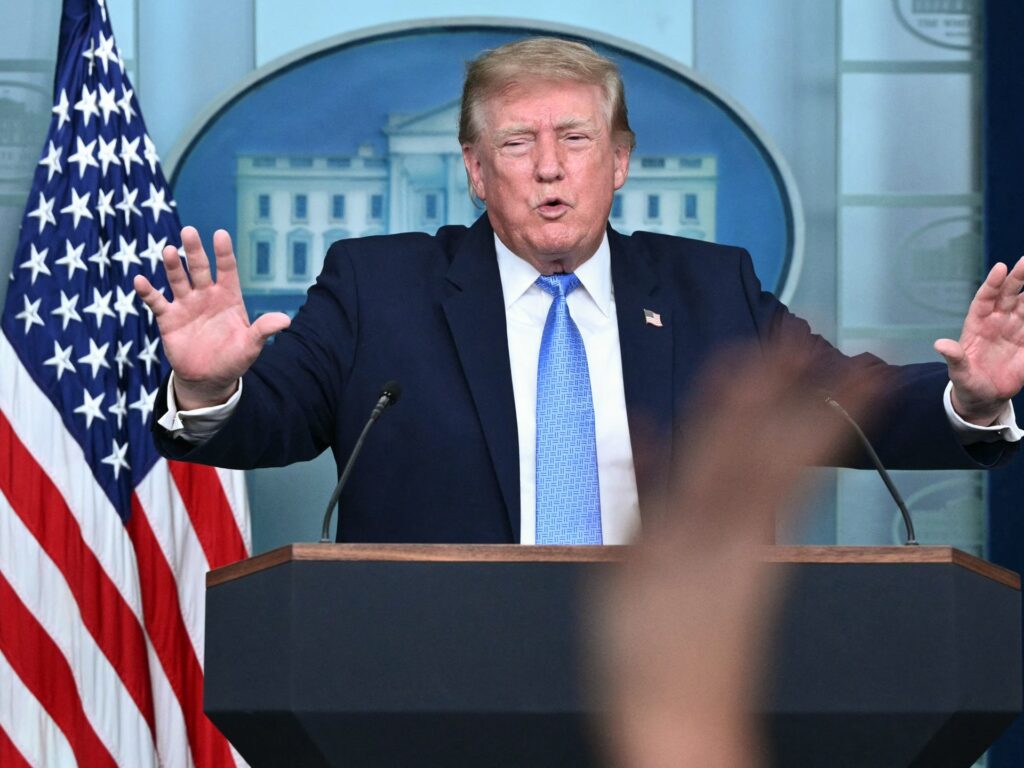
Following a significant diplomatic meeting with Qatar’s Prime Minister, former U.S. President Donald Trump declared that the military conflict involving Iran is “effectively over.” This bold statement came as Trump suggested that the international community should maintain the “status quo” regarding the ongoing tensions with Iran.
Trump’s remarks marked a notable moment in the complex and often volatile relationship between the United States and Iran. By emphasizing the end of active military hostilities, Trump appeared to propose a shift away from escalating conflict towards a more stable, controlled engagement.
However, Iranian officials promptly dismissed Trump’s comments, branding them as “fake news.” They expressed skepticism about any claims suggesting a resolution or de-escalation of the military situation, indicating that the underlying tensions and disputes remain unresolved.
The meeting with Qatar’s Prime Minister was reportedly focused on regional security and diplomatic efforts to address various Middle Eastern conflicts. Qatar, known for its mediation role in regional disputes, was seen as a strategic partner in facilitating dialogue and easing tensions.
Trump’s characterization of the Iran conflict as “effectively over” militarily is significant because it contrasts with ongoing reports of clashes, proxy conflicts, and a fragile ceasefire in various hotspots across the region. His call to maintain the status quo may reflect a preference for avoiding new military engagements while managing the existing challenges through diplomacy and strategic patience.
The international community has been closely monitoring the situation in Iran and the broader Middle East due to its implications for global security, energy markets, and geopolitical alliances. Trump’s statement adds a new dimension to the discourse, potentially influencing how other nations approach negotiations and conflict management concerning Iran.
Critics and analysts have debated the reality behind Trump’s optimistic assessment, pointing out that while direct U.S.-Iran military confrontation may have decreased, numerous proxy battles and political tensions continue to destabilize the region.
Meanwhile, Iranian leaders continue to assert their sovereignty and regional ambitions despite international pressures. They have reiterated their commitment to defensive readiness and strategic partnerships across the Middle East.
The divergent perspectives between Trump and Iranian officials highlight the complexity of Middle Eastern diplomacy and the challenges in achieving lasting peace and stability.
In conclusion, Trump’s declaration following his meeting with Qatar’s Prime Minister signals a potential shift in U.S. rhetoric towards Iran, emphasizing a preference for stability over military confrontation. Nonetheless, the differing reactions underscore that the situation remains fluid and that the path toward peaceful resolution is fraught with ongoing political and security challenges.