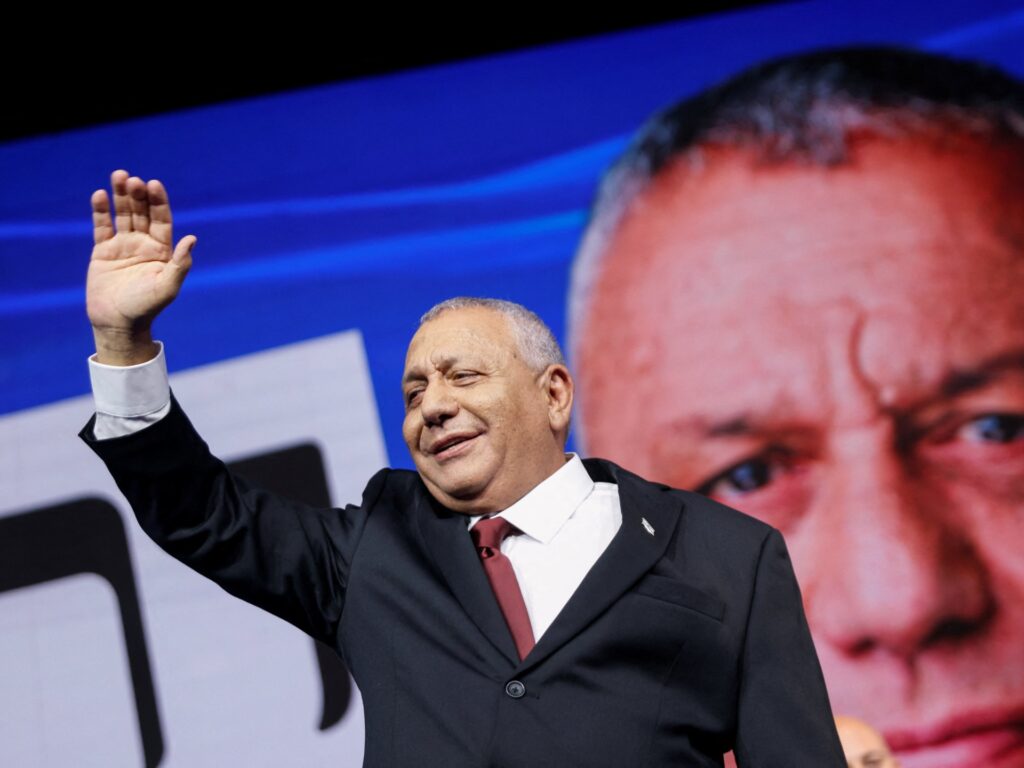
In a significant political development in Israel, President Isaac Herzog has officially tasked Benny Gantz Eisenkot with forming the next government, bypassing the incumbent Prime Minister Benjamin Netanyahu. This decision marks a pivotal moment as Eisenkot now has 28 days to secure a majority in the Knesset, specifically 61 seats, to replace Netanyahu as the Prime Minister.
Eisenkot’s selection by President Herzog reflects a shift in the political landscape and the complex dynamics within Israeli politics. The President’s mandate gives Eisenkot the constitutional responsibility to negotiate and build a coalition that can command a majority in the 120-seat Knesset, Israel’s parliament.
Benjamin Netanyahu, who has served multiple terms as Prime Minister, now faces the prospect of stepping down if Eisenkot succeeds in forming a government within the given timeframe. Netanyahu’s likelihood of losing the premiership indicates a broader shift in the political alliances and voter sentiment within the country.
Eisenkot’s challenge is considerable. Forming a coalition requires not only securing the support of a diverse array of political factions but also navigating complex ideological differences. The Israeli parliament is known for its multiplicity of parties, making coalition-building a delicate and often protracted process.
The announcement by President Herzog follows recent elections that demonstrated a fragmented vote distribution, thereby complicating the path to a stable government. Eisenkot’s task is to unify this fragmented Knesset into a functional and stable governing body.
Political analysts suggest that Eisenkot’s prior military experience and relatively moderate political stance may be advantageous in coalition negotiations. His pragmatic approach contrasts with Netanyahu’s combative political style. This could facilitate alliances with centrist and left-leaning parties, as well as enable engagement with some right-wing factions.
The 28-day deadline placed by President Herzog emphasizes the urgency of forming a government to avoid political instability. Failure to form a government within this timeframe could lead to new elections, further prolonging the political uncertainty in Israel.
This development also has implications for domestic policy and international relations. A new leadership under Eisenkot may signal shifts in policies related to security, economy, and foreign affairs, particularly concerning Israeli-Palestinian relations and regional diplomacy.
Public reaction in Israel has been mixed, with supporters of Netanyahu expressing concern about potential changes, while others view Eisenkot’s mandate as an opportunity for renewed direction and stability.
Eisenkot has yet to unveil detailed plans for coalition negotiations or policy priorities but is expected to engage actively with party leaders across the spectrum. This process is keenly watched both domestically and internationally, given Israel’s geopolitical significance.
In summary, President Isaac Herzog’s decision to select Benny Gantz Eisenkot to form the next government is a landmark moment in Israeli politics. Eisenkot’s success or failure in securing a majority will determine the country’s political path forward and the future of its leadership.