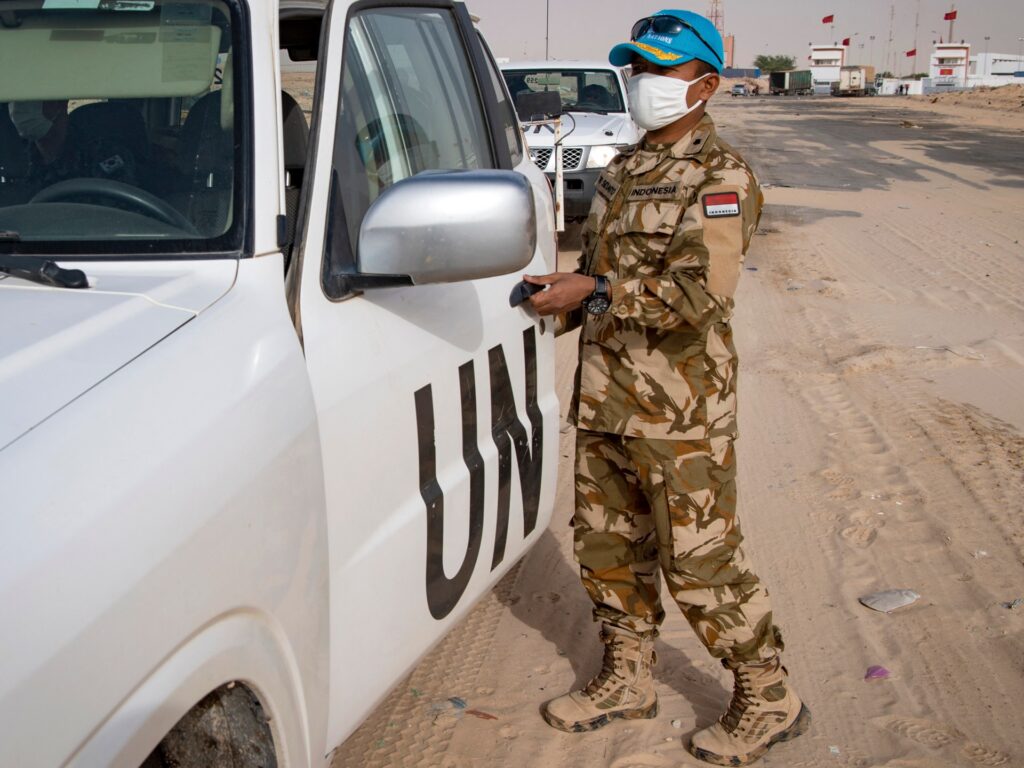
The United Nations has issued a warning about escalating security risks in Western Sahara following the conclusion of its peacekeeping mission, MINURSO, which has been active in the region since 1991. The mission was initially established to oversee a ceasefire between conflicting parties and to facilitate a referendum on self-determination for the Sahrawi people, a referendum that has yet to take place.
For over three decades, MINURSO’s presence has been pivotal to maintaining a fragile peace between Morocco, which claims sovereignty over Western Sahara, and the Polisario Front, which seeks independence for the territory. The departure of this mission raises concerns about renewed violence and instability in the area.
The mission’s end marks a significant transition in a region characterized by a long-standing territorial dispute rooted in the era of colonial withdrawal and competing nationalist claims. Despite the ceasefire agreement, sporadic clashes and tensions have persisted, underscoring the complexity and volatility of the conflict.
The United Nations highlights that without the peacekeeping forces acting as a buffer, there is an increased likelihood of escalated confrontations between the parties involved. The area, rich with natural resources and strategic importance, has attracted international attention and complicated diplomatic efforts.
Local populations face uncertainty as security diminishes, with the risk of displacement and humanitarian crises rising. Additionally, the absence of the mission hinders monitoring and reporting mechanisms that have been essential in documenting ceasefire violations and advocating for peaceful resolution.
Efforts to revive talks and push for a political solution remain critical. The UN continues to emphasize the importance of dialogue, respect for human rights, and adherence to international law as fundamental to achieving lasting peace.
Regional actors and international stakeholders are urged to support initiatives aimed at stabilizing the situation. The end of MINURSO does not signify the end of the international community’s responsibility to engage constructively with all parties involved.
As the situation develops, the focus shifts to diplomatic channels, confidence-building measures, and humanitarian assistance to prevent a deterioration of security conditions in Western Sahara.
The legacy of MINURSO serves as a reminder of the enduring challenges in resolving protracted conflicts and the crucial role of peacekeeping missions in conflict management. The coming months will be critical in shaping the future trajectory of the Western Sahara conflict and the prospects for peace and stability in the region.