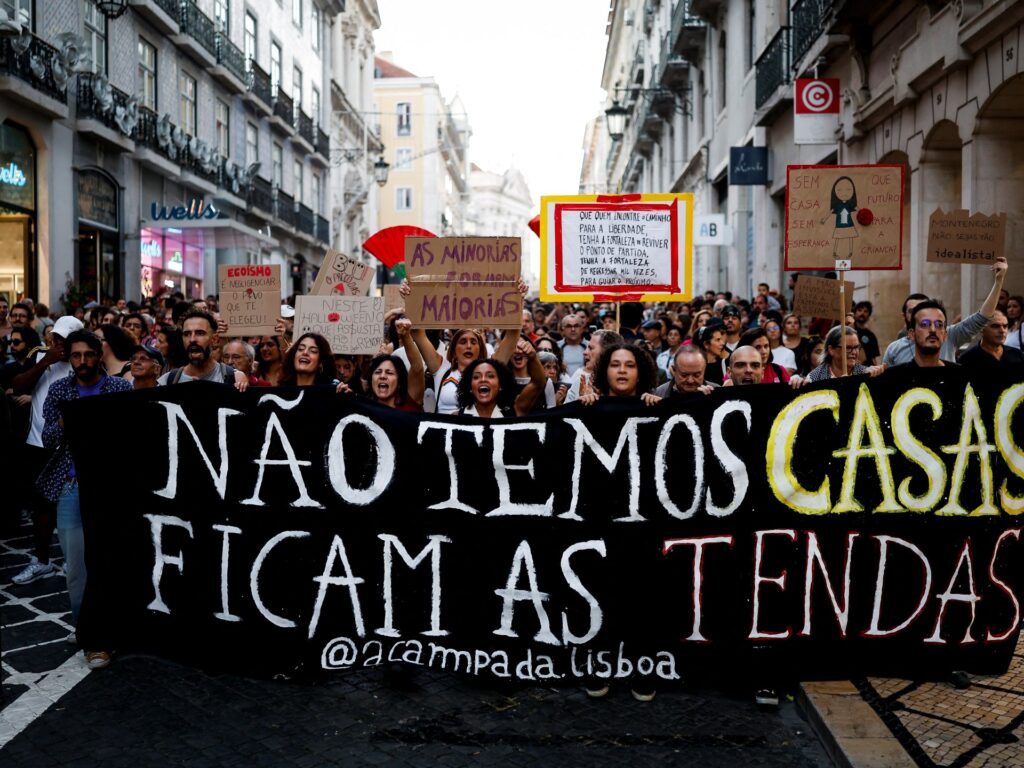
In the early hours of Sunday, a significant police operation took place at Rossio Square in Lisbon, Portugal, where dozens of officers stormed housing protest camps. The operation involved numerous officers, some accompanied by police dogs, signaling a robust police presence aimed at dispersing the demonstrators. Housing protests have been a growing issue in Lisbon amid rising housing costs and increased homelessness, with citizens demanding more affordable and accessible living options. The protest camps at Rossio Square had become a focal point for activists and those directly affected by the housing crisis, symbolizing the urgent call for government intervention. Authorities justified the operation by citing concerns over public safety, unauthorized occupation of public spaces, and the need to restore order in the city center. Witnesses reported that while the police operation was forceful, it avoided severe confrontations. Several protesters were detained during the raids, raising concerns among human rights organizations about the balance between maintaining public order and respecting the right to peaceful protest. This incident highlights the ongoing tensions between marginalized groups in Portugal and government policies related to urban housing. The Lisbon housing crisis reflects broader European trends where cities face affordability challenges exacerbated by economic pressures and population growth. Following the police clearing, city officials announced plans to increase dialogue with community leaders and explore solutions to the housing shortage. The operation at Rossio Square marks a critical moment in the escalating housing debates in Portugal, underscoring the urgency of addressing the needs of vulnerable populations. Public reactions have been mixed, with some applauding the police action as necessary for public order, while others criticize it as heavy-handed and counterproductive to social equity goals. International observers and local NGOs have called for a measured approach that balances enforcement with social support programs. The government now faces pressure to develop more comprehensive housing policies that can prevent such conflicts while ensuring citizens’ basic rights are protected. Experts suggest that affordable housing initiatives, rental controls, and increased social housing stock are essential components in resolving these urban challenges. This event may prompt further civic engagement and policy revisions as Portugal grapples with ensuring equitable access to housing. The Rossio Square protest camps and the subsequent police action have brought national attention to the housing crisis and its human impact, potentially shaping policy agendas in the near future. As the situation evolves, stakeholders are urged to prioritize dialogue and human rights while addressing the structural factors behind housing insecurity in Lisbon and beyond.