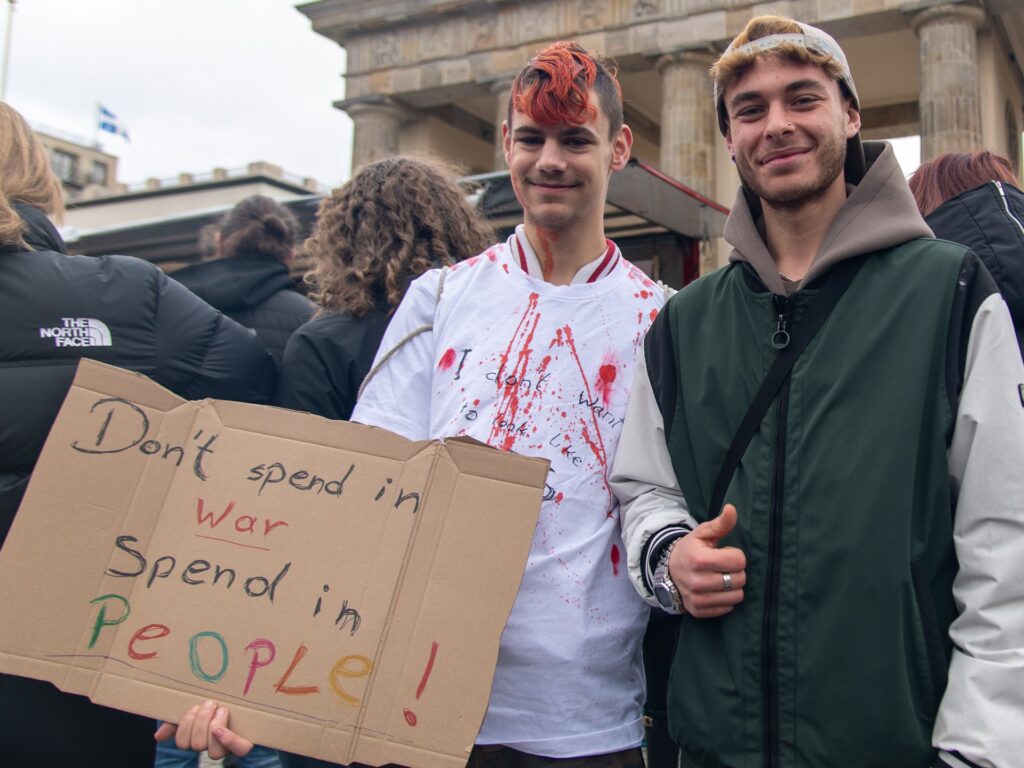
Thousands of young people gathered in Berlin, marking the peak of a widespread protest movement led by Generation Z across Germany. These demonstrations, taking place in more than 30 cities, highlight the growing frustration among young Germans regarding the rising cost of living and increased military expenditure.
The protests have been part of a larger wave of demonstrations sweeping through Europe, inspired by similar movements advocating for economic fairness and social justice. Young people, particularly those belonging to Gen Z, are voicing their concerns about how economic policies are affecting their futures.
In Berlin, the rally saw thousands congregate in the city center, carrying banners and chanting slogans that criticized government priorities. Many protesters expressed discontent over the government’s decision to allocate more funds to military spending while the cost of housing, education, and everyday essentials continues to climb.
Participants in the protests emphasized that their generation is bearing the brunt of economic challenges such as inflation and housing shortages. Many fear that the focus on military funding diverts resources from critical social programs that could alleviate their financial burdens.
Social media has been a vital tool in organizing these protests, with young activists using platforms to mobilize participants and share information. The movement has gained momentum as youths see their struggles reflected across national borders, connecting with peers in countries facing similar issues.
Experts note that the protests are not only about economic concerns but also about a deeper demand for a re-evaluation of political priorities. The desire for a sustainable and equitable future resonates strongly among Gen Z, who often criticize traditional politics for ignoring the long-term consequences of current decisions.
German officials have acknowledged the protests, with some politicians calling for dialogue and greater attention to youth issues. However, the government maintains that increased military spending is necessary in light of global security challenges.
Despite this, the young protesters remain defiant, insisting that peace and social welfare should take precedence over military expansion. Many see the rising costs of living as interconnected with broader policy choices and advocate for comprehensive reforms.
The movement in Germany mirrors similar protests across Europe, where youths are increasingly rallying to demand change. Their united message is clear: economic justice and responsible governance must become priorities to ensure a stable and prosperous future for all generations.
As the demonstrations continue, the voices of Gen Z are becoming harder to ignore, signaling a potential shift in political discourse and policy-making across the continent. The energy and determination of young protesters underscore their commitment to shaping a better tomorrow, one where their concerns are heard and addressed.