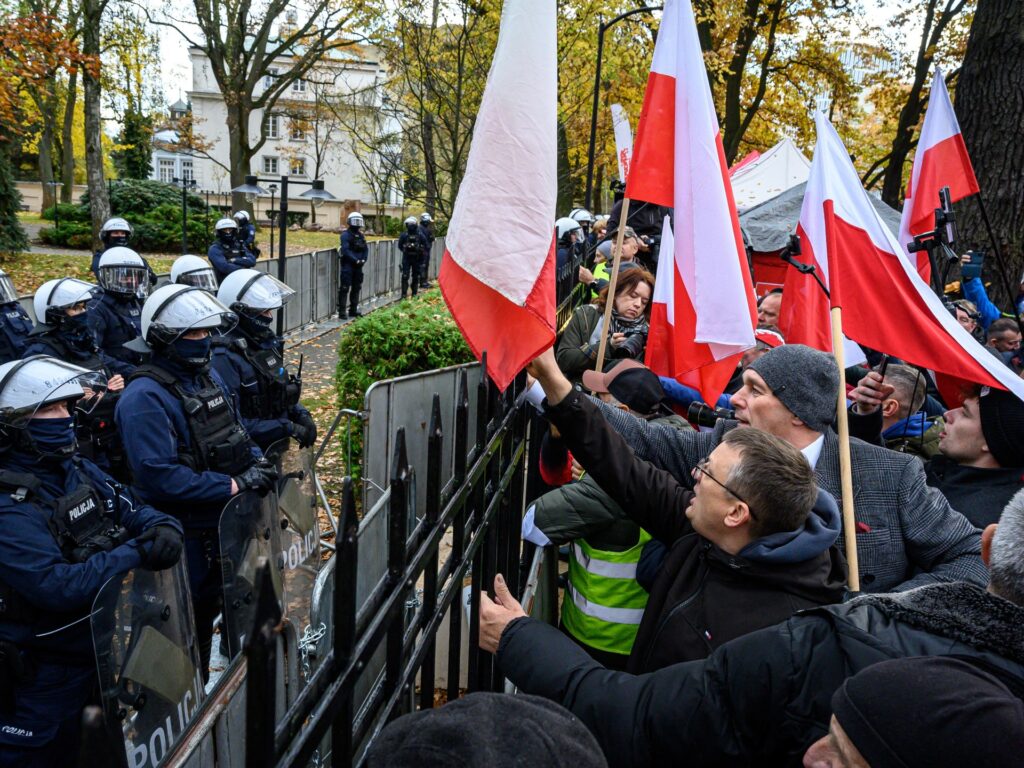
The political dispute revolving around Poland’s constitutional court has escalated into a significant crisis, as key stakeholders remain entrenched in their positions with no signs of compromise. The situation has prompted the Polish president to hold urgent crisis talks in an effort to defuse the mounting tension.
The core of the conflict lies in accusations of politicization of the constitutional court, a crucial institution responsible for upholding the nation’s laws and constitution. Critics argue that recent judicial appointments and decisions have been influenced by political interests, undermining the court’s independence and integrity.
Opposition parties and legal experts have expressed concerns about the erosion of democratic checks and balances, fearing that government interference threatens judicial impartiality. The dispute has polarized policymakers and citizens alike, reflecting broader struggles over the rule of law in Poland.
In response to the escalating situation, the Polish president has convened talks aimed at reaching a consensus to preserve the constitutional court’s credibility and stability. These discussions involve representatives from various political factions, judicial authorities, and civil society groups.
Despite the urgency of these crisis talks, participants have reported no immediate breakthroughs, as each side remains firm in defending their stance. The president has emphasized the importance of dialogue and compromise to prevent further deterioration of the political and legal climate.
The international community is closely monitoring the developments, concerned about potential ramifications for Poland’s democratic institutions and its obligations within the European Union. The EU has previously criticized attempts to undermine judicial independence in member countries, viewing such actions as threats to the union’s foundational principles.
As the standoff continues, the public’s confidence in the constitutional court and the broader judicial system is at risk. Civilians and watchdog organizations have called for transparent, fair, and depoliticized judicial processes to restore trust.
The crisis encapsulates larger issues facing Poland and other democracies globally, highlighting challenges related to governance, the separation of powers, and safeguarding judicial autonomy against politicization.
Moving forward, the outcome of the president’s crisis talks could set a precedent for how Poland addresses conflicts between political authority and the judiciary. Success in achieving a compromise could reinforce democratic norms, while failure might deepen divisions and provoke further institutional instability.
In conclusion, the Polish president’s engagement in crisis discussions over the constitutional court dispute marks a critical moment in the nation’s ongoing struggle to balance political interests with judicial independence. The situation remains fluid, with the hope that constructive dialogue will pave the way for a resolution that upholds the rule of law and democratic governance.