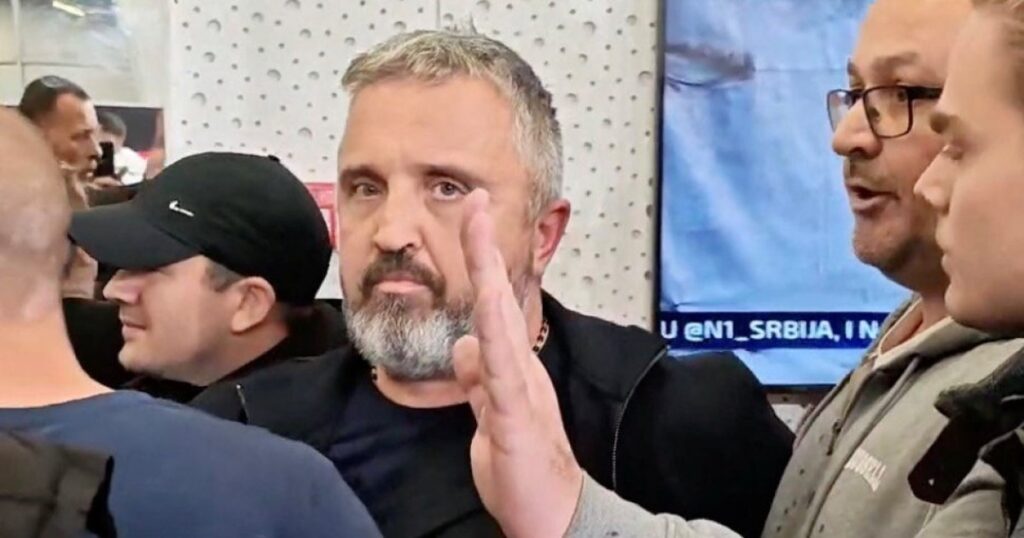
In a dramatic turn of events following the recent elections in Serbia, protesters stormed a television station known for its pro-President Aleksandar Vucic stance. The incident occurred shortly after Vucic’s unexpected loss at the polls, sparking a wave of unrest and confrontation.
The TV station, a major platform supporting President Vucic, became the focal point of public dissent as protesters flooded the premises, expressing their discontent and anger over the election results. This aggressive action has raised serious concerns about media security and the limits of protest in democratic societies.
President Vucic condemned the invasion vehemently, describing it as an assault on free speech and the freedom of journalism. He emphasized that such acts undermine the democratic process and threaten the fundamental rights of media professionals to operate without fear of violence or intimidation.
The protest and subsequent storming of the TV station highlight deep political divisions within Serbia, where tensions have been escalating amid rapidly changing political dynamics. Supporters of the opposition have voiced their frustration with what they claim to be years of biased media coverage and authoritarian practices.
Authorities have launched investigations into the incident to identify those responsible and to ensure that media outlets can function safely. Law enforcement is also assessing the measures needed to prevent similar occurrences in the future, stressing the importance of maintaining order and protecting journalistic entities.
International observers and human rights organizations have called for calm and respect for media independence. They warn that targeting news outlets not only jeopardizes journalists’ safety but also erodes public trust in the democratic process.
The incident serves as a stark reminder of the fragile state of media freedom in politically charged environments. It brings to the forefront discussions about the role of media, public protest, and the limits of political expression in emerging democracies.
As Serbia navigates this critical post-election period, dialogue between political leaders, media representatives, and civil society will be crucial in fostering a climate of respect and democratic resilience. President Vucic’s call for upholding free speech rights underscores the need for balanced and peaceful engagement among all societal stakeholders.
This unrest also highlights the broader challenges facing Serbia as it seeks to fulfill its democratic commitments and integrate more fully with European standards of governance and freedom of expression.
The path forward requires building trust, ensuring transparent media operations, and protecting journalists who play a key role in informing the public and shaping democratic debate. The Serbian government and political factions must collaborate to restore calm and reaffirm their dedication to democratic principles.
With ongoing investigations and continued public vigilance, there is cautious optimism that Serbia can overcome this episode and reinforce the vital freedoms that underpin democratic society.
The deep political divide and recent turmoil at the pro-Vucic TV station remind all stakeholders of the ongoing need to safeguard free speech and the independence of the press, ensuring these rights are not compromised in times of political transition.