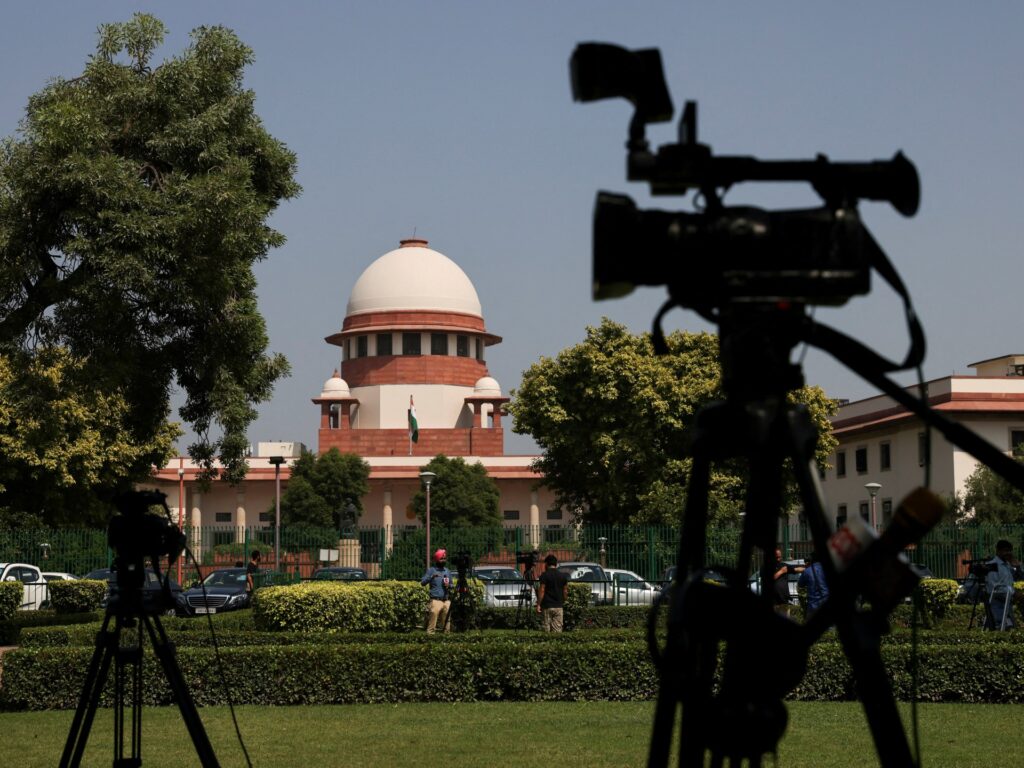
A coalition of prominent media organisations in India has filed a petition challenging the country’s privacy law at the Supreme Court. The media groups argue that the existing legislation poses significant threats to investigative journalism by potentially restricting journalists’ ability to protect their sources and gather critical information essential for public interest reporting.
The case has sparked widespread debate about the balance between individual privacy rights and freedom of the press. The law in question, originally implemented to safeguard citizens’ personal data and privacy, now faces scrutiny for possibly being overly restrictive and inadvertently endangering journalistic practices.
Investigative journalism often relies on confidential sources to expose corruption, malpractice, and abuses of power. The media organisations contend that stringent privacy regulations could deter whistleblowers from coming forward and make it difficult for reporters to verify sensitive information, thus undermining the role of the press as a watchdog.
Legal experts following the case note that the Supreme Court’s decision could set a landmark precedent regarding the interpretation of privacy rights and press freedom in India. The petitioners seek a judicial review that could either amend or clarify the application of the privacy law, ensuring it does not infringe on constitutional guarantees of free speech and freedom of the press.
The government, on the other hand, maintains that the privacy law is crucial for protecting the personal data of millions of citizens in an increasingly digital society and that it includes safeguards for journalistic privilege where appropriate.
This confrontation encapsulates a broader global dilemma where technological advancements and digital data proliferation challenge traditional legal frameworks. Media groups argue for a nuanced approach that respects privacy without compromising the essential function of investigative journalism.
Public opinion remains divided, with some advocating for robust privacy protections in the digital age, while others warn against laws that could stifle democratic accountability.
The Supreme Court hearing is anticipated to be closely watched by legal experts, media professionals, civil liberties activists, and the general public alike, as it could have far-reaching implications for media freedom, privacy norms, and democratic governance in India.
As the case progresses, stakeholders from various sectors are expected to participate in the discourse, possibly influencing legislative reforms and judicial interpretations in the near future. This legal challenge underscores ongoing tensions between state interests, individual rights, and the vital role of a free press in a democratic society.