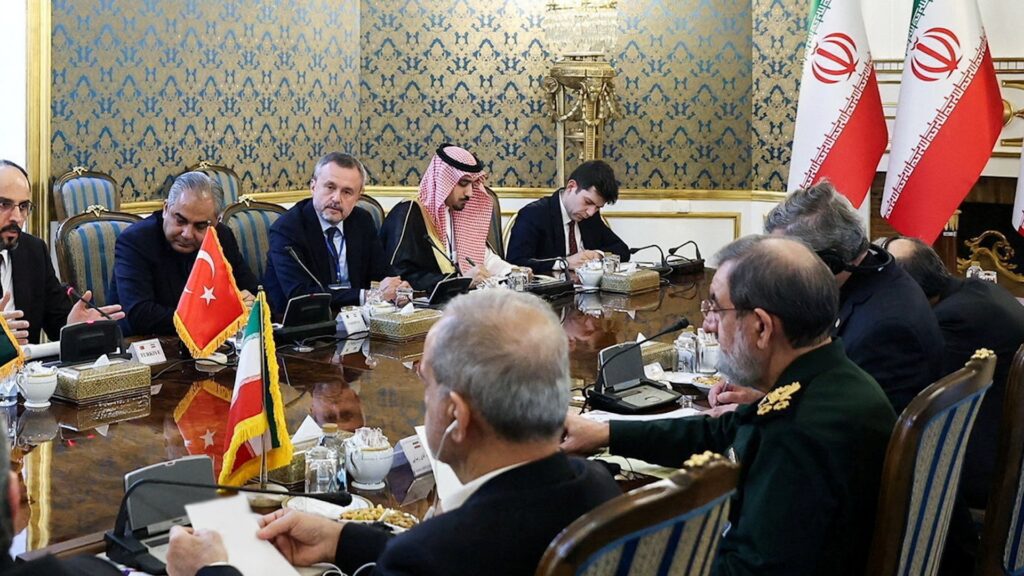
In a significant diplomatic development, officials from Iran, Pakistan, Turkiye, and Saudi Arabia convened in Tehran to discuss regional stability and efforts to prevent further escalation of tensions. During these talks, Iran publicly criticized the United States, asserting that the US is “not serious” about engaging constructively in dialogue.
The meeting brought together key regional players who have vested interests in maintaining peace and security within the Middle East. The officials aimed to foster cooperation and explore avenues to de-escalate conflicts that have persisted in the region.
Iran’s statement reflects its frustration with what it perceives as a lack of genuine commitment from the US in addressing critical issues through diplomatic channels. By hosting the meeting, Tehran demonstrated its intention to spearhead regional dialogue independent of US influence, signaling a shift toward multilateral discussions involving neighboring countries.
Representatives from Pakistan, Turkiye, and Saudi Arabia expressed a shared concern over rising tensions, emphasizing the importance of sustained communication to avoid misunderstandings that could lead to conflict. The gathering was seen as an attempt to build trust and create a platform for ongoing talks aimed at resolving disputes peacefully.
This event underscores the complexities of Middle Eastern geopolitics, where multiple actors with diverse interests intersect. The involvement of countries such as Pakistan and Turkiye highlights the broader regional impact of instability and the recognition that collaborative efforts are necessary for lasting peace.
While the US maintains a strategic presence and influence in the region, Iran’s comments suggest a deepening divide in approaches to diplomacy. Tehran’s criticism may complicate future negotiations and reflects the challenges faced by international actors trying to mediate conflicts in volatile environments.
The outcome of the Tehran talks remains to be seen, but the willingness of regional powers to engage directly with one another could pave the way for dialogue that circumvents traditional global powers. Such efforts may help reduce tensions and promote a more balanced approach to security in the region.
In conclusion, the recent meeting in Tehran highlights ongoing efforts by Middle Eastern countries to address conflicts through regional cooperation. However, Iran’s rebuke of the US illustrates persistent diplomatic hurdles. The path to peace will likely require continued dialogue, mutual understanding, and a commitment from all stakeholders to prioritize stability over rivalry.