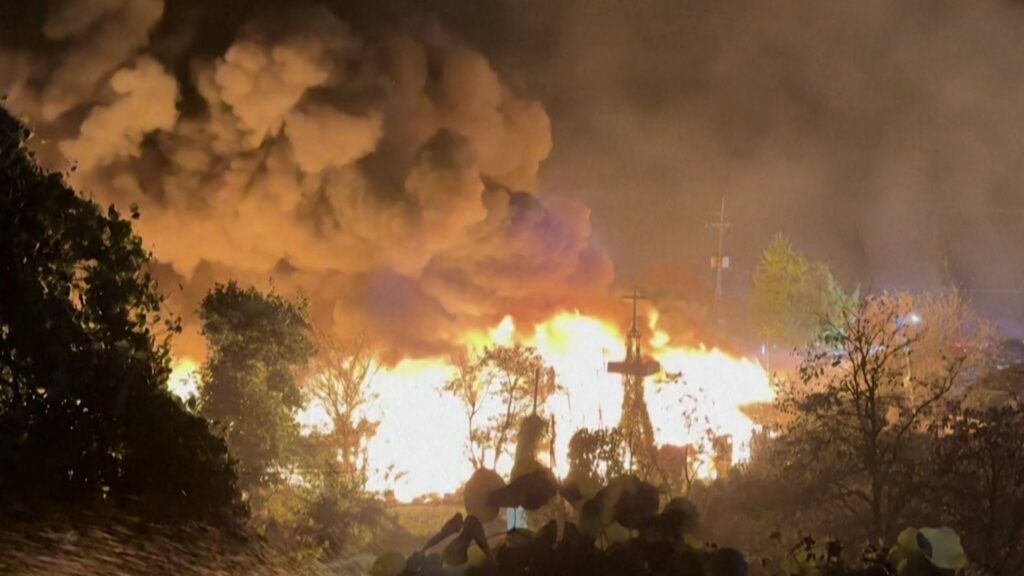
A devastating fire has ravaged Guryong Village, the last remaining shanty-town in Seoul, South Korea. The blaze erupted suddenly and spread rapidly, engulfing a large portion of the village and forcing over 100 residents to flee their homes. Guryong Village has been known as a symbol of informal settlements in the city, housing many low-income families in makeshift homes built from wood and other flammable materials.
Firefighters rushed to the scene to combat the flames, but the tightly packed and poorly constructed dwellings contributed to the swift spread of the fire. Emergency responders focused on evacuating residents to safety and containing the fire to prevent further destruction. Despite their efforts, significant damage has been reported, with many homes either severely damaged or completely destroyed.
The displaced residents now face an uncertain future as they seek temporary shelter and assistance. Local authorities have mobilized relief efforts, providing emergency aid such as food, water, and temporary housing to those affected. Aid organizations and community groups are also stepping in to support the evacuees during this difficult time.
Guryong Village has long been a point of concern for city officials due to its informal status and challenging living conditions. The fire highlights the vulnerabilities faced by informal settlements in urban areas, especially regarding fire safety and emergency response capabilities. Urban planners and policymakers may now face increased pressure to address the housing needs of marginalized communities and improve living conditions to prevent similar tragedies.
This incident has sparked conversations about social inequality, urban redevelopment, and the importance of enhancing infrastructure and safety measures in vulnerable neighborhoods. As investigations continue, city officials plan to assess the extent of the damage and explore steps to rebuild and support the affected community.
While no fatalities have been reported so far, the fire has underscored the urgent need for comprehensive solutions to address the risks associated with informal settlements. Many residents have expressed concerns about losing their homes and livelihoods, emphasizing the need for sustainable and safe housing alternatives.
The tragic fire at Guryong Village serves as a stark reminder of the pressing challenges faced by marginalized urban populations and the critical importance of inclusive urban development policies that prioritize safety, resilience, and social equity.