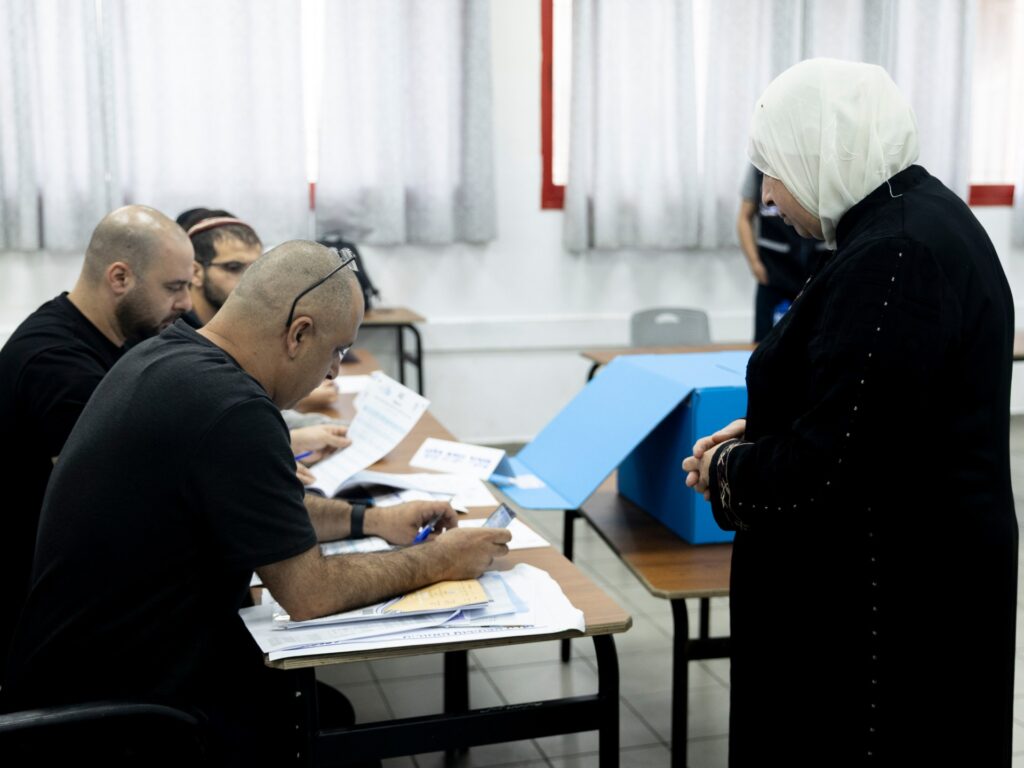
In a recent political controversy, Arab parties in Israel have accused Prime Minister Benjamin Netanyahu of deliberately inciting hatred against Arab citizens to sway voters ahead of upcoming elections. The tension escalated when Netanyahu made a social media post alleging that Arab voters were “raiding the polling stations and stealing the elections.” This accusation has sparked outrage among Arab political representatives, who condemned Netanyahu’s remarks as inflammatory and aimed at creating fear among the general population.
The accusation from Netanyahu comes in the context of tightly contested elections in Israel, where voter turnout and demographic dynamics play a critical role in determining the outcome. Arab parties, which represent a significant portion of Israel’s minority population, view the prime minister’s statements as a tactic to delegitimize their participation in the democratic process.
Leaders of the Arab parties have called on Netanyahu to retract his statements and urged all citizens to refrain from inflammatory rhetoric that could endanger social cohesion. They emphasized the importance of ensuring that every vote counts and is respected under the principles of democracy and fairness.
Political analysts suggest that Netanyahu’s statements could increase polarisation in Israeli society, potentially exacerbating tensions between Jewish and Arab citizens. They warn that such rhetoric may alienate Arab voters and foster mistrust in the electoral process.
On the other hand, Netanyahu’s supporters argue that his comments are a response to concerns about electoral integrity and are intended to mobilize his base. They claim that vigilance at polling stations is necessary to prevent any form of electoral fraud.
The backlash on social media and in public discourse has been significant, with many accusing the prime minister of using fear-mongering tactics to influence voting behavior. Civil rights groups have also expressed concern about the impact of such statements on minority rights and inclusivity within the state.
As elections approach, the controversy highlights the challenges faced by Israel in balancing national security, democratic values, and minority representation. It also underscores the fragile nature of ethnic relations and the need for responsible political communication.
Observers continue to monitor the situation closely, noting that the resolution of this dispute and the conduct of the electoral process will have lasting implications for Israel’s democracy and social fabric.