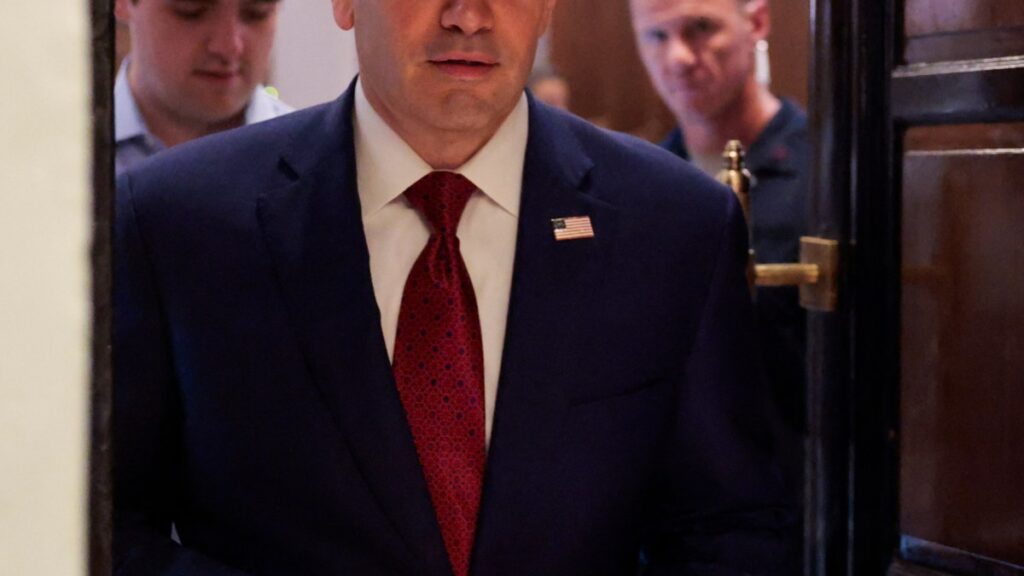
In recent developments, U.S. Senator Marco Rubio has publicly called on Cuban citizens to collaborate with the Central Intelligence Agency (CIA) as a means to foster positive change within Cuba. This statement comes amid escalating tensions between Washington and Havana following the capture of former Venezuelan President Nicolas Maduro.
Rubio’s appeal is part of a broader U.S. strategy to increase pressure on the Cuban government, which has long been a key ally of Venezuela’s administration. The U.S. government accuses the Cuban regime of supporting authoritarian governments in the region, including Maduro’s regime in Venezuela.
The senator emphasized the potential for grassroots cooperation with U.S. intelligence agencies to promote democratic reforms and human rights improvements in Cuba. Rubio’s remarks underscore the ongoing efforts by the U.S. to influence political shifts in Cuba, leveraging intelligence and diplomatic channels.
The capture of Nicolas Maduro has further intensified diplomatic strains, with Havana criticizing what it sees as Washington’s interference in Latin American affairs. The Cuban government has condemned the move as an act of aggression and a violation of regional sovereignty.
Meanwhile, Rubio’s call signals a desire to empower ordinary Cubans to become active participants in shaping their nation’s future. He envisions that collaboration with the CIA could facilitate access to information, support dissident movements, and ultimately lead to the erosion of the Cuban government’s hold on power.
Analysts note that this development could lead to increased covert activities within Cuba, raising concerns about possible counteractions from the Cuban security services. The U.S. administration, however, maintains that such partnerships are crucial for advancing democratic ideals and countering authoritarian influence in the Western Hemisphere.
Additionally, this initiative aligns with ongoing U.S. foreign policy priorities which seek to address the humanitarian and political crises in Cuba and Venezuela. The Biden administration has reiterated its commitment to supporting democratic transitions and human rights in the region.
The call to action by Senator Rubio highlights the complex interplay of diplomacy, intelligence operations, and regional politics. It reflects the broader geopolitical contest between the United States and Cuba, where influence over Venezuela serves as a critical front.
As the situation evolves, the international community watches closely how Cuba responds to these pressures, and what role, if any, Cuban citizens might play in cooperating with foreign intelligence to achieve systemic change.
In summary, Senator Rubio’s urging for Cubans to partner with the CIA marks a significant moment in U.S.-Cuba relations, underscoring Washington’s determination to catalyze political transformation in Cuba in the wake of recent regional upheavals.