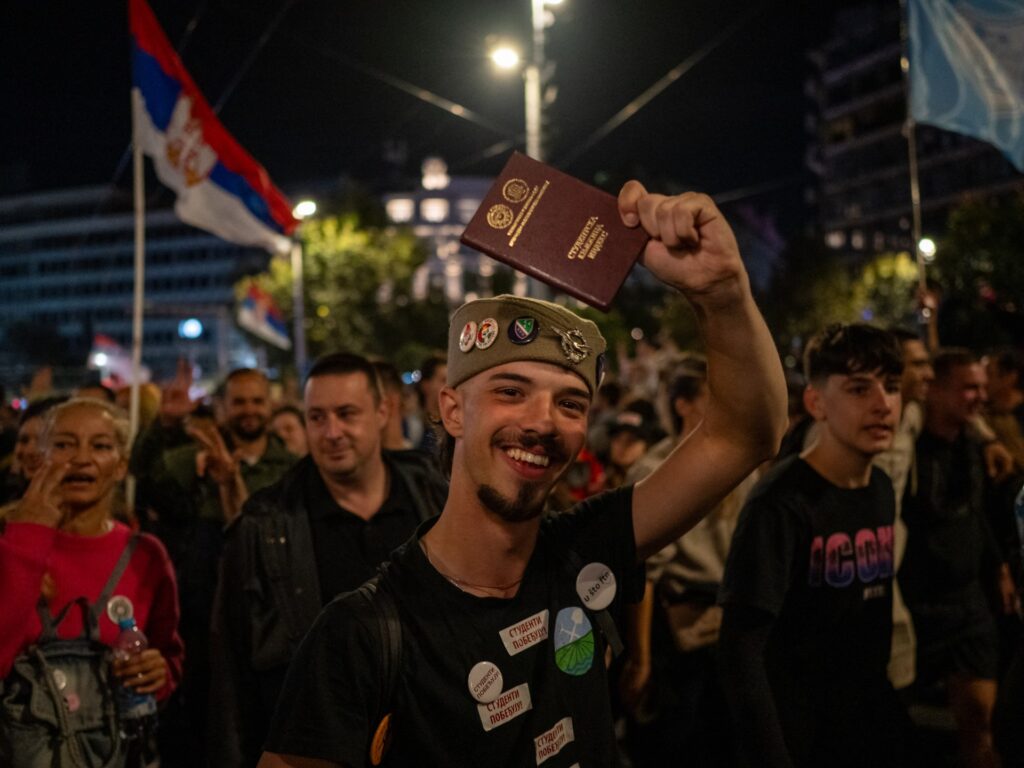
In recent months, Serbia has witnessed a remarkable political movement driven by its youth, particularly students who have transitioned from street protests to active participation in electoral politics. This surge represents a significant challenge to President Aleksandar Vucic’s longstanding hold on the country’s political landscape.
The genesis of this movement lies in widespread dissatisfaction among young Serbians with the current government, perceived to be marred by corruption, restricted freedoms, and economic stagnation. Motivated by these grievances, students initially took to the streets in peaceful demonstrations, demanding reforms and greater transparency.
What distinguishes this youth-driven political wave is not merely the protests but how these young activists have organized themselves into a structured political force. They have created networks that empower them to campaign effectively, communicate their messages, and mobilize voters ahead of crucial elections.
Key to their strength has been the use of social media platforms and grassroots community engagement. Young Serbians have employed innovative communication strategies to bypass traditional media channels, which they often accuse of bias or censorship. Through Facebook, Instagram, and TikTok, they have galvanized widespread support, bringing political discourse to a demographic often overlooked in Serbian politics.
Their platform centers on modernizing Serbia’s political system, combating corruption at all levels of government, promoting greater democratic values, and fostering economic opportunities for the youth. Education reform, environmental protection, and human rights are also high on their agenda.
The movement’s leaders, many of them university students or recent graduates, have emphasized dialogue and legal political participation as the path forward. By fielding candidates in local and national elections, they aim to transition from protestors into policymakers.
This shift from activism to candidacy has energized a generation long disillusioned with politics. The election campaigns have seen an unprecedented enthusiasm, notably in urban centers like Belgrade, where youth turnout is noticeably higher than in previous elections.
Observers note that should this youth-led coalition succeed in gaining substantial seats, it could mark a watershed moment in Serbian politics. It would not only disrupt President Vucic’s dominance but also signal a broader regional trend of young people challenging entrenched political establishments.
Nevertheless, the movement faces formidable obstacles. Vucic’s administration controls much of the media landscape and has at times been accused of undermining electoral fairness. Additionally, Serbia’s political environment remains polarized, with segments of the population wary of rapid change.
Despite these challenges, the determination and strategic approach of Serbia’s students continue to inspire hope. Their journey from organizing street protests to running for office illustrates a maturing political consciousness and the potential for democratic renewal.
In conclusion, the involvement of Serbia’s youth in elections symbolizes a dynamic interplay between grassroots activism and institutional politics. Whether or not this new political force can unseat established power structures, it has already reshaped Serbia’s political discourse and empowered a generation to envision a different future for their country.