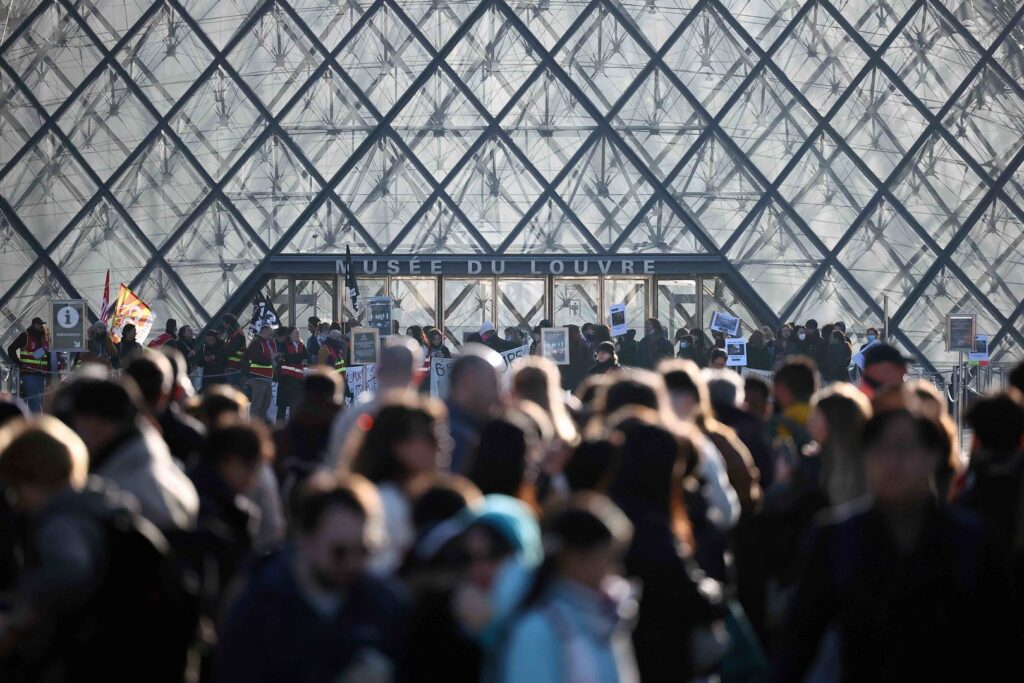
In a significant act of civil unrest, protesters have taken to blockading the Louvre Museum, the world’s busiest museum, as part of a broader demonstration in support of the ongoing French student movement. The blockade has disrupted the normal flow of visitors to the iconic cultural site, symbolizing the intensity and reach of the unrest beyond educational institutions and into major public spaces.
The French student movement, which has been active for some time, is protesting against various government policies they perceive as detrimental to the future of students and young people. The decision to target the Louvre is strategic, aiming to draw international attention to their cause by using one of France’s most globally recognized landmarks.
Authorities have responded by increasing security measures around the museum and nearby areas to manage the protesters and ensure the safety of visitors and staff. Despite these efforts, the protesters have maintained a firm presence, signaling their determination to keep the pressure on the government.
The Louvre blockade is part of a broader wave of social unrest sweeping through France, involving not only students but also workers and other groups expressing dissatisfaction with current governmental policies. This convergence of grievances underscores a wider national discontent that has been growing over the past months.
Protest organizers have called for solidarity from various sectors of society, emphasizing the importance of unity in their fight for reforms. The student movement highlights issues such as educational funding, employment prospects, and broader socio-economic inequalities.
This act of protest at the Louvre has sparked a wide range of reactions from the public and political figures. Some view the blockade as a legitimate form of protest and a necessary move to bring urgent attention to critical issues. Others criticize it for disrupting cultural access and potentially harming France’s tourism industry.
Cultural experts have noted the symbolic nature of the Louvre’s blockade, as the museum represents not only French heritage but also a connection to global history and culture. The protesters’ choice of venue brings a dramatic spotlight on their demands but also raises questions about the impact on France’s cultural diplomacy.
As the situation develops, the government faces a challenging balancing act between addressing the protesters’ demands and maintaining public order. Negotiations are expected to continue, with potential talks involving student representatives and government officials.
The blockade at the Louvre marks a pivotal moment in the ongoing French student movement, showcasing the lengths to which protesters are willing to go to have their voices heard. It remains to be seen how this will influence wider public opinion and the trajectory of government policies in the coming weeks.
In the meantime, visitors planning to see the Louvre are advised to check for updates and possible restrictions due to the ongoing demonstration. The events highlight a critical period in France’s social and political landscape, reflecting broader global themes of youth activism and civil protest.