France has been engulfed in widespread protests, signaling significant civil unrest as citizens voice their discontent with various national issues. In a rare and candid admission, President Emmanuel Macron has acknowledged “failures in anticipation and intelligence” regarding the government’s handling of the situation. This statement comes as protests have notably escalated, causing disruptions across multiple cities.
The unrest reflects deep-seated frustrations among the French population, with demonstrations spanning diverse social and political demands. Protesters have taken to the streets in large numbers, expressing grievances over policies, economic conditions, and recent government actions perceived as insufficient or unjust.
In response to these escalations, President Macron addressed the nation, conceding that the government had not fully anticipated the scale and intensity of the protests. He emphasized the need for reflection and corrective measures to ensure better management and communication in the future.
However, Macron also clarified his stance on accountability within his administration. Notably, he ruled out the resignation of his Interior Minister amidst calls for such a move following episodes of violence and riotous behavior linked to the protests. The president appeared to advocate for stability within his cabinet during this tumultuous period.
The Interior Minister has been a focal point for critics who attribute the law enforcement response to the protests as either too harsh or inadequately coordinated. Despite this, the administration seems to prioritize maintaining a united front and focusing on policy adjustments over leadership changes at this moment.
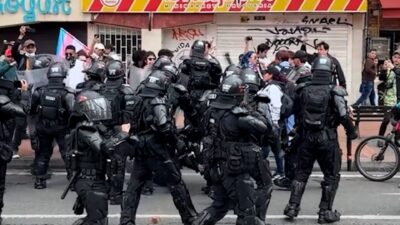
The protests themselves have varied in their nature, widespread throughout the country from Paris to provincial towns. They include peaceful marches, strikes, as well as instances of clashes with police. Crowds have expressed solidarity on issues including pension reforms, social inequality, and political transparency.
Economic grievances particularly resonate with many protesters who feel left behind by current governmental policies. Issues such as high living costs, unemployment, and perceived social injustice have fueled the widespread dissatisfaction.
Looking forward, the government faces challenges in balancing firm law enforcement with respect for democratic rights to protest. Macron’s admission of systemic shortcomings may open pathways for dialogue, yet the unrest highlights a critical juncture in French politics.
International observers are watching closely, recognizing that France’s stability is often seen as a bellwether for broader European political and social trends. The government’s next steps will be crucial in either calming tensions or potentially exacerbating divisions.
In summary, the France protests mark a significant moment of social upheaval, testing President Macron’s leadership and the resilience of French democratic institutions. His admission of failures indicates awareness and potential for change, while rejecting ministerial resignations suggests a strategy centered on maintaining governmental cohesion. The situation remains fluid, with ongoing developments expected as protests continue to influence the national discourse and the policy landscape.