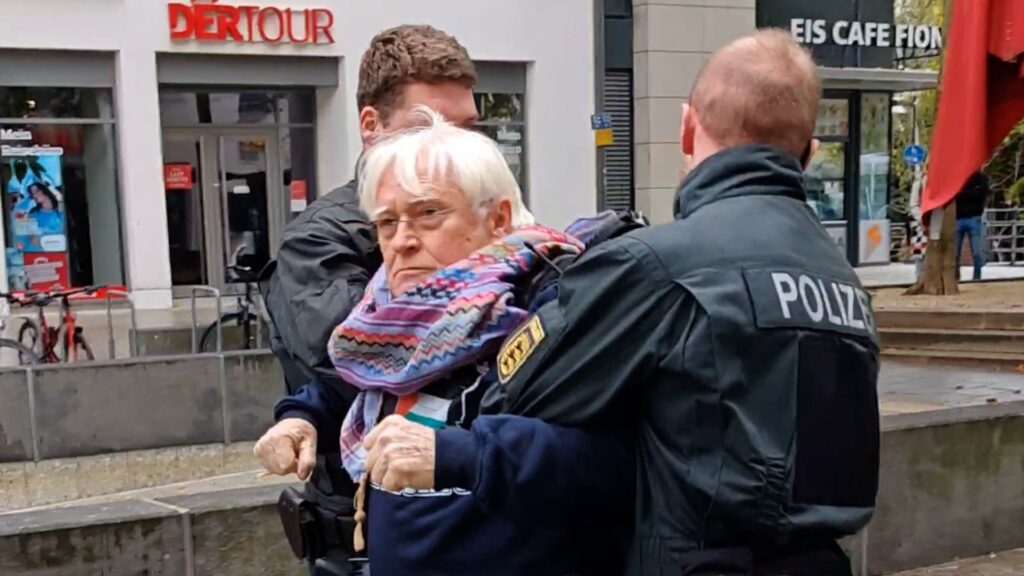
During a recent protest in Ulm, Germany, an elderly man was forcibly restrained by police while demonstrating against Elbit Systems, a prominent defense technology company. The protest aimed to raise awareness and express opposition to the company’s involvement in military and surveillance equipment production.
Witnesses reported that the protest was generally peaceful until tensions escalated, leading to police intervention and the forcible detention of the elderly participant. Authorities have cited concerns over public safety and maintaining order as the reasons for their actions.
Elbit Systems, headquartered in Israel, is known for its development of defense technologies and has been the subject of various global protests. Activists argue that the company’s products contribute to conflict and human rights violations.
The incident in Ulm has sparked debate about police conduct and the rights of protesters in Germany. Human rights organizations are calling for an investigation into the force used against the elderly man and highlighting the importance of protecting peaceful dissent.
Local officials have urged calm and dialogue, emphasizing the need for lawful protest while ensuring community safety. The event underscores ongoing tensions surrounding military companies and public accountability in democratic societies.
This occurrence is part of a broader wave of demonstrations worldwide demanding transparency and ethical responsibility from defense contractors. The situation in Ulm serves as a focal point for discussions on civil liberties, law enforcement practices, and the role of protest in effecting social change.
As the investigation continues, both supporters and critics of Elbit Systems watch closely, with many hoping for a resolution that respects human rights and the rule of law. The protest and subsequent police action highlight the challenges faced by activists and law enforcement in balancing security and freedom of expression.
This incident may lead to renewed calls for policy reviews regarding protest management and corporate accountability in Germany and beyond. It also raises awareness about the broader implications of militarization and the ethical considerations surrounding defense technologies.
Ultimately, the Ulm protest serves as a powerful reminder of the ongoing dialogue between state authorities, corporations, and civil society in shaping the future of democratic participation and human rights protections worldwide.