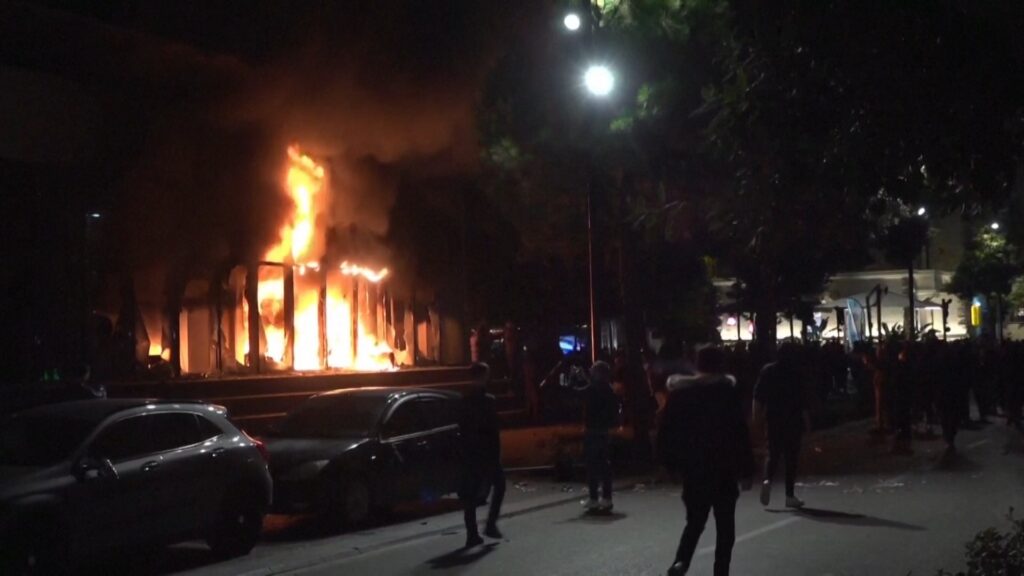
In a dramatic escalation of public dissent, the Albanian Ministry of Justice was set on fire as hundreds of students took to the streets of Tirana to protest against the current state of the education system. The protests, which began as a demand for urgent education reforms, rapidly turned violent, leading to clashes between protesters and law enforcement officials.
The students, frustrated with the government’s slow progress on addressing key issues such as funding, quality of education, and access to resources, gathered en masse in the capital. What started as a peaceful rally soon spiraled into chaos as some protesters turned to aggressive tactics, including setting fire to parts of the Ministry of Justice building.
Authorities responded with riot control measures, trying to disperse the crowd and restore order. Several arrests have been reported, and there are fears of escalating violence if the government does not engage promptly with the demonstrators.
This incident highlights the deep discontent among the youth in Albania regarding the education system’s deficiencies. The protesters demand comprehensive reforms to improve the quality and accessibility of education, which they argue is crucial for the country’s future development.
The Albanian government faces growing pressure both domestically and internationally to address the students’ demands and to ensure the safety of public institutions. Political analysts warn that failure to resolve the tensions may lead to further unrest and instability.
The Ministry of Justice, a symbol of governance and law enforcement, being targeted in the protests represents a significant challenge to the Albanian authorities. It underscores the urgency for dialogue between the government and civil society to find sustainable solutions to the ongoing crisis.
As investigations continue into the causes of the fire and the events that led up to it, the government has called for calm and promised to accelerate discussions on education reforms. The hope remains that peaceful negotiations will replace violent confrontations in the near future, bringing stability back to Tirana and meeting the aspirations of Albania’s youth.