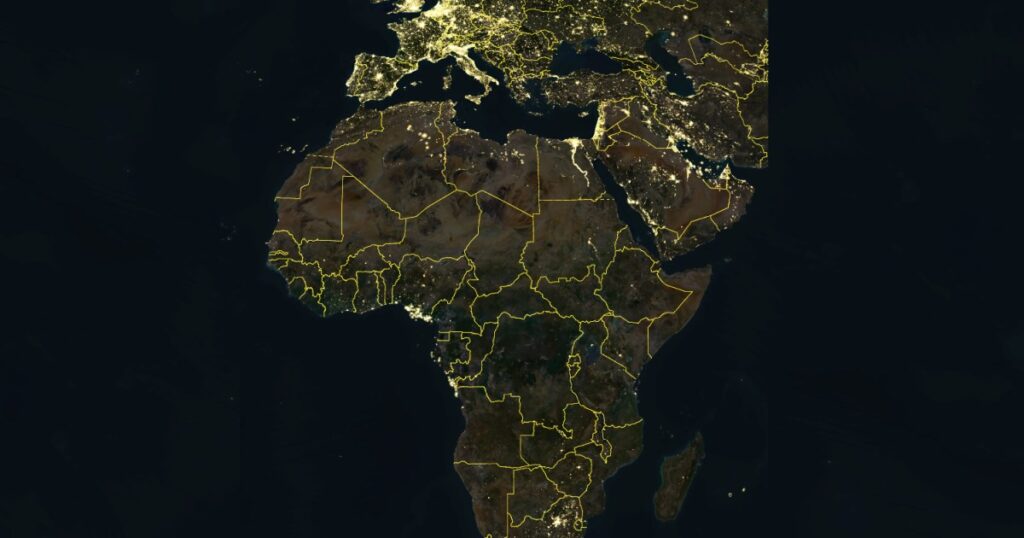
Africa is a continent abundant in energy resources, yet it paradoxically harbors some of the largest populations living without access to electricity. Approximately 560 million Africans remain without power, representing the highest number of people globally who lack this fundamental service.
Despite Africa’s vast energy wealth, including significant reserves of oil, natural gas, coal, hydroelectric potential, solar, and wind energy resources, a large portion of its population faces persistent energy poverty. This disconnect between resource availability and energy utilization poses a significant challenge to the continent’s development and socio-economic growth.
The energy wealth in Africa is geographically diverse. North Africa is rich in oil and natural gas, particularly in countries like Algeria, Libya, and Egypt. Sub-Saharan Africa boasts major hydroelectric projects, such as the Grand Ethiopian Renaissance Dam, which aims to harness the Blue Nile’s energy potential. Additionally, much of Africa benefits from abundant solar radiation, ideal for solar power initiatives, especially in regions like the Sahara Desert and the Horn of Africa.
Wind energy also holds promise, particularly in countries like Kenya and South Africa, which have developed wind farms to diversify their energy mix. Coal remains a dominant source in Southern Africa, notably in South Africa, which relies heavily on coal-fired power plants for electricity generation.
However, the challenge remains in expanding the energy infrastructure to reach remote and underserved populations. Many communities reside in rural or off-grid areas where energy networks are either non-existent or unreliable. The lack of electricity severely limits economic opportunities, education, healthcare, and overall quality of life.
Energy access is fundamental to achieving sustainable development goals, including poverty reduction, improved health services, and economic growth. The African Union and various international partners have launched initiatives aimed at increasing electrification rates through renewable energy expansion and grid improvements.
Off-grid and mini-grid solar projects have shown promise in electrifying rural communities. These decentralized energy solutions provide clean, affordable, and sustainable power, reducing reliance on expensive and polluting diesel generators.
Financial and technical barriers remain important hurdles. Investments in energy infrastructure require substantial capital, policy stability, and technical expertise. Many African nations face challenges in mobilizing funds, managing projects, and ensuring equitable energy distribution.
Moreover, there is a growing emphasis on transitioning to green energy to combat climate change, which is disproportionately affecting the continent. Clean energy solutions are not only environmentally beneficial but also economically advantageous by creating jobs and promoting innovation.
To bridge the energy divide, a combination of resource mapping, infrastructure development, policy reforms, and international cooperation is crucial. Empowering local communities through energy access can catalyze a transformational impact on Africa’s socio-economic landscape.
In conclusion, mapping Africa’s energy wealth highlights both the potential and the challenges of transforming abundant natural resources into reliable energy for all. The goal to electrify 560 million Africans must remain a central focus for governments, private sector, and international partners committed to Africa’s sustainable future.