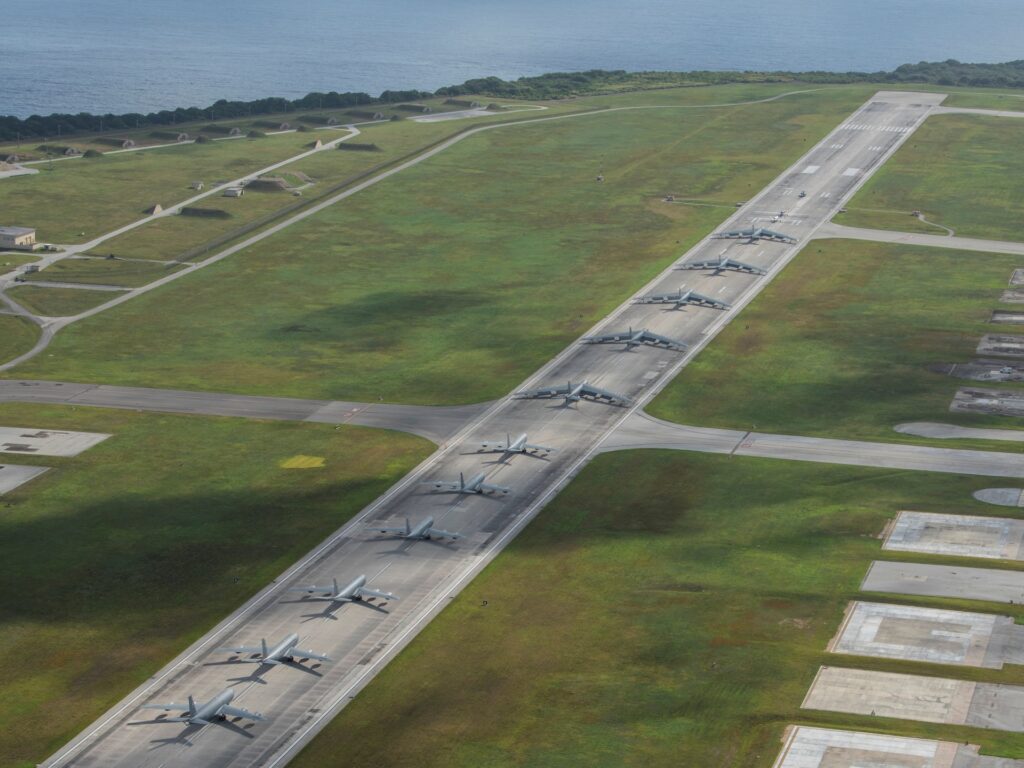
The United States Supreme Court recently heard a significant challenge concerning the Air Force’s use of unexploded ordnance (UXO) detonations in Guam, an issue that has sparked considerable concern among local communities and advocacy groups. The case centers on allegations that the military bypassed necessary environmental and impact reviews when conducting UXO detonations, which are explosives that failed to detonate when initially deployed and can pose ongoing hazards.
An advocacy group representing Guam residents has brought this issue to the forefront, arguing that the Air Force failed to comply with established protocols designed to assess and mitigate environmental damage before conducting such detonations. The group contends that the military’s actions not only threaten the natural landscape and public safety but also raise broader questions about procedural transparency and accountability.
Central to the lawsuit is the claim that Guam’s status as a U.S. territory has led to a lack of appropriate representation and consideration in military and governmental decisions that affect the island’s environment and the safety of its inhabitants. The advocacy group emphasizes that territorial residents often face systemic barriers in having their voices heard, especially on matters involving federal military activities.
The Supreme Court’s review of this case highlights critical issues about how U.S. territories are treated under federal law, particularly in relation to environmental protections and military operations. Intervening in this matter, the Court will consider whether the Air Force was required to perform a more thorough environmental impact review and if the residents of Guam have adequate legal standing to challenge the military’s actions.
Supporters of the military’s position argue that these detonations are necessary for national security and training readiness, asserting that the Air Force has conducted its activities in compliance with relevant laws. However, opponents stress that national defense cannot come at the expense of environmental degradation and the rights of local communities.
The case has attracted attention beyond Guam, raising awareness about environmental justice, the rights of U.S. territories, and the balance between military necessity and local community protections. Legal experts suggest that the Supreme Court’s decision could set a precedent for how military activities are conducted and regulated in territories, potentially influencing future policy and legal standards.
Local leaders in Guam have expressed hope that the ruling will bring greater oversight and respect for the island’s unique circumstances and environment. They call for more inclusive decision-making processes that genuinely consider the voices and welfare of Guam residents.
This case underscores the ongoing complexities of federal-territorial relations and the challenges faced by U.S. territories in safeguarding their environments and communities against the backdrop of national defense priorities. As the nation awaits the Court’s decision, the debate continues over how best to balance these competing interests in a manner that respects both security needs and local rights.