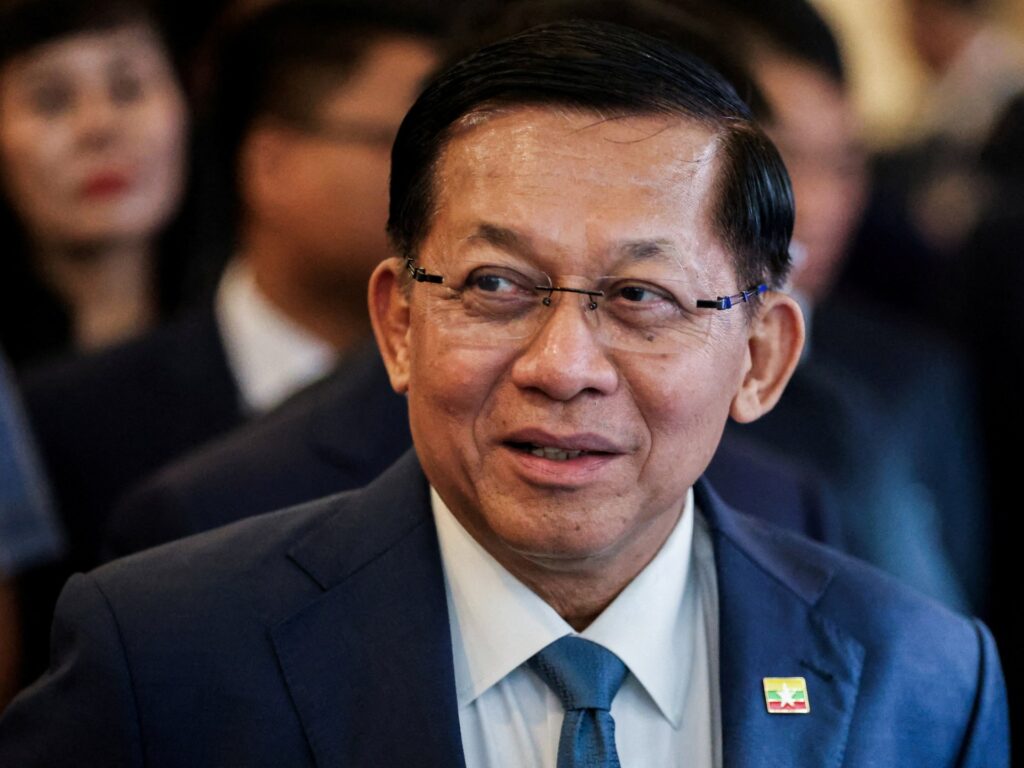
Myanmar’s military leader, Min Aung Hlaing, arrived in Malaysia for his first official visit since seizing power in the 2021 coup. This trip marks a significant moment as it comes amid rising concerns surrounding the repatriation of Myanmar nationals and the ongoing political crisis in the country.
Min Aung Hlaing’s visit is seen as an attempt to engage more directly with Southeast Asian neighbors and possibly to seek support or at least understanding from regional powers. Since the coup, Myanmar has faced international condemnation, sanctions, and widespread protests within the country. The situation has also created regional tensions, particularly concerning the handling of refugees and displaced persons.
Malaysia, home to a large Myanmar migrant community, has been closely watching developments. The issue of repatriation has been sensitive, with concerns over the safety and rights of those returning to Myanmar amid the continuing instability. Human rights organizations and international observers have cautioned against forced repatriations, urging Malaysia and other countries to ensure that returns are voluntary and conducted under safe conditions.
During his visit, Min Aung Hlaing is expected to discuss bilateral relations, trade, and regional security issues. However, the political backdrop and the humanitarian concerns linked to the coup’s aftermath inevitably influence the dialogue. Observers note that the military leader’s engagement with Malaysia may also be a bid to counterbalance international isolation.
ASEAN, of which both Myanmar and Malaysia are members, has been actively involved in seeking a peaceful resolution to Myanmar’s crisis. Malaysia, in particular, has voiced support for ASEAN-led efforts while emphasizing the importance of dialogue and stability in the region.
The visit underscores the complex dynamics in Southeast Asia, where member states like Malaysia navigate the delicate balance between addressing human rights concerns and maintaining diplomatic and economic ties with Myanmar’s military leadership.
As the situation evolves, international and regional players continue to watch closely how Myanmar’s leadership manages its external relationships and internal challenges. The outcome of this visit may impact future efforts to resolve the crisis and the broader cooperation within ASEAN.