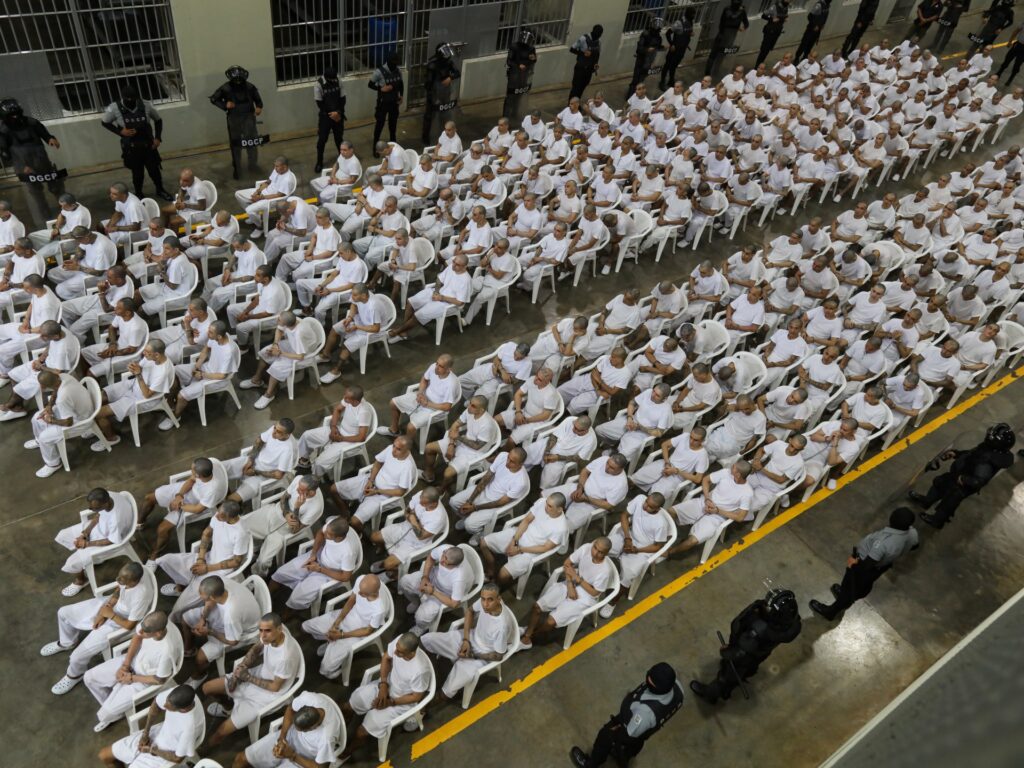
In El Salvador, a significant legal challenge is unfolding as mass trials become the norm, leaving defense lawyers grappling to provide adequate representation for hundreds of defendants. These trials, often involving large groups of accused individuals, have raised serious concerns about the fairness and transparency of the judicial process.
Human Rights Watch has highlighted the difficulties faced by defense attorneys, noting that many have struggled to gain access to vital case files. This lack of access severely hampers their ability to build effective defenses, potentially violating the defendants’ rights to a fair trial.
The mass trial system was introduced as a measure to expedite justice in a country grappling with high crime rates and gang-related violence. However, this approach has drawn criticism from legal experts and human rights organizations who argue that it undermines the principles of individual assessment and due process.
Lawyers report that the sheer volume of defendants in these trials complicates their work, making it nearly impossible to dedicate sufficient time and resources to each case. The overwhelming caseload can lead to rushed hearings and limited opportunities for thorough cross-examination or presentation of evidence.
Moreover, the restricted access to case files means that defense teams are often operating in the dark, unaware of the full scope of the prosecution’s evidence. This opacity can result in miscarriages of justice, with innocent individuals potentially being convicted without proper defense.
Human Rights Watch has called attention to these issues, urging the Salvadoran government to ensure that defendants’ rights are respected. They recommend reforms to improve access to legal documents and to reconsider the mass trial format to allow more individualized and fair proceedings.
The struggle of lawyers in El Salvador’s mass trials underscores broader concerns about the balance between security measures and human rights protections. While combating crime is critical for national stability, it should not come at the expense of justice and legal fairness.
As the international community watches closely, the situation in El Salvador serves as a reminder that the rule of law must be upheld, even in the face of daunting public safety challenges. The integrity of the judicial process is fundamental to democracy, and ensuring proper defense for all accused is a cornerstone of human rights.
The ongoing challenge in El Salvador calls for renewed commitment from all stakeholders—government officials, legal professionals, and human rights advocates—to safeguard the rights of the accused and maintain the legitimacy of the justice system. Only through such efforts can trust in legal institutions be restored and maintained in the long term.