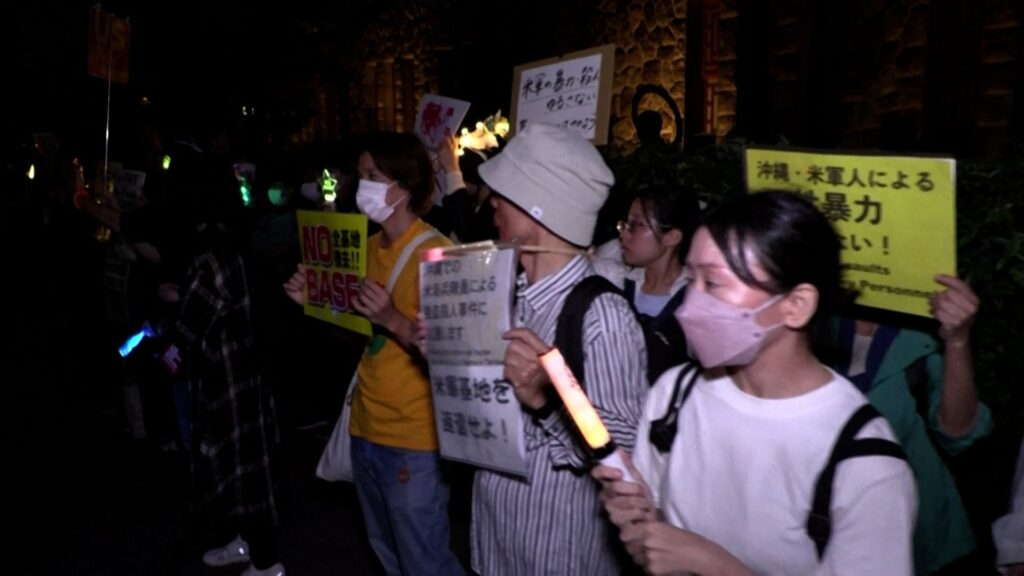
In a surge of public outrage, protesters gathered outside the US Embassy in Tokyo demanding accountability and reassessment of the US military presence in Japan after a recent tragic incident in Okinawa. The protest was sparked by the arrest of a US Marine suspected of killing a 39-year-old Okinawan woman, stirring deep-seated tensions about the long-standing US military footprint in the region.
Okinawa, home to a significant portion of the US military bases in Japan, has historically experienced friction due to the heavy military presence. The island’s residents have often voiced concerns over crime, accidents, and environmental impacts linked to the US forces. The recent killing has reignited these grievances, leading to widespread calls for a re-evaluation of the military arrangements.
Demonstrators in Tokyo expressed their anger not only at the violence itself but also at what they perceive as insufficient measures taken by both US and Japanese authorities to prevent such incidents. The victims’ supporters and local activist groups demanded justice for the slain woman and urged the Japanese government to take a stronger stance against the US military’s operational conduct.
Authorities confirmed the US Marine has been arrested and is currently held in custody, with investigations underway into the circumstances surrounding the death. Meanwhile, diplomatic channels are under strain as the incident complicates US-Japan relations, particularly concerning the sensitive issue of military cooperation and base hosting.
The situation underscores the complex dynamics of the US military deployment in Japan, a legacy of post-World War II arrangements aimed at ensuring regional security amidst ongoing geopolitical challenges. However, it also highlights the human cost and social tensions that can arise when foreign military forces are stationed in local communities.
Calls from protesters and political figures alike emphasize the need for greater transparency, accountability, and possibly a reduction or relocation of US bases to mitigate conflicts. The Japanese government faces mounting pressure to balance national security interests with the well-being and safety of its citizens.
Local Okinawan leaders have voiced their sorrow and frustration, reinforcing their long-standing opposition to the overwhelming US military presence on the island. They demand comprehensive reforms, stricter oversight of military personnel, and enhanced cooperation between the US and Japan to prevent future tragedies.
The global community is watching, as the incident not only affects bilateral relations but also impacts wider discussions about military bases overseas, sovereign rights, and the rights and safety of host communities. This tragedy serves as a somber reminder of the delicate balance required when foreign military forces operate within another nation’s borders.
As investigations continue, the focus remains on delivering justice and fostering dialogue aimed at healing the wounds inflicted by this event and preventing recurrence. The Tokyo protests symbolize a broader call for change, reconciliation, and respect for human life amidst complex geopolitical realities.