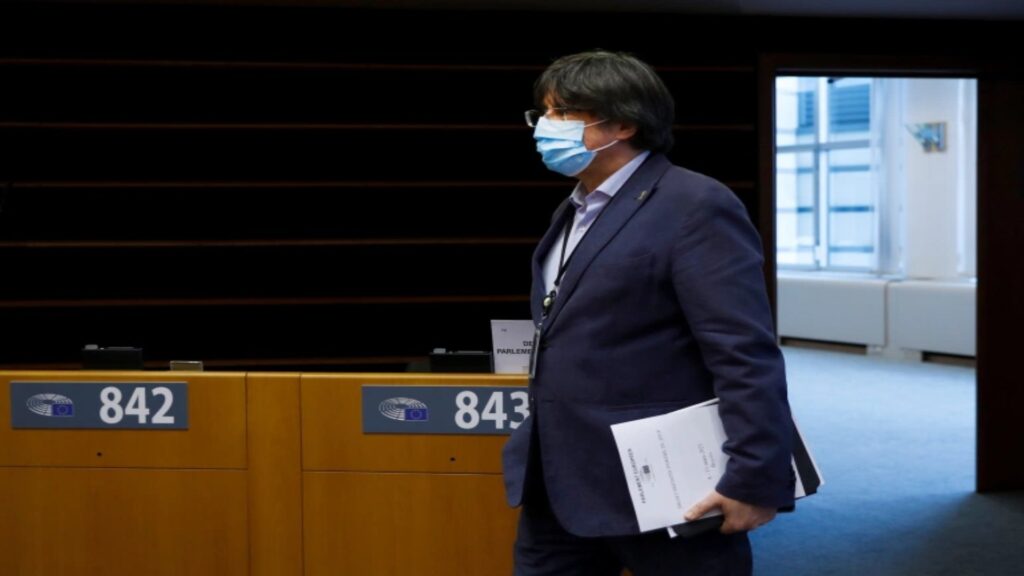
Carles Puigdemont, the prominent Catalan separatist leader, is set to return to Spain following a significant legal development. Spain’s Constitutional Court has ruled that an amnesty law encompassing Catalan separatists applies to Puigdemont, effectively lifting the international warrant against him.
Puigdemont, who has been living in exile since 2017 after leading Catalonia’s controversial independence referendum and subsequent declaration of independence, faced several criminal charges in Spain. The charges included rebellion, sedition, and misuse of public funds, which led to a European Arrest Warrant being issued against him.
The political and legal drama surrounding Puigdemont has been a focal point in the ongoing tension between Catalonia and the Spanish government. His exile, mostly in Belgium, has symbolized the broader struggle for Catalan autonomy and independence aspirations.
The recent ruling by the Constitutional Court marks a pivotal turn in this saga. The court recognized an amnesty law passed by the Catalan parliament – designed to pardon certain political acts related to the independence movement – as applicable to Puigdemont. This legislative move aims to promote political reconciliation and ease longstanding conflicts.
Following the decision, the international warrant for Puigdemont’s arrest was annulled, clearing the legal obstacle that prevented his return to Spain without immediate risk of arrest. This development paves the way for the former Catalan president to come back home and potentially engage in renewed political dialogue.
Supporters of Catalan independence see Puigdemont’s return as a hopeful sign for the movement’s future, indicating possible progress in resolving the conflict through political rather than judicial means. Conversely, some factions within Spain remain cautious, emphasizing the need to address legal and constitutional issues linked to the independence push.
Puigdemont himself has expressed optimism and a desire for unity and peaceful action, signaling his intent to participate actively in the political process within Spain. His homecoming may catalyze fresh discussions on Catalonia’s status and the broader question of regional autonomy within the Spanish state.
This ruling and Puigdemont’s anticipated return underscore the complexity of the Catalan issue, where legal, political, and social dimensions intertwine. It represents a rare moment of potential de-escalation after years of polarized debate and confrontation.
As Puigdemont prepares to return, all eyes will be on Spain’s political landscape to see how this change influences negotiations, public sentiment, and the future trajectory of Catalan separatism. The Constitutional Court’s ruling may open new channels for dialogue, but challenges remain in reconciling different visions of Spain’s territorial and political makeup.
Overall, the decision to lift the warrant against Puigdemont reflects broader efforts in Spain to find peaceful solutions to deeply rooted regional conflicts. It highlights the role of legal frameworks and political compromises in addressing contentious national issues.
Observers will watch closely to see if this move leads to sustained reconciliation or if unresolved tensions will continue to shape Spain’s political environment in the months and years ahead.
In summary, Carles Puigdemont’s ability to return to Spain without fear of arrest marks a historic moment in the Catalan independence saga and offers a potential pathway toward renewed political engagement and resolution.