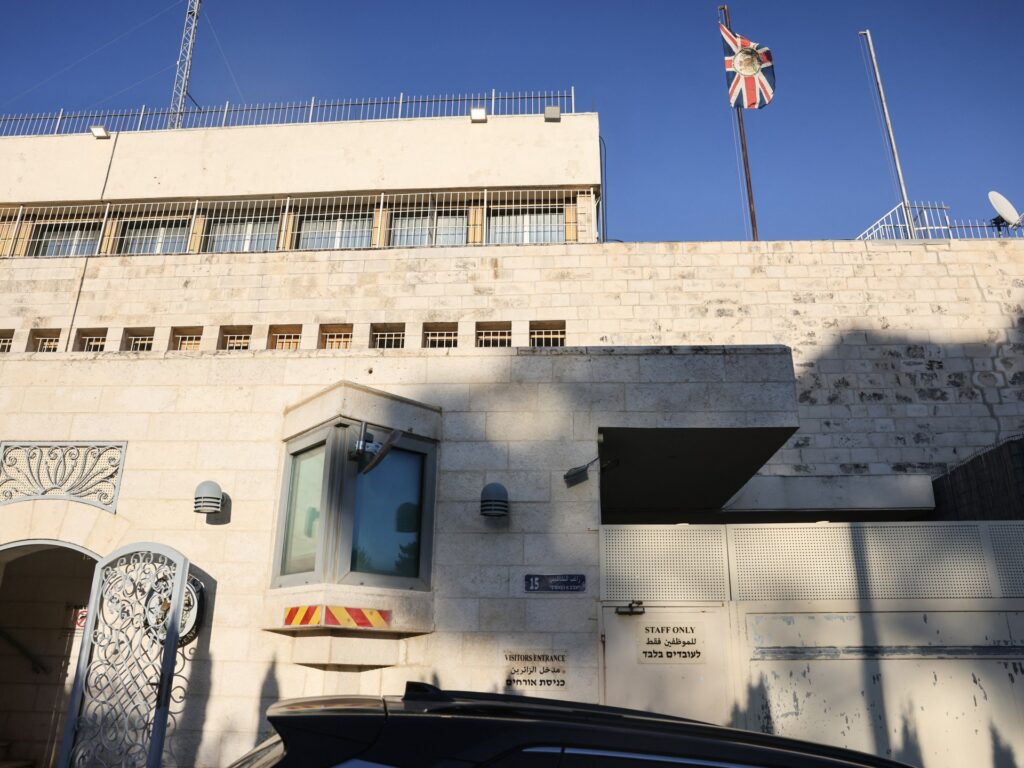
The United Kingdom has threatened to expel 27 Israeli diplomats in response to Israel’s decision to close the East Jerusalem consulate. This diplomatic conflict arises after Britain imposed sanctions on Israeli settlements in the occupied West Bank, escalating tensions between the two countries.
Israel’s closure of the East Jerusalem consulate, which had acted as a diplomatic mission focusing on Palestinian affairs, has been met with sharp criticism from the UK government. The consulate’s closure is viewed as a retaliatory move following the UK’s sanctions aimed at Israeli settlements deemed illegal under international law.
The UK government has firmly condemned Israel’s decision and warned that such actions could lead to a significant diplomatic fallout. British officials have indicated that expelling Israeli diplomats is on the table, signaling a serious breakdown in diplomatic relations if both sides do not seek de-escalation.
The background of the conflict lies in the longstanding dispute over Israeli settlements in the West Bank, which are considered by the international community as a violation of international law and an obstacle to peace. The UK’s sanctions targeted individuals and entities involved in settlement activities, aiming to pressure Israel into halting expansion.
Israel views the UK’s sanctions as an unfriendly and biased intervention in its internal affairs and a challenge to its sovereignty. Closing the East Jerusalem consulate is part of Israel’s broader stance against foreign interference.
The diplomatic tension underscores the complexity of the Israeli-Palestinian conflict and the fragile nature of international diplomatic relations surrounding it. Both sides carry deep-rooted grievances, and the consulate closure has intensified the diplomatic standoff.
Experts suggest that the expulsion of diplomats, if it occurs, would mark one of the most severe downturns in UK-Israel relations in recent years. It could impact cooperation on security, intelligence, and regional stability.
International reactions have varied, with some countries urging restraint and encouraging dialogue, while others reaffirm Israel’s position against foreign sanctions.
The UK government has reiterated its commitment to a two-state solution and has emphasized the importance of upholding international law and human rights in resolving the conflict.
As the situation develops, diplomatic efforts may be necessary to prevent further escalation and to safeguard the existing channels of communication between the UK and Israel.
This incident highlights the ongoing challenges in the Middle East peace process and illustrates how actions by one country can provoke strong responses on the international stage.
The coming weeks will be critical in determining whether the UK and Israel can find a path back from this diplomatic crisis or if the spat will lead to deeper divisions and further instability in their bilateral relations.