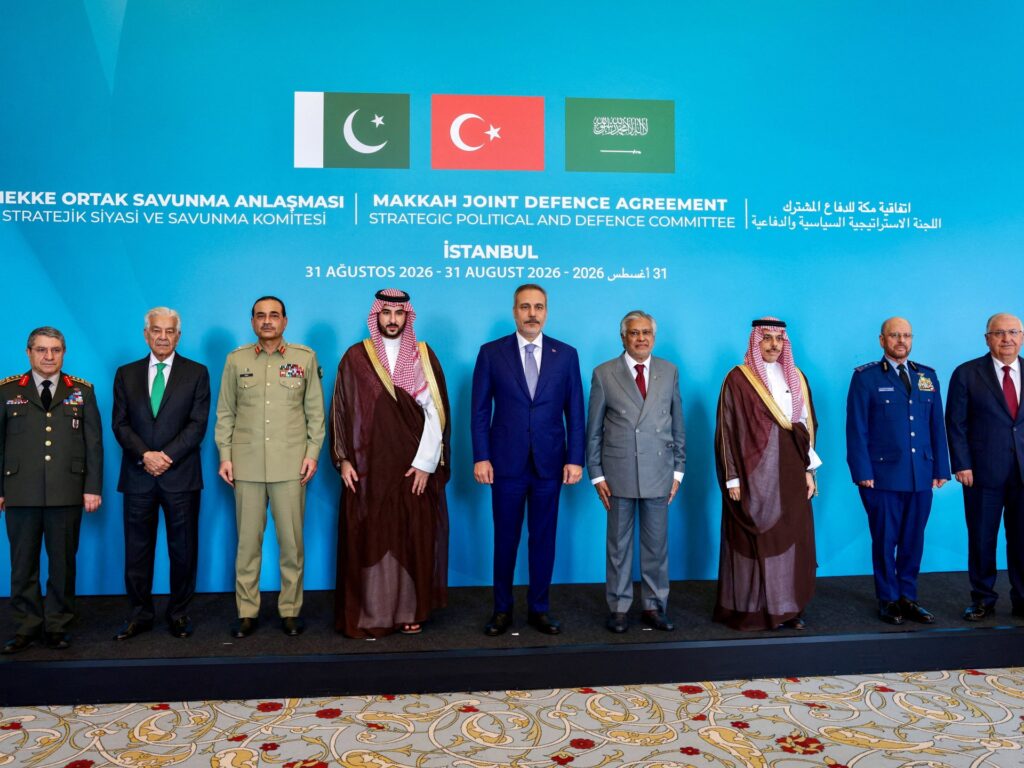
In response to the escalating conflict in Yemen, the military chiefs of Saudi Arabia, Turkey, and Pakistan are set to engage in urgent discussions to enhance their defense coordination. The ongoing fighting in Yemen, marked by intensified Houthi attacks, has prompted these three countries to seek closer strategic collaboration.
The conflict in Yemen has severely destabilized the region, drawing the attention of key regional players. Saudi Arabia, deeply involved due to its proximity and geopolitical interests, has faced persistent missile and drone attacks from Houthi forces. Similarly, Turkey and Pakistan, each wielding significant regional influence and military capabilities, see a coordinated response as essential to countering the growing threats.
The planned talks aim to establish a framework for joint defense strategies, intelligence sharing, and operational coordination. This unprecedented move reflects the severity of the situation in Yemen, where the Houthi insurgents have increasingly targeted regional security.
Saudi Arabia has been leading a coalition in Yemen since 2015, aiming to restore the internationally recognized government. However, the conflict has morphed into a prolonged and complex war, with shifting alliances and increasing external involvement.
Turkey and Pakistan, while not directly involved in the Yemen conflict, have shown interest in its outcome, particularly regarding regional stability and security. Pakistan has historically maintained a balancing act in its foreign policy, while Turkey’s involvement signals its expanding role in Middle Eastern geopolitics.
The intensified Houthi attacks, including ballistic missiles and drones targeting Saudi cities and infrastructure, have heightened the urgency for improved defense cooperation among these nations. Enhanced coordination could improve missile defense capabilities, counterterrorism efforts, and humanitarian response mechanisms.
Military analysts suggest that this tripartite coordination could also deter further Houthi aggression and potentially reshape alliances in the Middle East. By pooling resources and intelligence, Saudi Arabia, Turkey, and Pakistan aim to strengthen their defense posture to secure their national and regional interests.
The discussions are expected to cover a range of issues such as joint military exercises, defense technology sharing, and strategies to combat the financing of armed groups in Yemen.
Experts believe the talks could mark a shift in regional security dynamics, as nations adopt more collaborative approaches to confronting non-state militant groups and insurgents.
While details of the upcoming talks remain confidential, the commitment to deepen defense ties signals a significant development. It underscores the growing recognition that the Yemen conflict’s repercussions extend beyond its borders, affecting regional peace and security.
The international community has repeatedly called for a peaceful resolution in Yemen, yet the ongoing violence continues to threaten millions of lives and regional stability.
Saudi Arabia, Turkey, and Pakistan’s move to coordinate more closely may also influence diplomatic efforts, potentially fostering new pathways for negotiations between conflicting parties in Yemen.
In summary, the urgent talks among Saudi, Turkish, and Pakistani military chiefs highlight their resolve to tackle the intensifying Yemen conflict collectively. By strengthening defense collaboration, they aim to mitigate Houthi threats and contribute to restoring stability in a volatile region. These developments will be closely watched by regional and global actors, as they could significantly impact the geopolitical landscape of the Middle East.