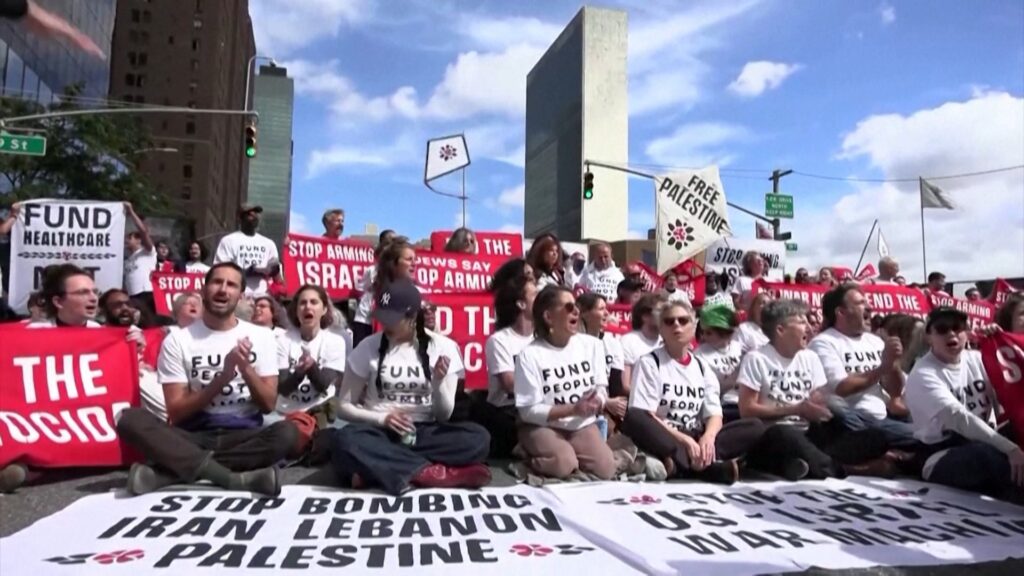
In a significant event drawing international attention, acclaimed actress Susan Sarandon and comedian Hannah Einbinder were arrested along with approximately 100 other protesters outside the United Nations headquarters. The arrests occurred just ahead of Israeli Prime Minister Benjamin Netanyahu’s scheduled speech at the UN.
The protest was organized as a demonstration against Netanyahu’s policies and political actions, reflecting ongoing global discontent and calls for political accountability. Activists and demonstrators gathered to voice their opposition, resulting in a large-scale protest noted for its high-profile participants and significant turnout.
Susan Sarandon, known for her longstanding activism on various social and political issues, joined the protest to amplify the voices calling for peace and justice. Hannah Einbinder, a rising comedian and public figure, also participated to show solidarity with the cause and highlight the urgency of the issues at stake.
According to reports, the protesters peacefully gathered near the UN premises to make their statements heard, despite the presence of tight security measures. The arrests were made as the crowd’s size and intensity increased, with police intervening to maintain order ahead of Netanyahu’s address.
This incident has sparked conversations about the right to protest, civil disobedience, and the international community’s role in addressing contentious political disputes. Social media platforms have been rife with support for the detained activists, while also generating debate over the political implications of Netanyahu’s UN appearance.
Experts note that protests at key international forums like the United Nations are emblematic of the growing demand for transparency and human rights adherence in global governance. The involvement of well-known figures like Sarandon and Einbinder helps bring additional visibility to these complex geopolitical issues.
Following the arrests, statements from activists emphasized their commitment to peaceful resistance and the importance of international attention on the policies Netanyahu represents. Legal advocates are reportedly monitoring the situation to ensure that the protesters’ rights are upheld during and after their detainment.
This protest adds to a series of global demonstrations targeting controversial political leaders and policies, with the UN often serving as a focal point for such expressions of dissent due to its diplomatic prominence.
As Netanyahu proceeded with his UN engagement, the backdrop of protest highlighted the deep divisions and ongoing challenges in Middle Eastern politics. The convergence of celebrity activism with grassroots movements underscores a dynamic interplay of influence and advocacy on the world stage.
The incident serves as a reminder of the persistent power of public protest in shaping public discourse and the enduring relevance of peaceful activism in the face of political contention. Observers around the world continue to watch closely as further developments unfold in this high-profile confrontation at the intersection of diplomacy and dissent.