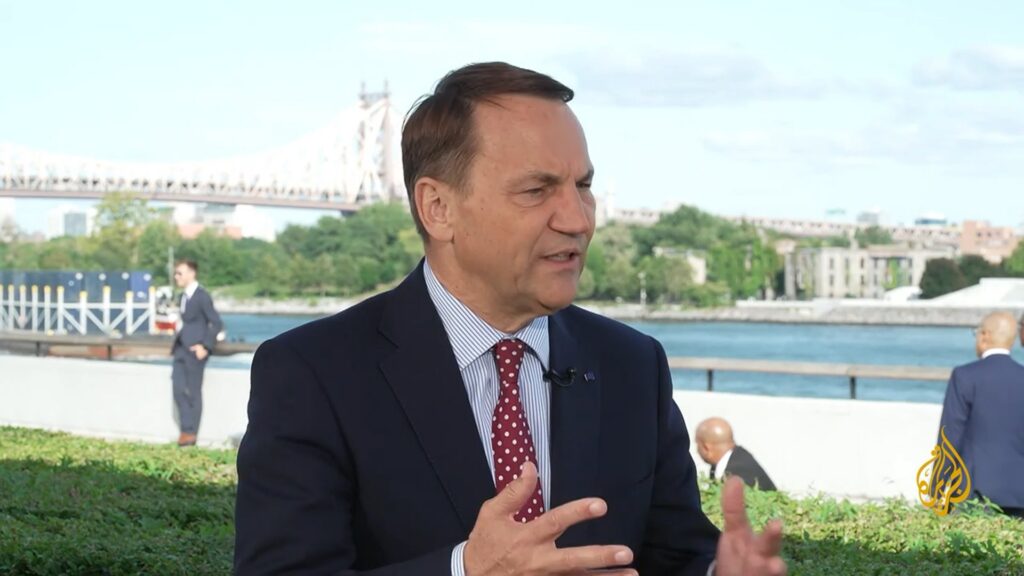
In a recent interview with Al Jazeera, Polish Foreign Minister Radoslaw Sikorski expressed his view that Russia does not possess the necessary military strength to launch an invasion against NATO members. Sikorski’s statement comes amid continued tensions between Russia and Western countries, raising questions about the balance of power and military capabilities in the region.
According to Sikorski, despite Russia’s demonstrated aggression in various regional conflicts, its armed forces are not sufficiently equipped or numerous enough to successfully invade and occupy NATO territory. This assessment highlights the significant deterrent effect that NATO’s collective defense arrangements and military preparedness have established.
The Polish Foreign Minister emphasized that while Russia may attempt to exert influence and conduct hybrid warfare tactics, a full-scale military invasion against the Alliance remains beyond its current capacities. Sikorski’s remarks underline the importance of NATO’s unity and continued investment in defense to counter any potential threats.
This perspective is significant given Poland’s strategic position on NATO’s eastern flank and its experience with regional security challenges. Sikorski’s analysis may also reassure NATO member states and partners about the Alliance’s overall security posture.
Experts note that Russia’s military modernization efforts face various challenges including economic constraints, logistical issues, and the need to maintain readiness across multiple fronts. Combined with NATO’s advanced technologies, joint exercises, and robust response strategies, these factors contribute to the deterrence that Sikorski highlights.
Furthermore, Sikorski pointed out that diplomatic efforts and sanctions remain critical tools in addressing Russia’s aggressive policies, aiming to limit its ambitions without triggering open conflict. The balancing act involves maintaining strong defense capabilities while promoting dialogue and conflict resolution.
The interview with Sikorski sheds light on ongoing debates within policy and defense circles about the realistic threats posed by Russia and the necessary measures NATO must continue to adopt. His candid assessment provides clarity and may influence future strategic decisions regarding defense spending, alliance cohesion, and regional security cooperation.
Overall, Sikorski’s comments reflect a confident but cautious stance, affirming NATO’s deterrence strength but acknowledging the complexity and unpredictability of international security dynamics in Eastern Europe.