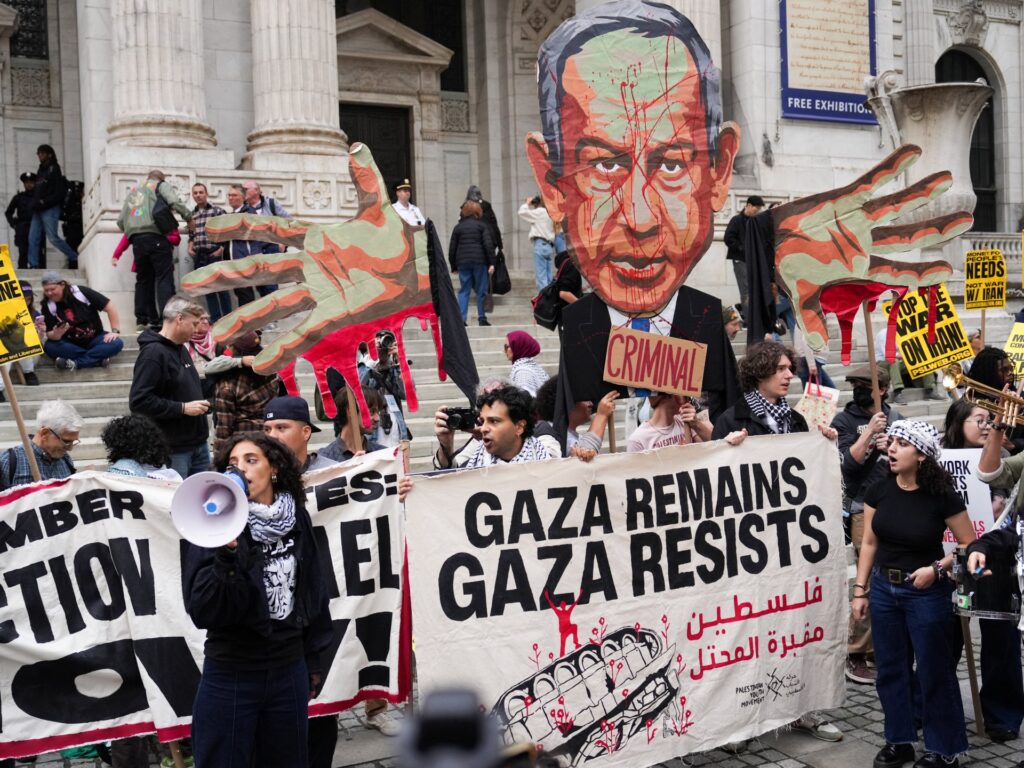
In a significant development during Israeli Prime Minister Benjamin Netanyahu’s recent speech at the United Nations, NYC police arrested renowned actress Susan Sarandon along with several other celebrities. The arrests occurred as part of a peaceful protest against Netanyahu’s policies and actions, which have drawn international criticism.
The demonstration was organized by various activist and human rights groups who accuse Netanyahu of perpetuating conflict and violating human rights. Protesters gathered outside the UN headquarters in New York City, holding signs and chanting slogans condemning Netanyahu’s leadership and calling for justice.
During Netanyahu’s address to the UN General Assembly, the atmosphere inside the chamber was charged with tension. Multiple delegations walked out in protest, signaling a rare display of disapproval towards the Israeli Prime Minister on this global stage.
Rights organizations have increasingly accused the United Nations of hosting a ‘war criminal’ by allowing Netanyahu to speak, citing allegations related to military actions and policies impacting Palestinian territories. This criticism has sparked debates about the UN’s role and the standards it upholds in international diplomacy.
Susan Sarandon, known for her outspoken activism, was among the prominent figures protesting Netanyahu’s visit to the UN. Alongside other celebrities, she faced detention for civil disobedience during the demonstration.
The arrests highlight the growing polarization surrounding Netanyahu’s leadership and the international community’s varied responses. The protest reflects broader discontent with ongoing conflicts in the Middle East and the global call for accountability and peace.
The walkouts by several UN delegations during Netanyahu’s speech underscore the divisions within the international community regarding Israel’s policies. Some member states expressed solidarity with the protests, while others reaffirmed their support for Israel.
This incident at the United Nations has reignited discussions on the effectiveness and impartiality of global institutions in addressing complex geopolitical issues. The event serves as a reminder of the challenges faced by international bodies in balancing diplomatic engagement with calls for human rights and justice.
As the situation develops, human rights advocates and political analysts will be closely monitoring the aftermath of these protests and the UN’s response. The convergence of celebrity activism and international diplomacy in this context illustrates the multifaceted nature of contemporary political advocacy.
In summary, the arrest of Susan Sarandon and other celebrities during protests against Netanyahu at the UN, coupled with the walkouts by various delegations, marks a notable moment of dissent on the world stage. It emphasizes the ongoing debates about leadership, accountability, and the role of international institutions in conflict resolution.