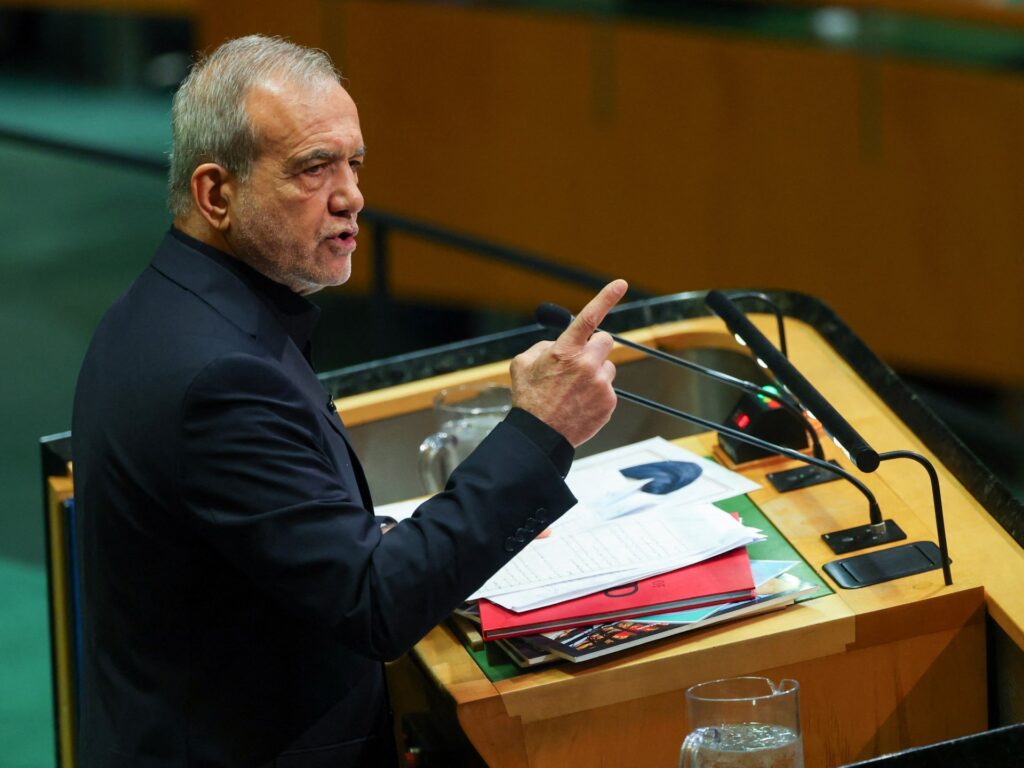
As geopolitical tensions continue to ripple through the Middle East, Iran intensifies its diplomatic efforts aimed at bringing the United States back to the negotiating table. Iranian President Masoud Pezeshkian has emphatically stated that Iran desires the US to reinstate its commitment to the Memorandum of Understanding (MoU) by early November, a strategic timeline that aligns with the upcoming US midterm elections.
The MoU, a crucial diplomatic agreement, has long served as a framework for dialogue and cooperation between Iran and the United States, focusing on key issues such as nuclear development, regional security, and economic sanctions. Tehran’s appeal underscores the urgency of re-establishing communication channels amidst an atmosphere fraught with suspicion and hostility.
President Pezeshkian’s public call for the US to return to the MoU reflects Tehran’s broader strategy to stabilize regional dynamics and reduce escalating tensions. The timing is particularly significant given the US midterms, which could potentially reshape American foreign policy depending on the election outcomes.
Diplomatic insiders suggest that Iran’s push is motivated by a desire to secure a more predictable and constructive engagement with Washington. Tehran views the MoU as a critical mechanism that could prevent misunderstandings and avert the possibility of military confrontations in the volatile region.
On the US side, policymakers remain conflicted. Some advocate for re-engagement with Iran to curb nuclear proliferation and foster peace in the Middle East, while others express deep skepticism, citing concerns about Iran’s regional activities and human rights record.
The international community is closely monitoring developments, aware that renewed US-Iran engagement could have significant implications for global energy markets, regional alliances, and international security frameworks.
Observers note that President Pezeshkian’s statement may also be intended as a diplomatic signal aimed at the American electorate, emphasizing Tehran’s willingness to negotiate and cooperate if the US adopts a conciliatory stance.
Despite the complexities, Iran remains steadfast in its position that a return to the MoU is essential for easing sanctions and enabling economic recovery, pivotal for the nation’s domestic stability.
Analysts warn that if the US fails to respond favorably before the midterms, the prospects of dialogue could diminish substantially, potentially leading to increased isolation and heightened conflict risk.
The coming weeks, therefore, represent a critical window in which diplomatic efforts must intensify. Both Tehran and Washington face significant pressure to explore avenues for renewed engagement that respect mutual interests and address longstanding grievances.
In summary, Iran’s call for the US to re-enter the MoU highlights a pivotal moment in Middle Eastern diplomacy. As the world watches, the effectiveness of these efforts will shape the trajectory of US-Iran relations, regional security, and international cooperation moving forward.