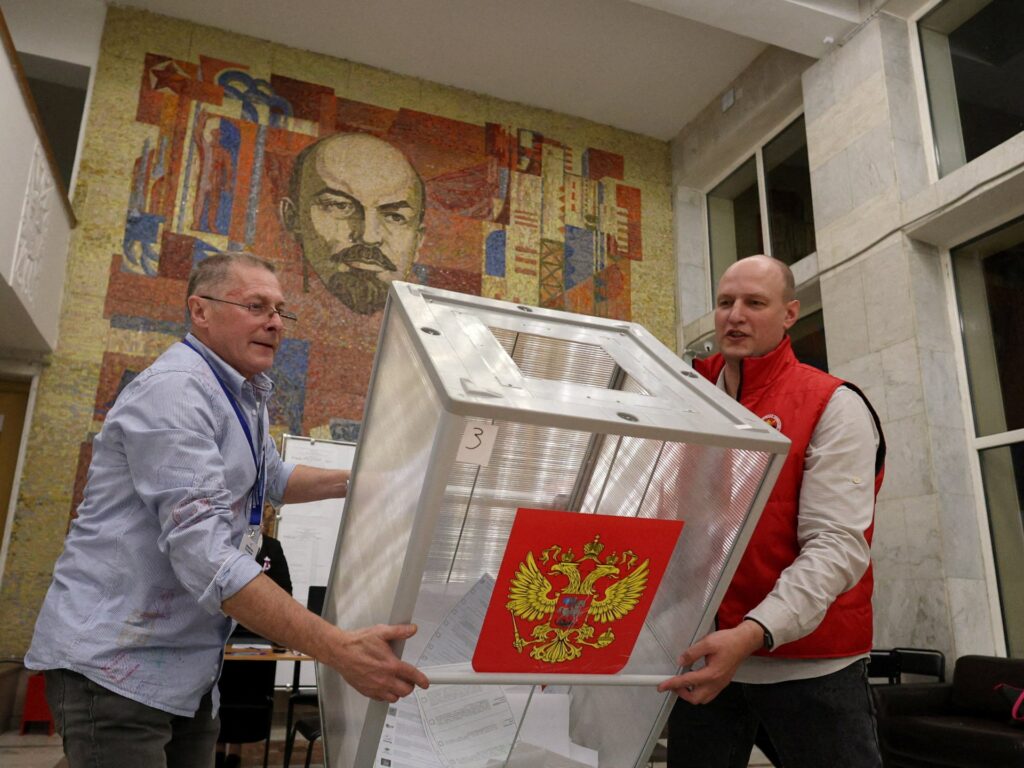
The polls have closed in Russia’s wartime election, with the ruling party expected to secure a dominant position. Russian President Vladimir Putin has framed this election as a critical test of public support for his administration’s ongoing military campaign in Ukraine.
Throughout the campaign, the ruling party has leveraged patriotic sentiment and state-controlled media coverage to galvanize voters. The government’s narrative has focused heavily on national unity and the defense of Russian interests abroad.
Critics, however, argue that the election environment has been heavily influenced by restrictions on opposition parties, suppression of dissenting voices, and limited access to independent information. They suggest that these factors undermine the fairness and competitiveness of the electoral process.
President Putin’s personal involvement, casting his own vote publicly, symbolizes the importance he assigns to this election as a mandate for his policies. Supporters view the election as a reaffirmation of Russia’s direction under his leadership, especially regarding the conflict in Ukraine.
International observers remain cautious, pointing out that the election occurs amid ongoing conflict and heightened tensions, which may affect voter turnout and the inclusivity of the political process.
The official results are expected to confirm the ruling party’s stronghold on the Russian legislative body, reinforcing Putin’s ability to push forward with his agenda.
Analysts predict that the election outcome will likely consolidate the president’s domestic power, despite ongoing challenges both within and outside Russia. The wartime context has played a significant role in shaping voter attitudes, with many seeing the election as a referendum on national security and sovereignty.
In the coming weeks, the international community will closely watch how the results impact Russia’s political landscape and its relations with other nations engaged in dialogue about the conflict in Ukraine. The election has underscored the complexities of holding democratic processes during times of war and political strife.