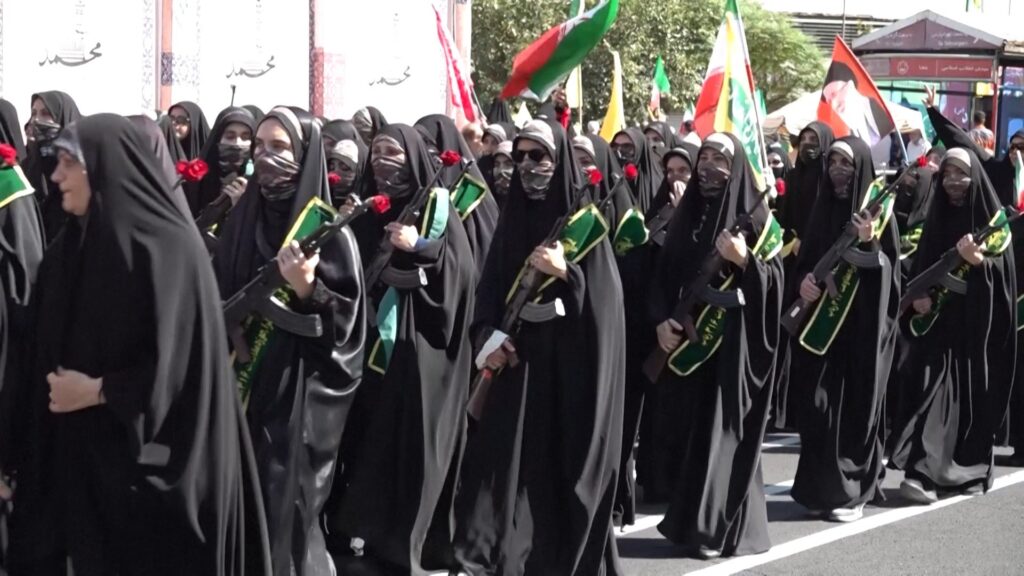
Iran recently showcased a significant display of military power during a massive mobilisation campaign held in its capital, Tehran. The event attracted hundreds of thousands of participants who gathered to express solidarity and strength amid a tense regional atmosphere.
Among the striking visuals of the rally were armed women, a symbol of Iran’s commitment to involving all segments of society in its defense posture. This inclusion highlights the nation’s emphasis on total national mobilisation and the role of women in protecting the country.
The parade featured a range of military hardware including anti-aircraft guns, which underline Iran’s focus on strengthening air defense capabilities in response to evolving regional threats. The presence of these weapons serves as a deterrence message to foreign adversaries.
In addition to traditional weapons, the rally prominently displayed Shaheed drones. These unmanned aerial vehicles have become a critical component of Iran’s strategic arsenal, capable of surveillance and precision strikes. Their inclusion in the parade signals Iran’s advancement in indigenous military technology and its growing capability to conduct drone warfare.
This mobilisation campaign and show of force come amid increased geopolitical tensions and ongoing conflicts within the Middle East. Iran aims to demonstrate its readiness and resolve to defend its sovereignty and interests against external pressures and potential aggression.
The massive turnout and the government’s emphasis on military prowess reflect Tehran’s dual strategy of rallying domestic support while sending a clear message internationally. By publicly showcasing military assets and involving diverse segments of society, Iran intends to project an image of unity and strength.
Overall, the event in Tehran was more than a mere military parade; it was a strategic communication tool designed to bolster national morale and to warn adversaries of Iran’s capabilities and determination. The mobilisation also serves as a backdrop for Iran’s ongoing efforts to navigate complex regional dynamics and assert its role on the Middle Eastern stage.
This mobilisation drive and the accompanying military display underscore Iran’s broader strategic objectives to maintain regional influence and deter any foreign intervention. The inclusion of women in armed roles and technological advancements such as drone warfare reflect a modernized approach to Iran’s defense policy, one that integrates both traditional and contemporary elements.
As the situation in the region continues to evolve, observers will be watching how Iran balances demonstration of force with diplomatic engagements to secure its national interests. The recent Tehran rally is a vivid illustration of Iran’s current stance and its aspiration to remain a dominant regional power.