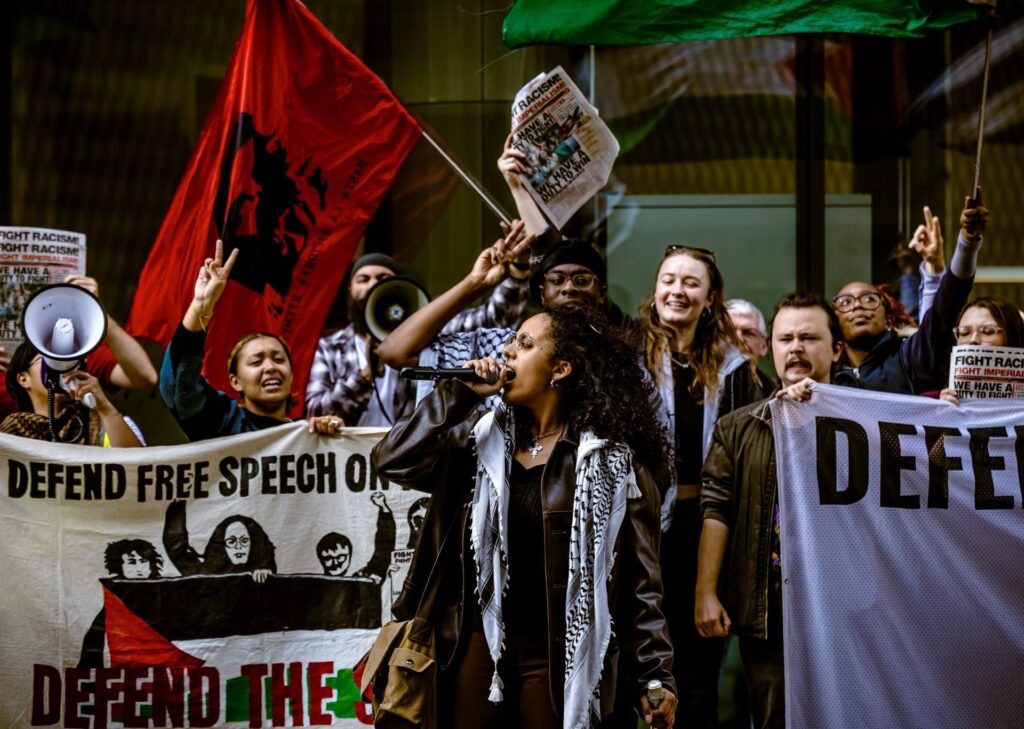
A UK court has cleared Sarah Cotte, a woman who faced legal scrutiny over her speech at a university where she expressed views related to the Israel-Palestine conflict. Authorities had accused her of voicing support for the designated terrorist group Hamas during the speech. However, the court found her comments did not equate to endorsing Hamas, but rather articulated support for Palestinians’ right to resist occupation.
The case drew significant attention due to the sensitive nature of the topic and the challenges posed in distinguishing between lawful free speech and expressions that may be interpreted as endorsing terrorism. Sarah Cotte defended her remarks by clarifying that her intention was to highlight the plight of Palestinians and their struggle, not to support Hamas as an organization.
The legal examination focused on the specific language used by Cotte during the speech, and whether it crossed the line into incitement or support for terrorism under existing UK laws. The court ultimately ruled in her favor, emphasizing the importance of safeguarding free speech, especially in academic settings that encourage open discussion and debate on complex geopolitical issues.
Advocates for free speech welcomed the verdict, underscoring the need to protect individuals from accusations that could suppress legitimate discourse about international conflicts. Meanwhile, some groups expressed concern over the boundaries of acceptable speech, emphasizing the difficulties governments face in balancing security concerns with civil liberties.
The case highlights the broader global debates around the Israel-Palestine conflict and the role of universities as platforms for dialogue. Many institutions are grappling with how to create environments that allow for the expression of diverse opinions while preventing hate speech and the promotion of violence.
Sarah Cotte’s acquittal sends a message encouraging critical examination and dialogue about contentious issues, reaffirming the principle that supporting a people’s right to resist does not automatically imply support for all methods or organizations involved. It also serves as a precedent for future cases involving speech on politically sensitive topics.
Legal experts note that this case may influence how future incidents are assessed, particularly in academic contexts where freedom of expression is a fundamental value. They advocate for clear guidelines to help differentiate between legitimate political speech and unlawful endorsements of terrorism.
The university where Sarah Cotte spoke has reiterated its commitment to free expression while ensuring a safe and inclusive environment for all students and staff. It emphasized ongoing education efforts to promote understanding of complex international issues.
This court decision is seen as a balancing act between combating terrorism and upholding democratic freedoms. It reflects the ongoing challenges in interpreting the nuances of speech related to conflicts like that between Israel and Palestine, especially within Western legal frameworks.
As global tensions persist, the case underscores the importance of judicial structures that can carefully weigh individual rights and societal security interests. It also illustrates the critical role of language and context in legal interpretations of speech.
Overall, the acquittal reaffirms that expressing support for a people’s right to resistance is distinguishable from supporting a designated terrorist organization, provided that the speech does not explicitly promote violence or terrorism. The ruling encourages ongoing dialogue and reflection on how societies can address complex geopolitical issues within the bounds of law and human rights.