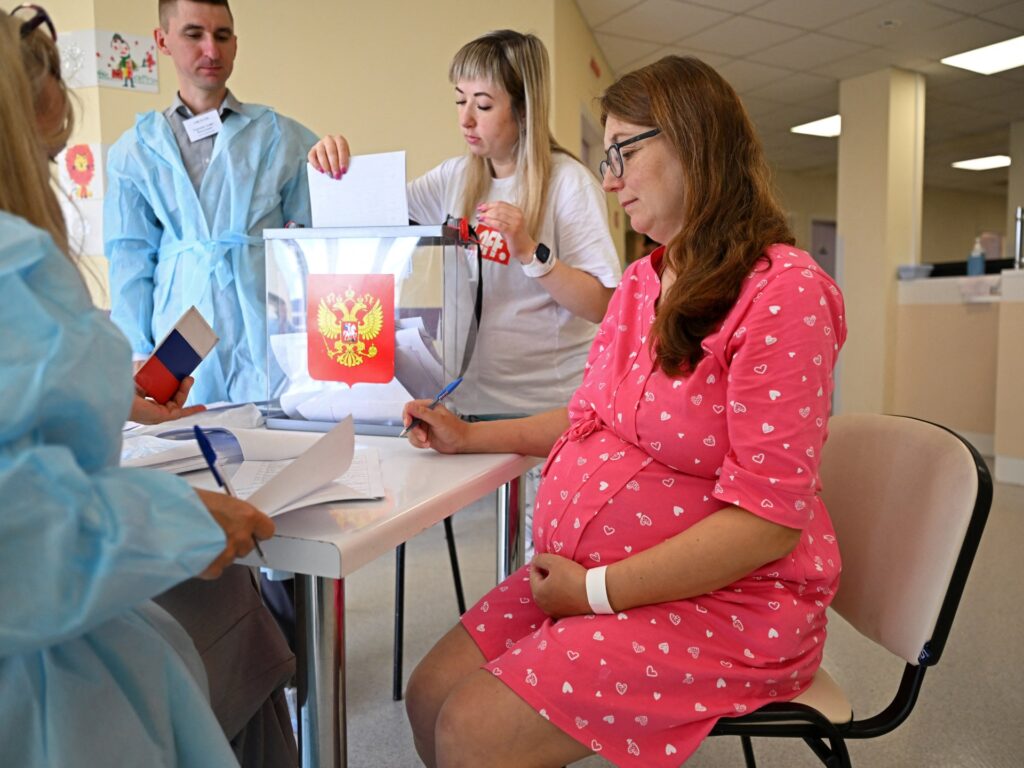
As Russia approaches its first parliamentary elections since the invasion of Ukraine, the political landscape is more charged and constrained than ever. The election, scheduled amid ongoing conflict, is viewed through contrasting lenses—considered by many as a fraudulent exercise lacking genuine democratic choice, while others perceive it as a rallying point for heightened nationalism.
The central theme dominating this election cycle is an unequivocal stance on the war in Ukraine. Russian authorities have made it clear that “no party can be antiwar,” effectively narrowing the political spectrum and silencing dissenting voices. This decree has drastically altered the nature of political debate, reducing it to a singular narrative that supports or does not criticize the war effort.
Critics argue that this move is a strategic ploy by the government to consolidate power and control the national discourse. With opposition voices either suppressed or excluded, the election risks becoming a mere formality that legitimizes the ruling party’s continued dominance rather than a genuine democratic exercise.
Despite such criticisms, proponents within Russia view the elections as an opportunity to unify the country under a banner of patriotism and resilience. The conflict has rekindled a sense of national identity and pride for some citizens, who see the elections as a chance to support parties that back the government’s military actions and policies.
Election campaigning in Russia has been heavily influenced by the ongoing war. Political parties are expected to demonstrate unwavering loyalty to the state’s narrative. Candidates often emphasize patriotism, national security, and stability, framing these issues as paramount to the country’s future. This focus diminishes discourse on other critical areas such as the economy, social policies, or human rights.
International observers and human rights organizations have raised alarms about the fairness and transparency of these elections. Reports of media censorship, voter intimidation, and restricted political freedoms contribute to the skepticism about the legitimacy of the electoral process.
The election outcome will likely reinforce the dominance of the current ruling party, which has capitalized on nationalist sentiments and the control of state resources. Even so, the election will offer insight into how deeply the war and nationalism have penetrated Russian political life.
With the global community watching closely, the election serves as a reminder of how conflict can reshape domestic politics. It highlights the tension between authoritarian control and the desire for democratic engagement within societies under strain.
As Russia moves forward, the results of the elections will not only impact its internal governance but will also signal how entrenched the war’s narrative has become in shaping the country’s identity and future direction. For many, this election is less about choice and more about survival in an increasingly polarized and controlled political environment.